Wally the Stegosaurus Returns to Berkshire Museum
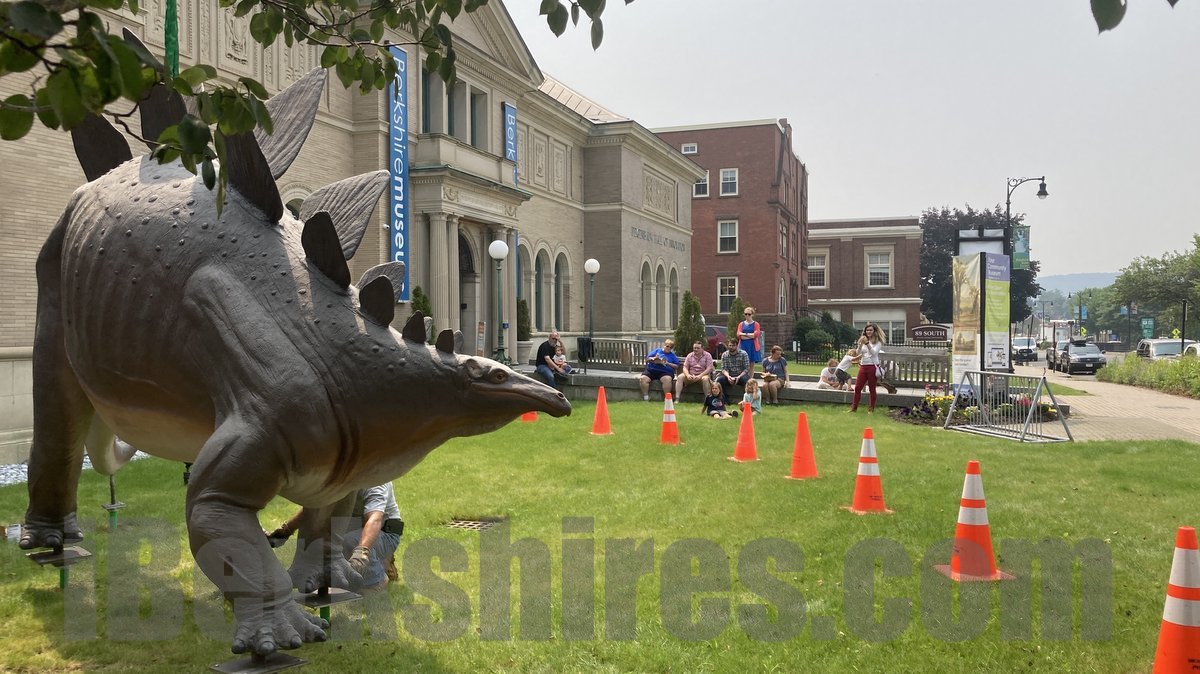
PITTSFIELD, Mass. — He's large, he's prehistoric, and he is back home at the Berkshire Museum.
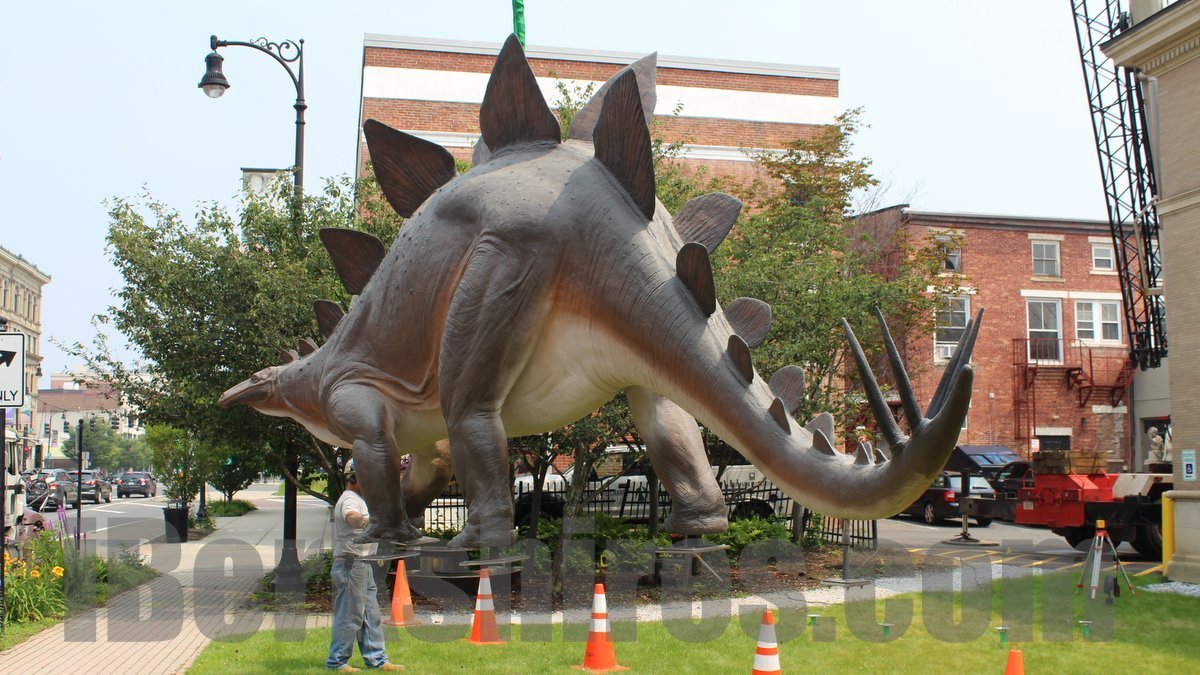
Wally the 1,200-pound, life-sized fiberglass Stegosaurus was crane-lifted to the museum's lawn on Monday after a yearlong hiatus for some rest and recuperation. During this time, he received a full inspection, tail restoration, surface crack repairs, and a new paint job.
The beloved Pittsfield hallmark of 24 years now sits on the left side of the museum's front lawn. He previously lived on the right side of the lawn.
"That's been our No. 1 question this whole time is 'Where's Wally?'" the museum's marketing and brand manager Kimberly Donoughe said. "Everybody wants to know where Wally is."
In April 2020, he made the journey back to his birthplace — Louis Paul Jonas Studios — down Route 7 South through Pittsfield, Lenox, Stockbridge, and Great Barrington before crossing the border to New York. The museum published Wally's route and estimated travel times so that fans could get a glimpse of the local celebrity in his travels.
For safety, he wore a mask over his nose and snout and donned banners that read "Thank you for doing your part to make COVID-19 extinct."
From the fall of 2020 to now, he spent time in quarantine at an undisclosed location nearby while the museum made infrastructure repairs to the lawn that he calls home.
Wally is a 26-foot-long, 12-foot-tall fiberglass sculpture created by artist Louis Paul Jonas in Hudson, N.Y., more than 50 years ago.
The Berkshire Museum welcomed him in 1997 after he spent 30 years outside of the Cleveland Museum of Natural History. Cleveland then commissioned a twin, "Steggie II," to take his place from the original casts.
Wally was the second dinosaur made from a mold created for the Sinclair Dinoland pavilion at the New York World's Fair in 1964-1965. Jonas is known for his work on natural history exhibits and worked with paleontologists to craft the Dinoland sculptures that were later featured in museums around the country.
His studio also created the dioramas for Berkshire Museum's "Worlds in Miniature" display.
In 1997, there was a naming contest held for the dinosaur and he was given the name "Wally" by a child because, at the time, scientific research showed that Stegosauruses had brains the size of a walnut.
Wally's return occurred less than two weeks before the museum unveils a fully renovated second floor on Friday, Aug. 6. The renovations include nine upgraded galleries, new exhibitions, two flexible learning spaces, and new amenities.
Tags: Berkshire Museum, dinosaurs,