Pittsfield Historical Commission Holds Off on Demolition Delay
PITTSFIELD, Mass. — The Historical Commission is torn on a demolition delay application from Berkshire Theatre Group for a carriage house located behind the Thaddeus Clapp House.
The panel decided to take some extra time with the application last week and will have a site visit to the structure.
After BTG spent more than $1 million to restore the Clapp House, a professional assessment indicated that the best path forward for the barn is to take it down. In the future, the theater sees more artist housing in that space, which is an area where it sees great need.
"We couldn't agree more about the historical value of that property and we feel it even more profoundly now as stewards of the house," Executive Director Nick Paleologos said.
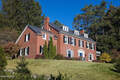
The main house located at 74 Wendell Ave. was built in 1871 by Thaddeus Clapp and is an Italianate/Colonial Revival style. It was placed on the National Register of Historic Places in the early 1990s.
"The detached barn in the rear, which is the subject of this demolition application, had been vacant and deteriorating for many years prior to BTG's purchase of the property," the application reads.
Bradley Architects Inc. was hired to analyze the timber-frame barn and deemed it "beyond repair" due to a lack of a foundation, compromised structure, lack of utilities, water-damaged interior, and weather-destroyed exterior.
A letter from the architects says the structure's sill plate is rotted out along almost the entire perimeter, that there are several holes in the roof causing water damage, that the asphalt roofing is beyond service, that windows are damaged or missing, and that the building's utilities are destroyed from neglect.
Paleologos explained that the theater group believes that the best thing it can do in the short term is take the barn down, regrade, and landscape that area.
"Ultimately, as we indicated, the need for artist housing is severe and one of the best decisions that we made as an organization, although it didn't seem it at the time, was to spend a million dollars on the Clapp House," he added.
"But right now, we're housing artists in there for most of the year in all of the rooms and we are saving a fortune every year because of that house's existence and that's a benefit directly to us. That doesn't even speak to the fact that the residents to that house are in downtown Pittsfield and enjoying the benefits of everything the city has to offer."
Commission members argued that the structure is likely not beyond repair but recognized the great cost that would be associated with refurbishing it.
"I have a hard time understanding how any building could be beyond repair myself," Chair John Dickson said. "And when I look at it, both with my own eyes and the pictures I just don't understand."
Commissioner Matthew Herzberg said it is certainly not beyond repair given unlimited resources but pointed out that it is probably cost prohibitive for the nonprofit theater company. The question then would be if BTG is expected to pay that cost to salvage the barn.
"I think it's an interesting structure. I think it's relatively unique in Pittsfield. It's not really a player on the streetscape, at least based on my estimation, I mean it's tucked behind kind of in the corner of the parking lot so it's kind of hard to say, 'well, it's really an asset to the city' in that respect. Certainly, it's not an asset of its current condition," he said.
"So I'm not sure what to do because while I agree it's not beyond repair, this would require a major, major financial commitment to rebuild it, and certainly into something useful, I mean if the intent was to turn this into housing, that would be a major, major undertaking."
Paleologos explained that it was an "uphill climb" to raise the million dollars for Clapp House and that organizations such as BTG barely survived the pandemic.
The monies were raised through individual donors, Pittsfield Community Preservation Act funds and the Massachusetts Cultural Facilities Fund.
Commissioner Ann-Marie Harris said she understood where the theater is coming from but that fact is the structure is historic.
"I am torn, literally torn, between what I'm going to do," she added.
The commission will take a site tour of the barn before its next meeting.
Tags: demolition, historical building,