

Hancock Shaker Village Executive Director Works to Honor the Shaker's Legacy
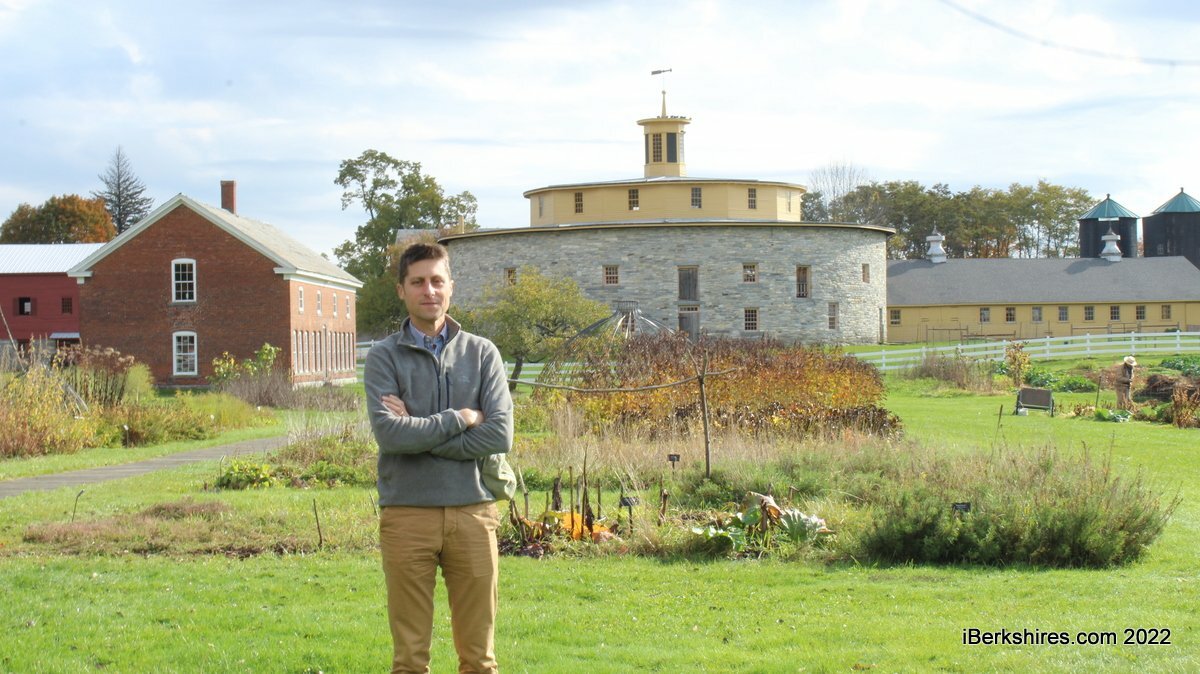
PITTSFIELD, Mass. — Nathaniel Silver assumed the role of Executive Director and CEO of Hancock Shaker Village on Sept. 19 and hopes to preserve the inclusive and diverse history that is ingrained in the 20 historic buildings on the campus.
"Everybody's been incredibly welcoming. And I'm really really grateful for the warm welcome since I've been here and especially fellow leaders of cultural institutions who have reached out to me in the last couple of weeks to meet and to welcome you to the area and so I'm incredibly grateful for everyone's support" he said.
“Hancock Shaker Village is an extraordinary place, beloved by our community. And it's been here for a very long time, since the 1780s," Silver said. "One of the things that I was really fascinated by was the shakers working. They were, in many ways, remarkably ahead of their time, progressive at a moment in ways that were very unexpected."
He replaces Jennifer Trainer Thompson who stepped down in July. She was appointed in 2016.
Silver said during a time when sexism, racism, and prejudice hindered people's ability to lead, the Shakers were inclusive.
There were women in power positions, "black shakers, indigenous shakers, shakers from Slavic countries when people from those countries were being discriminated against in the United States," Silver said.
In fact, the Shakers, or the United Society of Believers in Christ's Second Appearing, was founded by Mother Ann Lee in 1784.
Silver said the values of inclusion and sustainability that Hancock Shaker Village was founded on not only resonate with the visitors but resonate with Silver's own background.
"I worked at the Isabella Stewart Gardner Museum in Boston for almost eight years, and that's another institution founded and led by a woman," Silver said.
The historic buildings, tools, and collection that the museum makes the museum a work of art in and of itself similar to the Stewart Gardner Museum, Silver said.
"[Stewart Gardner Museum] is also an institution that is a work of art in its entirety. So it's not just the collection, it's the historic building, it's the garden in the center and the grounds," Silver said.
"And for me, that was an incredible parallel to Hancock Shaker Village because here we have the remarkable collection of over 22,000 objects. The 20 historic buildings on our campus, the working farm, and the 750 acres that we steward."
Silver's experience working as a curator of the collection and Division Heads at the Stewart Gardner Museum informs the approach he is going to take at Hancock Shaker Village.
"We are physically a remarkable sight. One of the most beautiful places in the Berkshires, I think. But in many ways, our identity as an institution, I think, is encapsulated not just in our buildings in our landscape, but in our collection," he said.
"And I think that our collection, which we've seen some incredible exhibitions by our curator, can be elevated even further. And that's a place where I feel that I can help a little bit."
Silver's experience at the Stewart Gardner Museum and working at The Frick Collection in New York City informs the themes that can be utilized for future exhibits.
"One of the things that I think the Gardner does incredibly well is connecting the art of the past with the present and asking new questions of the permanent collection of the art of previous eras that inform our understanding of the world around us today," he said. "And that is exactly something that we have been doing already here at Hancock shaker village, in the remarkable contemporary exhibitions."
This is something he would like to continue to explore in the future, especially with the collection because "asking new questions of works of art and works of shaker material culture can't solve the challenges that we have in our society today, but they can give us new ways of thinking about them, and help us to understand and make sense of our complex present," he said.
The museum seeks to honor and celebrate the legacy the shakers have left behind through the sustainable ways in which they maintain the farm, exhibitions, tours and programming.
Silver said the legacy the Shakers left behind provides artists with an endless amount of themes that they can respond to.
"I think the Shakers have left this legacy. Whether it's a legacy of sustainability in the way that they work the land, or whether it's a legacy of equity and the way that they're treated male and female relationships or power within the community. And, those are the kinds of themes that the artists can respond to," Silver said.
More information on Hancock Shaker Village here.
Tags: Hancock Shaker Village,