MEMA Eyes Western Mass for Abandoned Migrants

By Sabrina DammsiBerkshires Staff
Print Story | Email Story
PITTSFIELD, Mass. — Some of the migrants abandoned on Martha's Vineyard in September could find homes in Western Massachusetts. 
 
On Sept. 14, approximately 50 South American asylum-seekers were sent to the island of Martha's Vineyard from San Antonio, Texas, under the direction of Florida Gov. Ron DeSantis. No one was informed of their imminent arrival, leaving the small island community to scramble to find shelter and services for them.
 
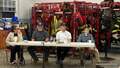
Central Berkshire Regional Emergency Planning Committee Chair Michael Britton informed the committee on Wednesday morning that the Massachusetts Emergency Management Agency has been preparing for Western Mass as the next location to relocate some of these people.
 
The asylum-seekers had been transported to Joint Base Cape Cod to provide them more services, including legal services. Many of them had court dates in Texas that they would have missed being in the Northeast.
 
MEMA was concerned because it took a mass effort to get the immigrants situated and fed, said Britton, and the agency was developing locations and policies for them. 
 
MEMA is in charge of finding housing for these people which is why they are coming up with procedures. This is the same role it played during COVID-19, said Lt. Col. Thomas Grady of the sheriff's office.
 
"We had all of the locations at hotels throughout the commonwealth, for people that were unhoused that needed to quarantine. So there's some models in place for how they can move people," he said.
 
Places like Pittsfield are likely to be notified if people will be moved to the Berkshires, and it is unlikely that places like Hinsdale or Becket will be chosen.
 
The September incident is now the subject of a class action lawsuit that alleges fraud in that the migrants were promised jobs and housing if they got on the plane. 

If you would like to contribute information on this article, contact us at info@iberkshires.com.

Pittsfield Housing Project Adds 37 Supportive Units and Collective Hope

By Brittany PolitoiBerkshires Staff

PITTSFIELD, Mass.— A new chapter in local efforts to combat housing insecurity officially began as community leaders and residents gathered at The First on to celebrate a major expansion of supportive housing in the city.

The ribbon was cut on Thursday Dec. 19, on nearly 40 supportive permanent housing units; nine at The First, located within the Zion Lutheran Church, and 28 on West Housatonic Street.  The Housing Resource Center, funded by Pittsfield's American Rescue Plan Act dollars, hosted a celebration for a project that is named for its rarity: The First. 

"What got us here today is the power of community working in partnership and with a shared purpose," Hearthway CEO Eileen Peltier said. 

In addition to the 28 studio units at 111 West Housatonic Street and nine units in the rear of the church building, the Housing Resource Center will be open seven days a week with two lounges, a classroom, a laundry room, a bathroom, and lockers. 

Erin Forbush, ServiceNet's director of shelter and housing, challenged attendees to transform the space in the basement of Zion Lutheran Church into a community center.  It is planned to operate from 8:30 a.m. to 4:30 p.m. year-round.

"I get calls from folks that want to help out, and our shelters just aren't the right spaces to be able to do that. The First will be that space that we can all come together and work for the betterment of our community," Forbush said. 

"…I am a true believer that things evolve, and things here will evolve with the people that are utilizing it." 

Earlier that day, Executive Office of Housing and Livable Communities Secretary Ed Augustus joined Lieutenant Governor Kim Driscoll and her team in Housatonic to announce $33.5 million in federal Community Development Block Grant funding, $5.45 million to Berkshire County. 

He said it was ambitious to take on these two projects at once, but it will move the needle.  The EOHLC contributed more than $7.8 million in subsidies and $3.4 million in low-income housing tax credit equity for the West Housatonic Street build, and $1.6 million in ARPA funds for the First Street apartments.

"We're trying to get people out of shelter and off the streets, but we know there are a lot of people who are couch surfing, who are living in their cars, who are one paycheck away from being homeless themselves," Augustus said. 

View Full Story

More Pittsfield Stories