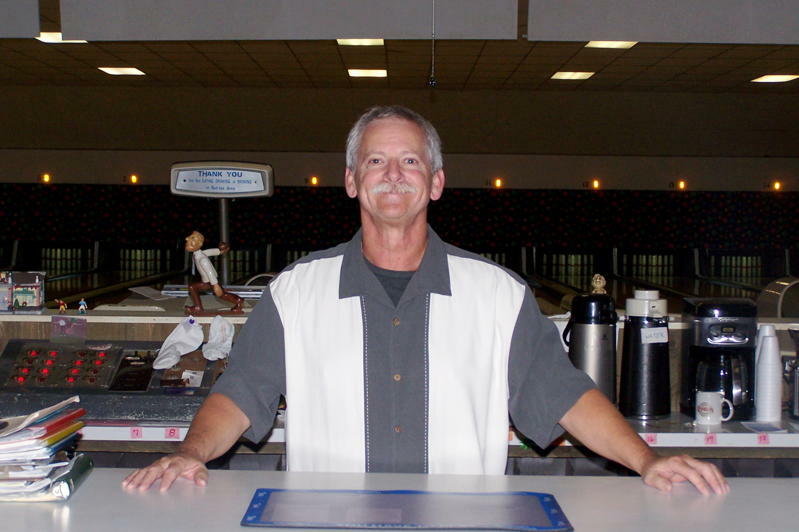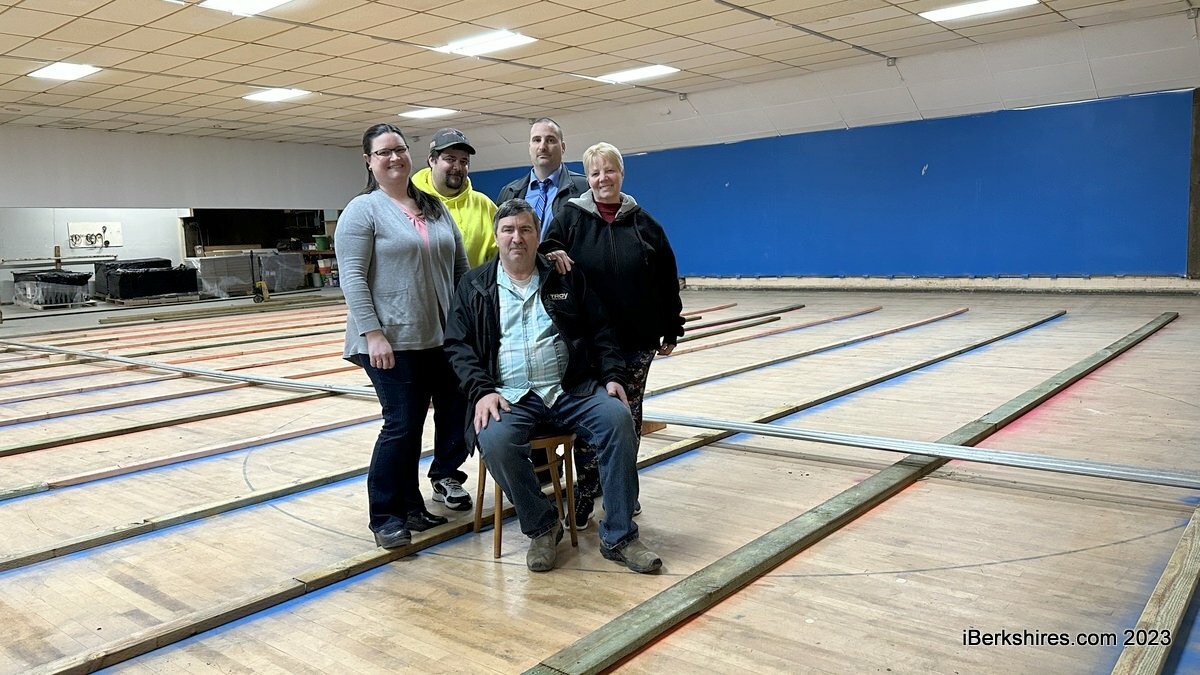
A new family is continuing a bowling heritage in Pittsfield by resurrecting tenpin bowling on Dalton Avenue. Seen here are Kari and Mark Mathes, from left, George Mathes, Joey Mathes and George's wife, Dawn Mathes.
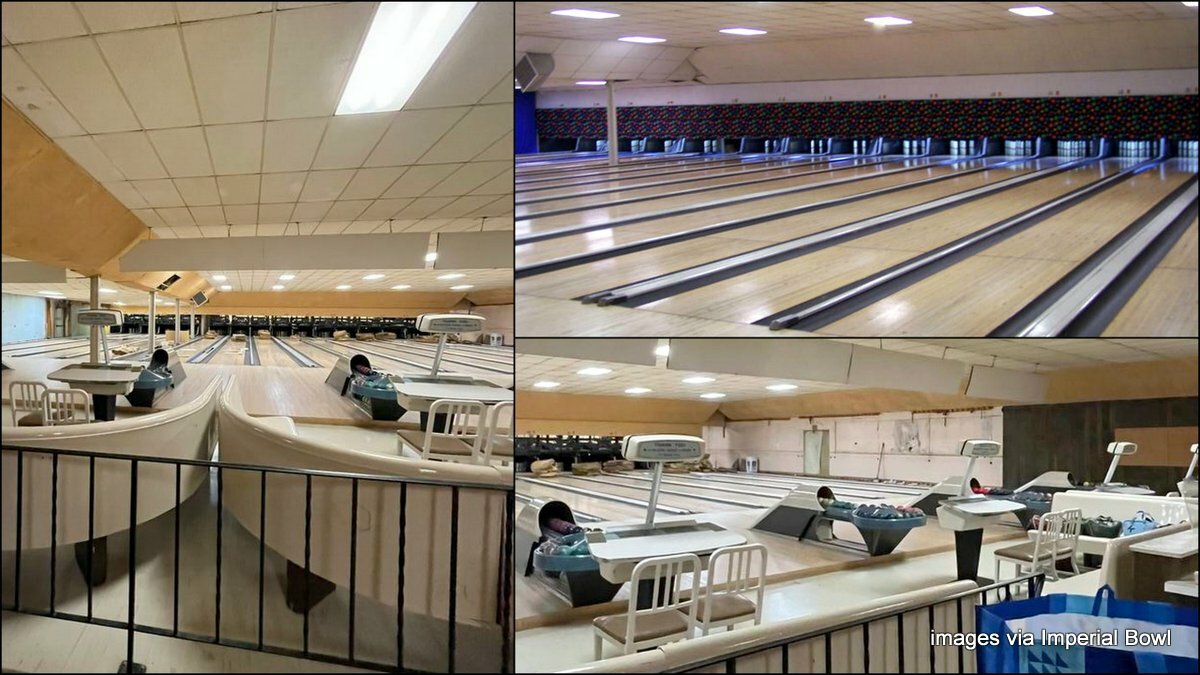
Images of Imperial Bowl from its website. The Matheses have gutted the building to put in new lanes and contemporary equipment for tenpin bowling.
Robert Ireland, in this image from Imperial Bowl, retired and closed the candlepin alley in November after running the lanes for 45 years.
PITTSFIELD, Mass. — When one door closes another one opens as the saying goes, and this is the case for Pittsfield's last candlepin bowling alley, Imperial Bowl.
Robert Ireland took over what was Imperial Lanes on Lyman Street around 1970 after returning home from Vietnam.
Ireland and his business partner, Zigmund Wojtkowski, were always serious about candlepin bowling — a New England version using smaller balls and narrow pins — and wanted to further the sport by getting involved in associations. Ireland would become president of the Western New England Candlepin Association and pro tour director.
In 1987, he continued on the venture alone and moved Imperial Bowl to 555 Dalton Ave., where it stayed for 35 years until closing its doors last year when he announced his retirement. It would end the Imperial name after 62 years.
During the 45 years that Ireland ran it, the business laid a foundation of community and family.
Ireland's wife, Rosemary, and her father helped run the operation whenever Ireland was unavailable. In addition to covering for her husband, Rosemary on occasion ran the lounge and cooked.
Its end was a bittersweet decision but they are looking forward to being able to spend more time together and be with their family.
"The thing I take from the whole thing is I met a lot of nice people in the bowling industry and made a lot of friends," Ireland said. "And I appreciate all the people that were with us all those years that patronized our beloved center. They were all good friends."
Although the doors have closed to candlepin bowling, the alley was sold in November to K&M Bowling, which will bring tenpin bowling to 555 Dalton Ave.
K&M Bowling was founded by Pittsfielders Kari and Mark Mathes, and they've since partnered with Mark's brother, Joey Mathes, and father, George Mathes.
"We threw out a hope and a thought, and it just snowballed from there. It came out that there was no way we could do it, just the two of us and me and my brother for years have always talked about going into business together," Mark Mathes said.
"So we talked, and we grabbed my father into it. We just couldn't do it all on our own, there's no way we could and so as a group, we were able to do it."
Although this is their first business, each of them have worked in leadership positions and have a variety of skills ranging from business, maintenance, management, and human services that they say will help them be as successful as possible.
Like Ireland, they have a passion for bowling — just the tenpin version. It's always been part of their families' lives, the Mathes said, and each of them have fond memories of participating in leagues.
"I mean you take one family business, and we're incorporating a new family business. So it's just continuing, family and small-business owning and things of that nature, just making it our family and what bowling means for our family. And to give back to our community, too," Kari Mathes said.
The group grew up visiting Ken's Bowl just down the street on a weekly basis and during that time they saw how a space like that brought people together, Joey said.
"And that's the emphasis of community, they come here, they enjoy time. It's a great stress relief and people need to get out and do things," he said.
The family is quite literally building their passion as they have been working for the past three months renovating the space and sharing their journey on social media.
As renovations were underway, they found lost objects such as roller skates, wheels, roller skate brakes from the building's time as a roller rink, and pins and candlepin balls demonstrating the journey the building has gone through since being built in 1952.
Many residents have expressed their enthusiasm on the business's Facebook page, proclaiming how they are excited to see the renovations.
People need things to do around here so creating a space like this provides them a space to be entertained, socialize, and meet new people, Mark and Kari said.
The alley will be equipped with state-of-the-art bowling technology including cosmic bowling (special illumination and music), automatic scoring systems, and more.
"We have state-of-the-art technology between the lanes, the pin centers, everything that we're bringing in is current, it's new and it's really the way forward when it comes to tenpin bowling," Kari said.
Not only are they sharing their passion with the community, they are filling a need, she said.
There are more than 550 adult bowlers sanctioned — members of leagues — through Ken's Bowl, which never reopened from the pandemic and was demolished in 2021, not including the children who were sanctioned.
After Ken's closure, local bowlers had drive a half-hour to an hour to participate in the sport that they love, the couple said.
The only other tenpin bowling alleys left in the Berkshires are Greylock Bowl & Golf in North Adams and Cove Bowling & Entertainment in Great Barrington. With the closure of Imperial and the 104-year-old Candle Lanes on North Street in 2018, only Valley Park Lanes in North Adams still offers candlepin.
The Mathes team has also been working to hold on to the historical components of the building while modernizing it.
"I know a lot of people that have come here even when it wasn't Imperial. I want them to walk in and go, 'Wow.' That's the impression that I would like when somebody walks in because that's what we hope to bring," Joey said.
"Like Kari said, we're bringing in all new equipment, all new state of the art. So it's getting a facelift. The building itself is still here; we're just giving it new character."
Residents are not the only ones expressing their excitement for the opening of this new family business — other local businesses have reached out with advice.
"There's been a lot of local small businesses that have definitely reached out and definitely helped and given a lot of advice," Mark said. "There have been multiple, including today. We run into a snag, they help us so it's the little things that help us progress faster."
If you would like to contribute information on this article, contact us at info@iberkshires.com.
Your Comments
iBerkshires.com welcomes critical, respectful dialogue. Name-calling, personal attacks, libel, slander or foul language is not allowed. All comments are reviewed before posting and will be deleted or edited as necessary.
No Comments
Dalton Planners Hold Public Hearing on Tiny Homes Bylaw
By Breanna SteeleiBerkshires Staff
DALTON, Mass. — The Planning Board held a public hearing last week on a bylaw for mobile accessory dwelling units (ADU) that will be brought before a special town meeting.
For nearly two years, Amy Turnbull has been trying to amend the current ADU bylaws to allow mobile tiny homes.
A movable tiny home is defined as a unit under 400 square feet that meets all of someone's daily needs, including sanitation, cooking, and other facilities, and which is also mobile. Most homes considered "tiny" are built on a trailer so they can be towed.
Her proposal defines a movable tiny house as a "residential property with an existing primary house, intended for year-round living," and outlines eight conditions for approval.
Among these conditions: the unit must adhere to accessory dwelling unit regulations, undergo site plan review, be licensed and registered with the state Registry of Motor Vehicles, have approved energy, water, and wastewater systems, and comply with American National Standards Institute 119.5 and National Fire Protection Association 1192 safety requirements.
Additionally, the unit must be certified for ANSI or NFPA compliance by a manufacturer or third-party inspector, including adherence to Appendix Q and the International Residential Code's structural guidelines and energy efficiency standards. The tiny house cannot move under its own power, and its undercarriage, wheels, axles, tongue, and hitch must be concealed from view. Wheels and leveling or support jacks are required to rest on a level gravel or paved surface.
Turnbull has gotten enough signatures for her petition to amend the current bylaws to add her definition of the mobile ADUs. Last Wednesday, the board held a public hearing on the petitions, which will be voted on at a special meeting.
Turnbull says she has two reasons for wanting to add this to the town's bylaws: aging in place and affordable housing.
"We need a variety of housing types in Dalton, and that we also need to address the idea that you know nearly 30 percent of our population by 2035 is going to be over 65 years old, and it's problematic because ... there's not enough choice for these people to to age in place,"she said. "What movable tiny houses does, is it provides a less restrictive ADU. It's much cheaper to place, and it's easier to place, less time consuming. And what it offers to people is it offers people who are owners a place for their children to come and live, or a caregiver to come and live, or for the people who own their own house to come and live while they rent out their maybe their three bedroom home to a new family who wants to attend to Craneville simultaneously."
She said people need to move away from calling and treating the tiny homes as though they are trailers, as one former Planning Board member has voiced opinions on.
"That is an opinion, and I think we need to get over that, because I want to say that these are foundation homes, and that the chassis is a foundation, and it's a stick-built home on a chassis, and in very many ways it's like a modular house. I think we will not be surprised in the next 10 years if we see the market turn around and start to make smaller, tiny modular homes, but that is not the case right now, and we have a dire need for affordable housing," she said.
At a former Fire District meeting the Water Department drafted regulations for water hook-ups for these types of homes. The superintendent sent a letter to the Planning Board to be read at the meeting stating it will not be a hindrance for sewer system connection.
"The Department of Public Works does not feel that mobile ADUs will be an issue with the town sewer system. The homeowners will be responsible for any issues outside of the sewer main and connect and responsible for connecting in, so that would address any permits, fees, or anything like that would be added to that," the letter states.
"The Water Department, as we've stated previous, and as you stated, the water department has come up with their own set of SOPs, standard operating procedures, for hooking up a an adu and a mobile adu, which will then have to meet winterization and all those, but they've laid out a plan for that, that they have, so I'd like to point that out," board Chair Robert Collins said.
One concern was raised that if someone can have a mobile ADU could they also have another tiny home on their property, including the main house. That situation is not likely, said Turnbull, as it would cost a considerable amount of money. Town Manager Eric Anderson also stated that in his former community when they adopted similar laws their first one wasn’t put in until a couple years later and then maybe one a year.
The Nonprofit Center of the Berkshires held its ninth annual nonprofit awards last week honoring the contributions of those who have helped the community in their own way. click for more
Jason Codey struck out 13, walked two and allowed just an infield single as the Generals earned a 7-1 win over Wahconah to claim their third straight regional title. click for more
Gracelyn Wright struck out eight, and Genevieve Lagess went 3-for-5 with four runs batted in as the Hurricanes beat Monson, 17-3, to claim their first Western Mass title in four years. click for more