Pittsfield Educators Push for Stricter Phone Policy
PITTSFIELD, Mass. — Staff in the public schools say phone use is out of control and they want a policy to address it.
Educators cited issues with excessive phone use disrupting education, social and emotional health, and safety during last Wednesday's School Committee meeting. Chair William Cameron agreed that it is an urgent issue and is placing it on the next meeting agenda.
United Educators of Pittsfield President and Herberg Middle School teacher Melissa Campbell said mobile phones are a constant distraction for those who carry them and for those who don't, as their learning is disrupted by others.
"Phone use has increased for students over the past few years. They are constant companions and constant distractions. Pushback from students when they're asked to put them away has increased, many often refusing. This creates a power struggle between teacher and student," she said.
"Our jobs are to foster relationships and provide learning opportunities yet much of our day is devoted to addressing cell phone issues."
Cameron pointed out that, in March, the committee made a recommendation to revisit the policy. In April, the Social Emotional Learning and School Safety subcommittee discussed gathering input on responsible cell phone usage from principals, teachers, and students for a policy review.
"I understand that this can be a slow process and although I would like to have a discussion of this tonight, it's not on the agenda and it's an important issue so I would like to put this, that is the status of the review and possible recommendations, on the agenda for the next meeting," he said.
"I've been advised against doing that because it accelerates the process and we may not have the best information but I'm very reluctant to go into the summer when the school committee only has a couple of meetings scheduled when an issue of this importance is out there."
Pittsfield Public Schools policy requires devices to be turned off and not used during the instructional day or a school-sponsored activity or program. Violations can result in disciplinary action that includes the confiscation and denial of possession for a varied amount of school days.
As an experienced teacher, Campbell said she prides herself in the ability to engage students in learning and that she struggles with this. She asked the committee to imagine how less experienced teachers are handling these situations.
She outlined some of the cell phone disruptions that have occurred over the past year, which include students playing games, watching videos, sharing content with peers, listening to music on earbuds, texting, going on social media, and taking pictures and videos of fellow students and teachers.
"Often peer texting and/or social media apps like Snapchat lead to peer conflict during the day. Students are fighting with their friends or their girlfriends and boyfriends and they come into the room clearly distressed and not in a mental space to learn," Campbell said.
"Much of that behavior then leads to verbal or physical altercations in hallways and public spaces. Some kids are so disengaged from learning they present as having a learning disability and are often recommended for testing and services. Our intervention classes contain too many work-avoidant students who spend their days on their phones, thus stealing resources from students who truly need the intervention."
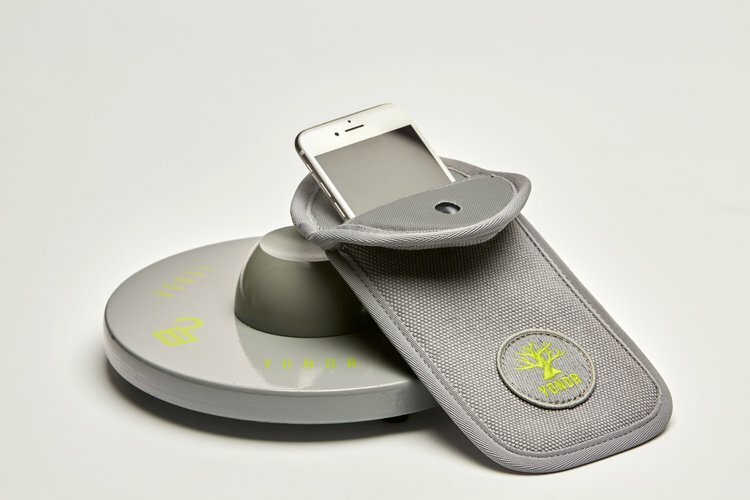
She said U.S. Surgeon General Vivek Murthy and the Department of Elementary and Secondary Education recognize that cell phone use in schools is negatively impacting students academically, socially, and emotionally and suggested a policy that highly regulates phones such as Yondr boxes.
Yondr is a company that makes products that limit phone usage.
Campbell also argued that school safety is worse with cell phones.
"Bullying and mean behavior causes undue stress throughout the school day. Constant screen time is impacting attention to learning and social media is a very toxic space for our students," she said.
"If there is an imminent threat at schools, there are protocols in place to deal with that threat in the safest way possible. The worst thing to do is to have 500-plus students all getting on their cell phones, making undue noise in the middle of a crisis. All of our schools are negatively impacted, especially our schools in turnaround. We will never see significant growth in academic achievement and true engagement in our students until we address this issue."
Taconic High School social-emotional learning coach John Moreno leans toward the belief that phone usage impacts student education and SEL negatively.
Over the previous couple of days, he surveyed more than 20 peers and colleagues and found that most do not use phones for assignments, about half said they do influence education and SEL negatively.
"In their own words, they report it is incredibly distracting. Their entire social-emotional well-being is tied up with this device, there is little room for anything else. Others say too many cannot seem to self-regulate, put it away, and are resistant to do the favor of working on schoolwork when in this classroom. A very big reason for a failure of the class," Moreno reported.
"Others say many really struggle to put them away. Their use is a distraction from the lessons and learning tasks, generates in-the-moment social drama, and upsets them. Sometimes students use them to set up bathroom meetups that increase the time out of class and occasion to lead to unsafe situations."
He added that one teacher cited Northampton High School's use of Yondr products as having had a positive effect on student learning.
"It's clear unregulated cell phone usage impacts student learning and their social well-being," he said.
"But if trust and respect are established in the classroom if we employ phones creatively meaningfully and sparingly to the curriculum, they can be used as an asset to both student attention, engagement, and a resource for research."
Moreno said students' use of social media should be monitored and limited and that there should be a dialogue about underlining issues, breaks from social media, and the understanding that it is not an accurate reflection of people's lives.
"We've seen when we ban, when we prohibit in our country, instead of understanding that, we tend to make those things more popular and give rise to something worse," he said.
"There was an attempt by a local private school to address this issue by replacing smartphones with flip phones. The idea was that they didn't sever the ability to be connected with family during emergencies but removed the temptation inherent in smartphones. The results seem to be mixed. In the class, phone usage dropped precipitously, but student usage of their smartphones simply became more clandestine."
District Latin teacher John Slote was there when Pittsfield High School adopted its first cell phone policy over 10 years ago.
"At that time, I voted to let students bring them in and we would monitor their usage," he said. "I regret that vote deeply. I did not see what was coming. Ten years ago is like 1,000 years and technology. I've watched the effects of phones on students."
He pointed to the amount of energy that teachers are spending in classrooms enforcing their own cell phone rules.
"With a cell phone, with a smartphone, and a connection to the internet, a student can get an answer to virtually any question that you could possibly ask that student," he said.
"You can use apps to translate foreign languages, you can use apps to solve any kind of math problem by taking a picture of it. Students are taking pictures of each other's work and passing it around so that not everyone has to do the work."
He said it's not hard to find evidence of teenagers suffering a "crisis of anxiety and depression" right now and though cell phones are not the cause of it, it is a consequence of being online all day.
"While you're in a building with 800 other kids it's kind of akin to opening the doors and letting everybody in the world run through your hallways. Anybody can text anybody at any given moment. They can like a post that you've made. They can say something nasty to you,"
"And I have watched this. About two weeks ago I saw a kid show a girl a post. She took one look at it and I just saw her meltdown. She got up and said, 'I can't be here anymore' and walked out. Teenagers are wired to embrace the world and that's what's great about them. Unfortunately, by opening the doors to the internet, we are just letting the world go crashing over them and they don't have the tools to filter this stuff out."
The educator believes it is the district's job to protect its kids and have them put their phones away for eight hours.
Reid Middle School teacher Joseph Maffuccio reported that there are 900 schools across the country that have chosen to lock away phones and the results are desirable.
"Nobody knows what we really deal with on a daily basis except for those of us that are inside those walls and children are asked to put them away they outright refuse," he said
"There are phones out, they're watching movies, they've got earbuds in, you ask them to take the earbuds out, they put them right back in. So these are the challenges that we're faced with."
Being in the school system for the last 18 years, Maffuccio has seen a decline. He also recommended phone-locking devices.
"So what we need to do here is we need to find a solution," he said.
"I'm recommending for that to make that investment for those pouches. The pouches are in the morning kids would put their phone in if it gets locked because I know that we have parents that are concerned about what if. My spin on that: we have landlines at every one of our schools. If parents want to contact their student call the school. We need to push that if parents don't like it, frankly I don't care. We are the experts in that building that teach those children. We know what they need and we know how to do it."
Fellow Reid teacher Tammy Russell thinks that a stricter cell phone policy would be worth it.
"Cell phone usage is not just a problem, it is a social epidemic. Studies have proven that excessive usage is rewiring brains and causing severe detrimental effects with our developing youth," she said.
"These devices have become an unhealthy substitute for real-life interactions. Students' abilities to build positive relationships with their teachers and peers have become heavily compromised. Just mere eye contact has become an issue as so many scroll excessively in search of the next popular TikTok video that got a million likes."
Russell said the school instructs educators not to take phones away and they feel defeated with the amount of poor grades being given out on a daily basis.
"We are failing our kids as well as our educators. Cell phone usage as other research shows is comparable to that of a drug addiction, creating compulsive behaviors due to information overload thus leading to lower productivity or no productivity at all. This is a real setup for failure for college and career readiness," she said.
"Many of our students are unable to sustain or even begin an assignment because they retreat to the feel-good hormone that the usage creates of these phones but there's a huge letdown as students increasingly become anxious, depressed, hyperactive impulsive and the list goes on and on. When challenges come their way, they are void of any grid or resilience. The phones just merely win at the expense of our student's education and the endless hours our educators put in to build and implement rigorous and engaging lessons."
Vice Chair Daniel Elias said there is much data out there from many different districts and that the committee needs to draw upon their successes and failures to a point where they can adequately try to start the conversation.
Tags: phone,