Second Street Second Chances Triples its Outreach Goal

By Sabrina DammsiBerkshires Staff
Print Story | Email Story
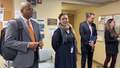
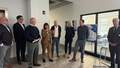
PITTSFIELD, Mass. — Since launching a little over a year ago the nonprofit Second Street Second Chances has tripled its original goal.  
 
When the organization first started out its goal was to help 150 people in its first year but as of date it has seen more than 500 people, Executive Director Jason Cuyler said. 
 
Second Street Second Chances works with current and formerly incarcerated individuals to provide the support that they need for a successful reintegration into the community. 
 
It was established when a community coalition started looking into the challenges people go through when being reintegrated into their communities, board President Mark Gold said.
 
From there, the organization put together key partners from health care, cultural centers, legal aid, and other community organizations to aid in providing formerly incarcerated individuals access to resources, Gold said. 
 
"One of the things that we wanted to do here at Second Street is, we wanted to collaborate as much as possible with all the wonderful local community agencies that we have here in Berkshire County, " Cuyler said. 
 
"And we really wanted to dig down deep and find out how we can successfully help people transition back into the community.” 
 
The organization starts working with the individuals while they are incarcerated to determine what resources they need for a successful reentry and will continue working with them when they are released, Gold said.  
 
The non-profit aims to provide formerly incarcerated individuals with job readiness skills and access to job opportunities while treating them with respect and encouragement with the goal to make them productive and contributing members of their communities.
 
On this journey the nonprofit also works towards educating the community so they can embrace these individuals when they are reintegrated. 
 
Recent community educational programming includes the "Insight Out” exhibit at the Berkshire Museum, and the play "Release” at Berkshire Community College
 
It collaborates with Berkshire County organizations to provide or provide access to resources such as medical, mental health, and substance use disorder services, financial and literacy resources, transportation, employment, legal services, and many more. 
 
The establishment of the organization was also spearheaded by Berkshire Community College in partnership with the Berkshire County House of Correction, and the Berkshire County Sheriff's Office.  
 
Over the last 12 years the city has been trying to establish a program like this but despite getting legislators to advocate for it, the initiative did not pan out, Sheriff Thomas Bowler said. 
 
When Gold approached the sheriff's office showing that he already had a vision and understood what was going on in the community it was clear that the best path would be through the non-profit route, he said. 
 
When a person is incarcerated they are entered into a structured environment that they do not have upon reentering into the community. 
 
"A lot of these individuals lack structure, guidance, direction, resources, access to resources, and they miss out on a large number of opportunities,” Bowler said. 
 
It is vital that the community continues to provide those services and access to resources so they can overcome obstacles such as mental health issues, substance use disorders, or lack of education and job opportunities, he said.
 
According to its website, since launching it has received grants from the state and city amounting to $1,015,300. It also receives support from a variety of community members and organizations. 
 
More information on the nonprofit here
If you would like to contribute information on this article, contact us at info@iberkshires.com.

BRTA Looks to Another Year of Fare Free

By Breanna SteeleiBerkshires Staff

PITTSFIELD, Mass. — The BRTA is expecting another year of fare free rides.

Berkshire Regional Transit Authority Administrator Kathleen Lambert told the advisory board recently that she expects to receive $1.3 million in state funding to remain fare free. She said RTAs may be given up to $40 million this year statewide, which is $5 million up from last year.

While the state budget is not formally approved yet, the effect will take place on July 1.

The news came at the same time the board approved the BRTA's budget of $13.6 million, which is an increase of 11 percent since last fiscal year.

Some of the increases were in the fixed route area which jumped from $9 million to $12 million. Lambert said this is due to the contractual agreement between the union where they have a five percent raise for all of the drivers and other union members, as well as a seven percent raise for paratransit fleet operators.

Lambert said much of the costs raised were fuel costs because of the ongoing war in Iran. The authority uses about 8,000 gallons of fuel a month and has planned for $5.75 per gallon.

The customer service desk, which currently staffs two employees, will be shut down, she said. The two employees were given notice months in advance and one showed interest in becoming a bus driver and will plan to interview for that. Lambert said two new drivers have started and that the new transit company Keolis, which is taking over for Transdev, will continue to hold recruiting events. The new manager is Mark Moujabber, taking over for Bobby Quintos. 

Lambert told the board she believed there are discrepancies in ridership data. Deputy Administrator Benjamin Hansen, who was in operations before his current role, said the authority has been seeing low ridership because of route cancellations, however, this past month, the numbers did not make sense as demand has stayed the same but ridership seemed exponentially low.

To get the figures, bus drivers must manually push a button on the farebox to record passengers, wheelchairs, and bikes, which might have errors. There are automatic passenger counters (APCs) installed, but they are not certified, so are only used as a rough comparison tool as they are not accurate.

Board member Stuart Lawrence asked if there has been any investigation on if this might be deliberate. Hansen said there is not as he does not know how they could watch for that to happen.

Lambert said she has been working with professor Paula Consolini at Williams College, who will have a group of samplers who will ride the bus and gather a week's worth of data.

In the last meeting, the board spoke about anonymous emails from drivers, and a letter iBerkshires received spoke of unhappy drivers who were considering quitting because of decisions being made without "input from frontline staff," frustration and falling morale, and the removal of the former general manager shortly after Lambert came in.  

Multiple employees had also signed on to a vote of no confidence letter in the BRTA administration spearheaded by Raymond Killeen who is a bus driver and represents Cheshire on the advisory board. Killeen said losing Quintos was hard, stating he was an excellent general manager and not having him there led to hardships on accomplishing many things.

"Once the removal was there, it was difficult to accomplish certain things, because we had lost the general manager. So, the letter was an attempt to get things moving a little bit quicker, so we could provide a better service for the residents of Berkshire County. I don't know if it accomplished that. We were able to do some things, though, but the concern amongst rank and file here is that we're not providing the best service we possibly could, and we're hoping that when the new management team comes in, that can be accomplished," Killeen said.

Killeen said he was unhappy with the progress to a revised driver schedule. The day after the meeting, Lambert and the team had a meeting to discuss and negotiate run schedules, Lambert said it was a very good and productive meeting.

View Full Story

More Pittsfield Stories