Dalton Board Approves Sales Agreement for Bardin Property
DALTON, Mass. — After nine years of navigating regulations that complicated the sale of the so-called Bardin property, the town has taken the last step in being rid of the land.
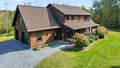
The Select Board on Monday signed the purchase-and-sales agreement for the property, awarding it to Charlotte Lind Crane for the amount of $150,000. Of that amount, $25,000 has already been paid as a deposit.
The state Department of Agricultural Resources now has 60 days to enact its right of first refusal.
The 148 acres of land made up of three parcels came into the town's possession in 2016 in a taking for delinquent taxes. The town had first placed a lien against the property in 2009.
However, there's a fourth parcel still owned by the Bardin estate in Windsor and an agricultural preservation restriction that covers all four contiguous pieces of the farm that would seem to prevent Dalton from selling its portion.
This issue was apparently not brought up in Land Court when the town took the land for back taxes.
Town meeting voted in 2022 in favor of selling the land rather than leasing it. The Select Board first announced the availability of the land during its meeting on June 27 the same year.
The MDAR paid the late James Edgar Bardin $260,000 in 1991 to place an APR on his farm.
According to the agreement, the APR cannot be subdivided and can only be sold when unified but the APR became subdivided when the town took possession of three lots located in Dalton, separating them from the four acres in Windsor.
The preservation program was the first of its kind in the nation when it was enacted in 1977 to
encourage farmers to maintain their land for agricultural use by paying them the difference between the fair market value and the fair market agricultural land value.
In exchange for this payment, there is a "permanent deed restriction which prevents any use of the property that will have a negative impact on its agricultural use," according to MDAR's guide.
"Since its enactment nearly 1,000 farms totaling more than 73,000 acres have been protected allowing farm owners to access the equity in their land while still maintaining ownership of it," MDAR spokesperson Phu Mai said during an interview with iBerkshires.
Depending on the situation, a farm may be made up of multiple APRs or a single APR will be placed on multiple parcels.
MDAR does not want a viable farm to slip up into a bunch of small pieces without approval. So if it finds that several different parcels are viable and they make up one viable property, then they are protected under one restriction.
If there are separate APRs for multiple parcels, then they could all be sold separately and there will no longer be a viable farm.
Mai said the only way to release the APR is if the owner is able to demonstrate that the land is not suitable for agriculture or horticulture.
Tags: land sales,