Pittsfield Community Development Board Continues to Study Battery Storage Proposal
PITTSFIELD, Mass.— The Community Development Board last Tuesday got a deeper look at the city's proposal for a battery energy storage zoning amendment.
This would allow Pittsfield to embrace greener energy sources while protecting the interests of residents.
"They are basically just an energy system that uses batteries to store and distribute energy in the form of electricity," City Planner Jacinta Williams explained.
"We are kind of familiar with them already. We have seen them and have probably encountered in solar power installations, smart homes, and even our electric vehicles if we have them but at the most basic level battery energy storage systems may consist of one or more batteries that, again, store electrical energy for use at a later time."
The panel got a first look at a proposed zoning amendment and overlay district last month and made several suggestions for the final document. It plans to take a vote early next month.
There are various types of battery energy storage system (BESS) batteries used including lithium-ion, lithium-silicon, lead-acid batteries, flow batteries, and flywheels.
Williams said the most common type is the lithium-ion batteries where lithium ions flow to the anode that is typically made of a carbon called graphite.
There are three categories being proposed for the amendment to fit different needs:
Residential battery energy storage systems supplement rooftop solar and other renewable systems and would be allowed as an accessory use in all districts. This scale of this system has an aggregate energy capacity less than or equal to 30 kWh and consists of a single energy storage system if in a room or enclosed area.
Small-scale battery energy storage systems have an aggregate energy capacity greater than 30kWh to 10 MWh and would be permitted as a principal or accessory use in certain districts through the granting of a special permit.
Commercial and industrial energy storage systems have an aggregate energy capacity greater than 10MWh and would be permitted as a principal or accessory use only in the overlay district through a special permit.
There was some confusion at the last meeting about why the city may need an overlay district and Williams explained that they are used to fill gaps where traditional zoning does not address a specific or complicated condition and it is used over the top of two or more zoning districts.
"We're just doing that so we can streamline what the regulations are and so that we don't have to go through and amend multiple districts," she said. "And we just want to maintain the consistency throughout."
It was decided that the delineation for the overlay district could be a 10th of a mile from the boundary of the industrial zone, explaining that it would make life a little bit easier for developers and the community.
She explained that a client called her department wanting to put an energy storage system near the Berkshire County House of Corrections but they didn't want to limit it to that area, which is purely industrial. A 10th of a mile out from the boundary is residentially zoned and with an overlay district, they would not have to go through a zoning change for the project.
Williams explained that the district would give a little more of a buffer area but not allow the systems to spill into purely residential zones.
She showed a map of the city that includes residential zones, purely residential zones, and the overlay district.
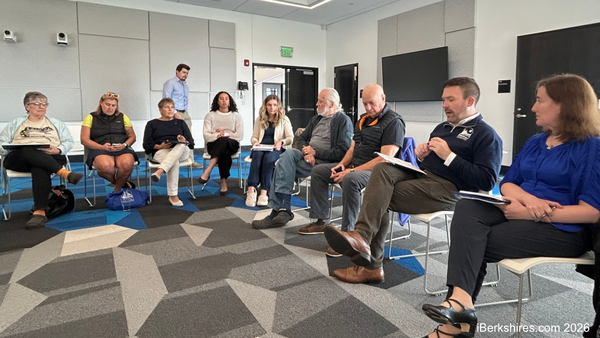
Members of the board were glad for the deeper explanation of the proposal, appreciating the visuals and explanations of the systems' capacities.
Tags: overlay districts, solar,