Pittsfield Council Tables FY24 Tax Rate Asks
PITTSFIELD, Mass. — The City Council has delayed a vote on the proposed fiscal year 2024 split tax rate.
Councilors on Tuesday voted to table the administration's ask for a commercial shift of 1.75 that would result in a residential rate of $18.45 per $1,000 of valuation and a commercial rate of $39.61 per $1,000. Discussion will resume at its Dec. 12 meeting.
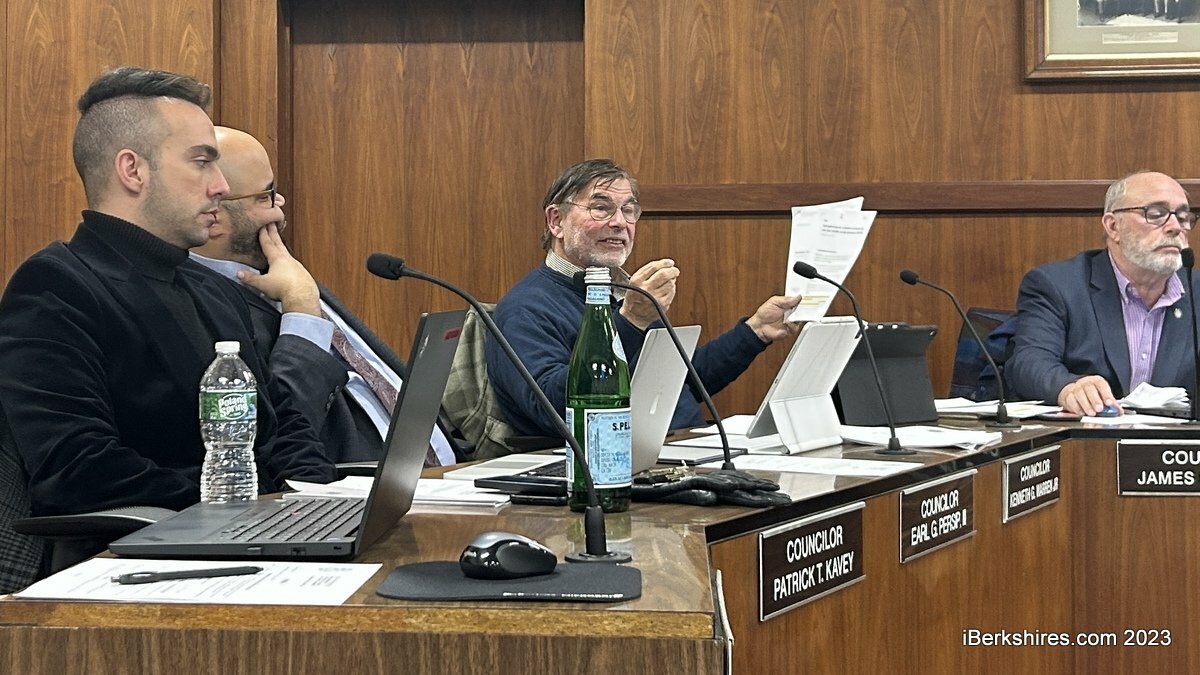
Ward 1 Councilor Kenneth Warren, Ward 2 Councilor Charles Kronick and at-Large Councilor Karen Kalinowsky spoke against the proposal that would increase the average homeowner's bill by 8.75 percent.
Kalinowsky said the city has a spending problem and people cannot afford it — especially seniors.
"You are driving people out of Pittsfield," she said.
Kronick, who has a history of motioning to use free cash to reduce the burden on taxpayers, would like to know how much certified free cash the city has before making a decision on the rate. He said the tax levy of $109.1 million is a direct result of the budget that was passed in June, which he unsuccessfully proposed reductions for and then opposed.
"You can't run away from the numbers," he said. "They're gonna chase you down."
Warren asked that the administration be more creative with its sources for tax relief. Last year, he argued that American Rescue Plan Act funds can be used to pay for projects that are in the budget so that the money doesn't have to be raised by property taxes.
"I think we need to do something for our homeowners," he said.
"When I ran two years ago, I made that as a priority and I've got to keep my promise and I probably only can keep it for this term because we're running out of excess funds that we have to be creative with."
Lifetime resident Paul Gregory said that rather than being "Pittsfield proud," he is struggling to survive Pittsfield and cited issues that he had with his property being over-assessed by $78,000.
The proposed rates are based on a residential factor of 0.8151 and a commercial shift of 1.75. The city will utilize a levy of about $109.1 million.
The residential rate for FY23 was $18.32 per $1,000 of valuation and the commercial, industrial, and personal property rate was $39.21. If the council adopts the FY24 shift, there would be a 13 cent, or 0.7 percent, increase for residential and a 40 cent, or one percent, increase for commercial, industrial, and personal property.
An average home valued at nearly $267,914 would pay an estimated $4,943 in property taxes, representing a $397.82 increase from the previous year when the average home value was $248,100. This would amount to about $33 additional dollars a month.
Commercial properties would see a less dramatic increase of about $145, as the assessed median value has only increased by $1,550 from FY23.
The assessed residential value for FY24 is $3,868,977,337, an 8 percent increase from the previous year, and the city's total taxable value is $4,822,885,672, a 7.5 percent increase from the previous year.
The FY24 tax levy of $109,166,941 is a 7.93 percent and more than $8 million increase from FY23.
Between receipts and real and personal property taxes, the city expects to raise almost $230 million in FY24.
Mayor Linda Tyer said there are a lot of factors that go into calculating the tax rate, which includes property values that are not determined by the city and have to be certified by the state Department of Revenue.
Tags: fiscal 2024, property taxes, tax classification,