Williamstown Housing Trust Seeks to Resolve Habitat Project Issue
WILLIAMSTOWN, Mass. — The board of the town's Affordable Housing Trust on Wednesday agreed in principle to a plan to address an issue that has been a sticking point for a proposed subdivision on Summer Street.
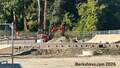
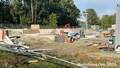
The AHT has been working with Northern Berkshire Habitat for Humanity to develop a 1.75-acre parcel with four houses and an access road.
Part of the plan Habitat developed with civil engineer Guntlow and Associates is a rain garden that would be part of the subdivision's stormwater management plan.
Among the issues raised by critics of the subdivision is the question of who ultimately would be responsible for maintaining the rain garden. It is one of the items mentioned in an abutter's appeal to the Massachusetts Department of Environmental Protection, which Summer Street resident Jeffrey Parkman has asked to review an order of conditions issued by the town's Conservation Commission.
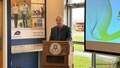
On Wednesday, Affordable Housing Trust Chair Thomas Sheldon laid out for his colleagues a proposed memorandum of understanding between the town and Northern Berkshire Habitat for Humanity.
Under the terms of the MOU, the non-profit would maintain the rain garden — or detention basin — for three years after it becomes operational. At the end of that three-year period, the town would inspect the basin to make sure it is "in good repair and is functioning as designed," and, if it is, the town would accept the rain garden as part of the right of way associated with the access road and take responsibility for its maintenance going forward.
The MOU stipulates that the town's determination of functionality, "will not be unreasonably withheld."
If the town decides the rain garden does need repair "to provide that the retention basin will function as designed" at the end of the three-year period, Habitat for Humanity would make those repairs, and the Affordable Housing Trust agrees to contribute "up to $1,000" toward that maintenance and repair."
"When the requested maintenance and repairs are finished to the reasonable satisfaction of the Town, it will accept responsibility for the retention basin and will be solely responsible for any future maintenance and repair," the two-page MOU reads in part.
On Wednesday, one of the abutters who has challenged Habitat's proposal to develop the site reminded the trustees why the issue of rain garden maintenance is so important.
"It's been a sore point for everyone because no one has said who's definitely going to take over maintenance," said Kayla Falkowski, whose home at the corner of Summer Street and North Hoosac is located downhill of the town-owned parcel. "The answer has been, 'We're hoping the town will' [take responsibility].
"If it's not maintained, we're flooded out, the Parkmans are flooded out. It will breed mosquitoes, and West Nile virus is running rampant right now in Berkshire County."
The trustees voted 6-0 to authorize Hogeland to finalize and sign the MOU, as long as it stays substantially the same as the version presented on Wednesday evening. One member of the board, Dan Gura, was absent from Wednesday's meeting.
The memorandum of understanding has lines for signatures from the town manager, director of the Department of Public Works, Northern Berkshire Habitat for Humanity's president and Hogeland, the chair of the board of the AHT.
On Wednesday, Hogeland also updated the board on the status of a grant agreement between the trust and Habitat. Under terms of the agreement he is negotiating on behalf of the town board, the trust will give the non-profit $60,000 toward completion of the road once Northern Berkshire Habitat finds a contractor and another $60,000 toward completion of the first house in the subdivision.
Northern Berkshire Habitat's financial model is to fund the building of each house with proceeds from the sale of a house to the first homeowners. Once built, all four houses are planned to be deed restricted and affordable to residents making up to 60 percent of the area median income.
In other business on Wednesday, the trustees voted unanimously to award a $15,000 grant to a new homeowner under the trust's DeMayo Mortgage Assistance Program.
Dawn Lampiasi of Adams Community Bank told the board that the grant will allow the income-qualified homeowner to avoid paying private mortgage insurance on the home, allowing the new resident to avoid about $14,000 in increased payments over the first 10 years of the mortgage.
Tags: affordable housing trust, habitat for humanity, housing,