Pittsfield Schools' New Cell Phone Policy Effective So Far
PITTSFIELD, Mass.— The revised cell phone policy has shown positive results so far for the Pittsfield Public Schools.
"I feel like we have reversed time. My students are engaging with me, engaging with others. I have had no issues with cell phones at all," one teacher reported to the administration.
Matthew Bishop, interim assistant superintendent of instruction, assessment, education, and engagement, shared an update on cell phone infractions with the School Committee last week.
With 13 instruction days left in the month, there have been 156 referrals with a tightened policy that holds students' phones in the main office on a second infraction. There were 989 in September 2023.
He reported that educators have said the new rules are a "definite deterrent" and that it is a clear policy with well-spelled-out consequences.
Herberg has taken it a step further, going to tech-free lunches and reporting a "big difference."
"But again, I caution it's the second week of school," Bishop said.
The policy starts with documentation of the cell phone infraction and by the fourth, the student is assigned Restorative In-School Education (RISE,) and a caregiver must pick up the device.
A tiered cell phone policy was accepted last summer and after more than 6,300 infractions occurred in the subsequent school year, administrators went back to the drawing board.
Over the summer, teachers, families, and committee members helped inform a refined policy that Bishop described as an "intermediary step." It was accepted by the committee last month.
In other news, a committee has been formed to restructure the district's middle schools. The panel met for the first time with Superintendent Joseph Curtis on Monday and while the meetings are not public, he will report progress to the committee and will speak on Pittsfield Community Television and WTBR radio's "Morning Drive."
"We have about roughly half that are parents or guardians, which is fantastic," Curtis said.
Also last month, the committee endorsed an ambitious timeline that could see the city's middle school reconfiguration implemented as soon as the 2025-26 academic year.
The Middle School Restructuring Committee will continue studying possible grade configurations, assess data on student performance, and gather feedback from stakeholder groups before presenting a final recommendation on reconfiguration in January 2025.
If all goes according to plan, the School Committee would make its final decisions on grade spans and the educational models for the, potentially, newly configured schools in February. The administration would work out an implementation plan in March.
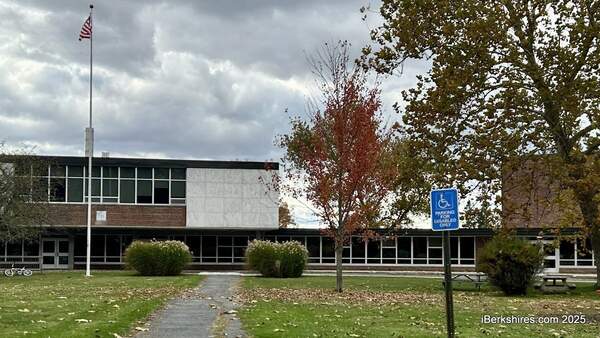
The district has also submitted a statement of interest to the Massachusetts School Building Authority for a combined build on the site of Crosby Elementary School.
The proposal rebuilds Conte Community School and Crosby on the West Street site with shared facilities, as both have outdated campuses, insufficient layouts, and need significant repair. A rough timeline shows a feasibility study in 2026 with design and construction ranging from 2027 to 2028.
Following the SOI, the next step would be a feasibility study to determine the specific needs and parameters of the project, costing about $1.5 million and partially covered by the state. There is a potential for 80 percent reimbursement through the MSBA, who will decide on the project by the end of the year.
Silvio O. Conte Community School, built in 1974, is a 69,500-square-foot open-concept facility that was popular in the 1960s and 1970s but the quad classroom layout poses educational and security risks. John C. Crosby Elementary School, built in 1962, is about 69,800 square feet and was built as a junior high school so several aspects had to be adapted for elementary use.
Tags: phone,