Dalton Puts HVAC on Hold, OKs Conservation Agent
DALTON, Mass. — Voters approved all but one of the four articles on the warrant at the special town meeting that was held on Wednesday at Nessacus Regional Middle School.
More than 40 registered voters attended the meeting, which lasted half an hour, to vote on decreasing fiscal year debt exclusion, amending the cannabis bylaws, and transferring funds for a conservation agent and a heating, air conditioning, and ventilation system at Town Hall.
An article that many thought would be a highly discussed article turned out not to be the case.
Voters approved taking no action on Article 2, which would have transferred $350,000 from capital stabilization for the HVAC system in the police station and main floor of town hall.
The decision was made after the Select Board recommended voters take no action on this article.
The reason was explained during a Select Board meeting an hour prior to the special town meeting.
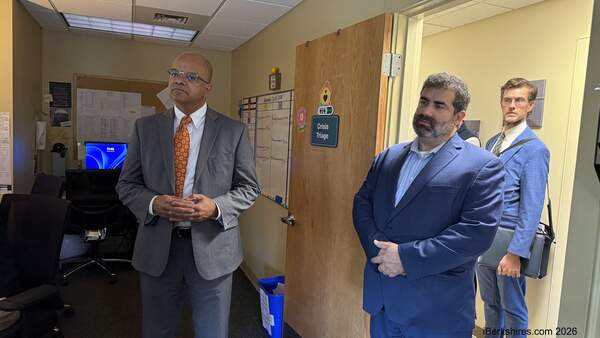
During that meeting, Town Manager Thomas Hutcheson recommended that they postpone the vote on the HVAC system because of a recent development in the preliminary cost estimate which was not available during last Wednesday's Finance Committee meeting.
Hutcheson said he received an updated preliminary estimate of about $858,000 for both the police station, in the basement of Town Hall, and the main floor.
The cost to complete the HVAC system project would use up all the town's stabilization.
If the town were to just install a system in the basement it would cost about $475,000 which would take up a large chunk of the capital stabilization. This is not recommended and going out to bond for the project is a better process, Hutcheson said.
During the board’s meeting, members recommended that they wait until they have a total cost of addressing all the issues at town hall, including its plumbing, HVAC, and possibility making it Americans with Disabilities Act compliant.
The topic that garnered the most attention was transferring funds for a conservation agent. Voters approved raising and appropriating $15,000 to hire a conservation agent. This will be a contracted, hourly position, not a salaried town employee.
The Conservation Commission's chair stepped down, and nobody has stepped up to take over because of the extensive work it entails.
The job of the commission is to enforcing the state's Wetlands Protection Act and Rivers Protection Act and it has become increasingly technical and requires specialized expertise, Select Board Chair Robert Bishop said.
This includes mitigating floods, reducing pollution and storm damage, and protect wildlife and various wetland resources.
The conservation agent can do a lot of legwork for the chair and commission and make recommendations. The law is ever changing and there is a lot of information that has to be kept up on, Bishop said.
The Conservation Commission receives very little in funding. There is a small amount for expenses, and no funds for staff, Hutcheson said.
He also clarified some residents' confusion because of the unclear language in the conservation agent article, due to its reference to Article 4 from the annual town meeting, which is always the operating budget.
Voters approved Article 4 after some clarification on the language and intent. The article amends the town's licensing bylaws to comply with new regulations set by the Cannabis Control Commission to make it easier for people harmed by marijuana prohibition and enforcement to enter the industry.
The bylaw change allows only social equity applicants to get licenses to sell cannabis in town for the next three years.
Hutcheson explained what has been said at several other meetings, that decision should not be a big deal to the town because in the last three years there have only been two phone calls asking about the possibility of opening a cannabis business in town, neither of which followed up.
The Cannabis Control Commission established regulations and programs to help legacy market participants enter the industry.
Municipalities have three options, one of which is to adopt the commission's model bylaw.
"One of those options is a very onerous bylaw that the Massachusetts Municipal Association strongly opposed, and another is setting up internal policy guidelines that would do pretty much the same thing as the very onerous bylaw," Hutcheson said.
The option to only accept applicants from the legacy market, is the simplest option, Hutcheson said.
Voters also approved the first article, which will decrease the fiscal year debt exclusion line item by $48,668, with little to no discussion.
Tags: HVAC, special town meeting,