Sweetwood's Owner Bringing Apartment Proposal Back to Williamstown Town Meeting
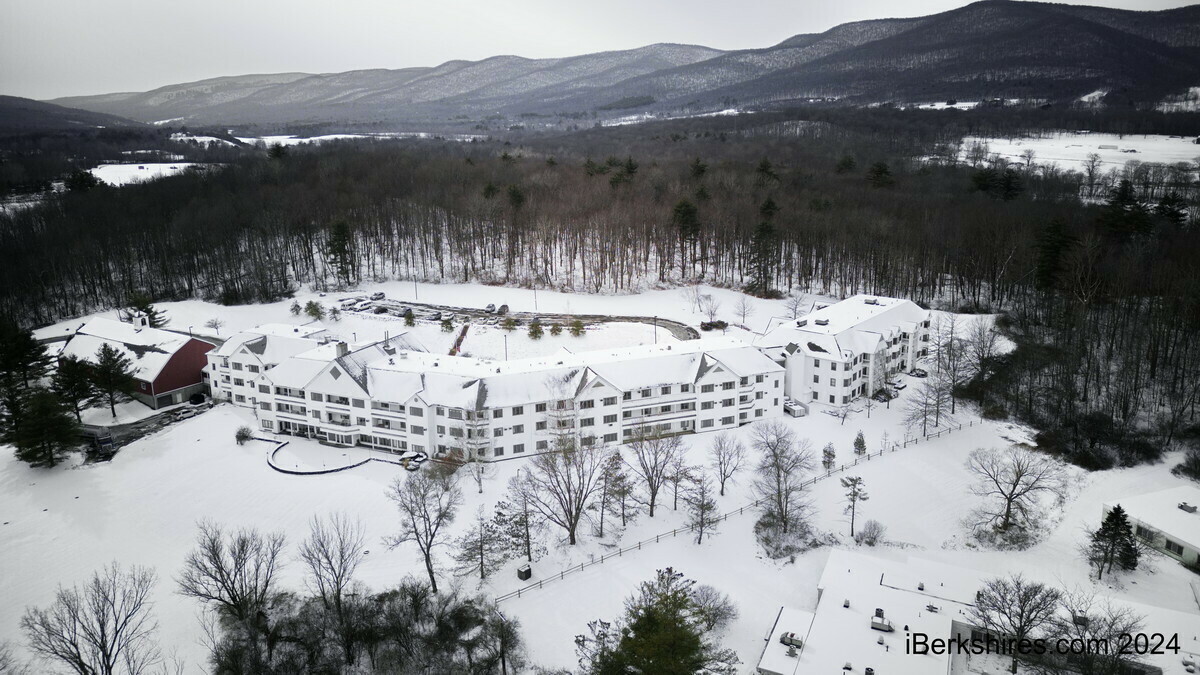
WILLIAMSTOWN, Mass. — The owner of the Sweetwood assisted living community in South Williamstown is proposing a zoning bylaw amendment that would enable the property to transition to regular apartments in the future.
Sweetwood currently operates under a special permit granted more than 40 years ago to allow an assisted living residence in a zoning district where multifamily residences (apartments) are prohibited.
Attorney Jeffrey Grandchamp Tuesday met with the Planning Board to discuss a proposal for the May 2025 annual town meeting that would create a zoning overlay district enabling multifamily residences on the Sweetwood property under a special permit from the Zoning Board of Appeals.
Grandchamp reiterated that CareOne, Sweetwood's owner, is committed to honoring the assisted living contracts it has with current residents, and Sweetwood is still marketed online to potential new residents as an "independent living" community.
As written and presented on Tuesday, the proposed bylaw would create the overlay district and allow "conversion of existing building(s), or parts thereof" to apartments after approval from the ZBA. It essentially was the same proposal that Grandchamp brought to the board in February but pulled from consideration for the 2024 annual town meeting.
"We spent the summer working with the town and waited until this time of year to come back before you," Grandchamp told the board. "The idea was to have a zoning overlay that will allow the conversion of existing buildings but not the construction of new buildings.
"We tried to keep this fairly simple."
As a property owner, CareOne has the right to bring the zoning proposal affecting its property directly to town meeting. The Planning Board and, possibly, the Select Board, would make advisory votes to the meeting but cannot keep the bylaw proposal off the meeting warrant.
The New Jersey-based proprietor of nursing and assisted living facilities has been telling the town for two years that Sweetwood is not viable as an assisted living center at that location. The overlay district proposal was developed after a failed attempt to rezone Sweetwood as part of the nearby Southern Gateway District.
Earlier this year, members of the Planning Board questioned whether the overlay bylaw could be written to make "regular" apartments a secondary use at Sweetwood, ensuring that it would continue to operate primarily as an assisted living facility.
Planning Board member Roger Lawrence asked Grandchamp how the board's concerns were addressed in the new bylaw draft.
Grandchamp replied that he was happy to talk about the reasons why CareOne, doing business as 1611 Cold Spring Road, does not believe Sweetwood is viable, but the property owner's decision to seek a path to full conversion of the property to multifamily housing has not changed.
"This is really a business judgment by 1611 Cold Spring Road – where they see the trend of the business and the life cycle of that building is going," Grandchamp said. "They see it eventually transitioning to multifamily but are committed to maintaining it as assisted living as long as they can."
Grandchamp said that building an assisted living facility at the site made sense when Sweetwood opened because of its then neighbor, the rehabilitation and nursing center known as Sweet Brook. But conditions have changed; the Sweet Brook property is now owned and operated by an alcohol and drug rehabilitation facility.
"If you were to design an assisted living facility today, you wouldn't put it in South Williamstown – not because of zoning, but because it doesn't make practical sense," Grandchamp said. "If you're building a two-handed business model that works together, that makes sense. But when you lose one of those businesses, the other one is orphaned.
"What CareOne is saying is: They have this property. Whether they should have bought it or not is irrelevant. But they have this property with a business model, half of which is gone. And they're trying to take a series of structures and use them to continue to provide viable housing to the Town of Williamstown. If you could magically take the Orchards [near Williamstown Commons Nursing Home] and move it [to 1611 Cold Spring Road] and move Sweetwood to where the Orchards is, you'd have a different situation, right?
"We don't have that."
Lawrence told Grandchamp that he understood that CareOne's motive is to find a way to make the Sweetwood property profitable. But the Planning Board has a different mission, Lawrence said.
"If [the overlay district] addressed either the long-term security of seniors or affordability, I think it would strengthen the argument," Lawrence said.
"It's my understanding Sweetwood was originally established as a one-time exemption to our protections for our rural areas, specifically to address the needs of seniors. This [overlay district proposal], in the long term, appears to leave the seniors out. If we're going to do away with that, for want of a better term, social good, what other social good are we introducing to compensate for that?"
Grandchamp said that affordability is not part of the current bylaw but could be discussed. He later pointed out that the site may not be suitable for residents who need income-restricted housing.
"If I have a concern about affordability in that part of Williamstown, it's the same concern for the elders who live there," Grandchamp said. "Those folks may rely on public transportation, and I don't know how good the public transportation is in that part of Williamstown.
"I'm not against the notion of affordability. I just get concerned if you had a fixed percentage or some number for [affordable units], and it turns out that it's aspirationally wonderful but practically unfeasible because the people who can take the apartment can't get to work. It's not workable."
Planning Board Chair Peter Beck noted that developers typically include low- and moderate-income housing in "mixed income" developments, like the Cable Mills complex on Water Street, because those set asides allow the developer to access public financing, like the Low-Income Housing Tax Credit program, to lower construction costs.
"In this case, we're presented with a building that is there," Beck said.
Kenneth Kuttner asked whether the bylaw could be written to create set asides for seniors as Sweetwood transitions to multifamily housing. Town Planner Andrew Groff said he thinks that sort of mechanism would run afoul of the Fair Housing Act.
In February, Beck joined Kuttner in pushing for an overlay proposal that would make the apartments a secondary use to the assisted living facility. On Tuesday, Beck sounded more resigned to the idea that creating a path for full conversion to multifamily housing is the only way to keep Sweetwood operational.
"I agree with [Lawrence] that what this sets up, not immediately, but, say 10 to 15 years from now, is just a market rate apartment building," Beck said. "My question is: Fifteen years from now, the market rate apartment building, is it compared to a shuttered building that went out of business and is sitting up on that hill deteriorating? In which case, for me, it's a no-brainer. The market rate apartment building is better.
"Or, 15 years from now, is there a path where that is a thriving, full, retirement community, in which case, again, for me, a no-brainer that the thriving, full, retirement community is better than the market-rate apartment building.
"That's my concern. That's my question. If we're comparing this to a business that's going out of business, I'd much rather have it be an apartment building than an empty building."
Grandchamp told the Planning Board that 1611 Cold Spring Road would present the zoning bylaw amendment to the Select Board by the end of the calendar year. At that time, the Select Board will refer the matter back to the Planning Board, which would hold a public hearing prior to town meeting.
Tags: Sweetwood,