Housing Event in Pittsfield Highlights Need for More Units
PITTSFIELD, Mass. — Berkshire County needs nearly 2,000 housing units to meet demand, and housing advocates are urging the construction of housing for multiple income levels to meet it.
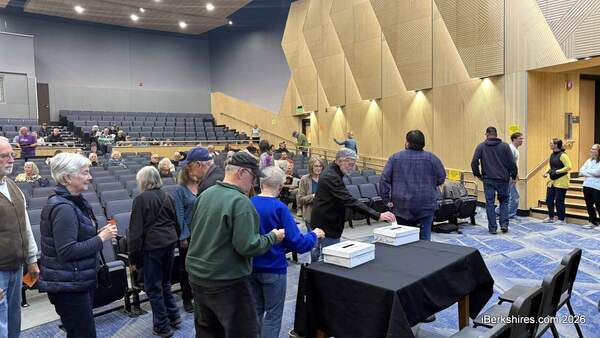
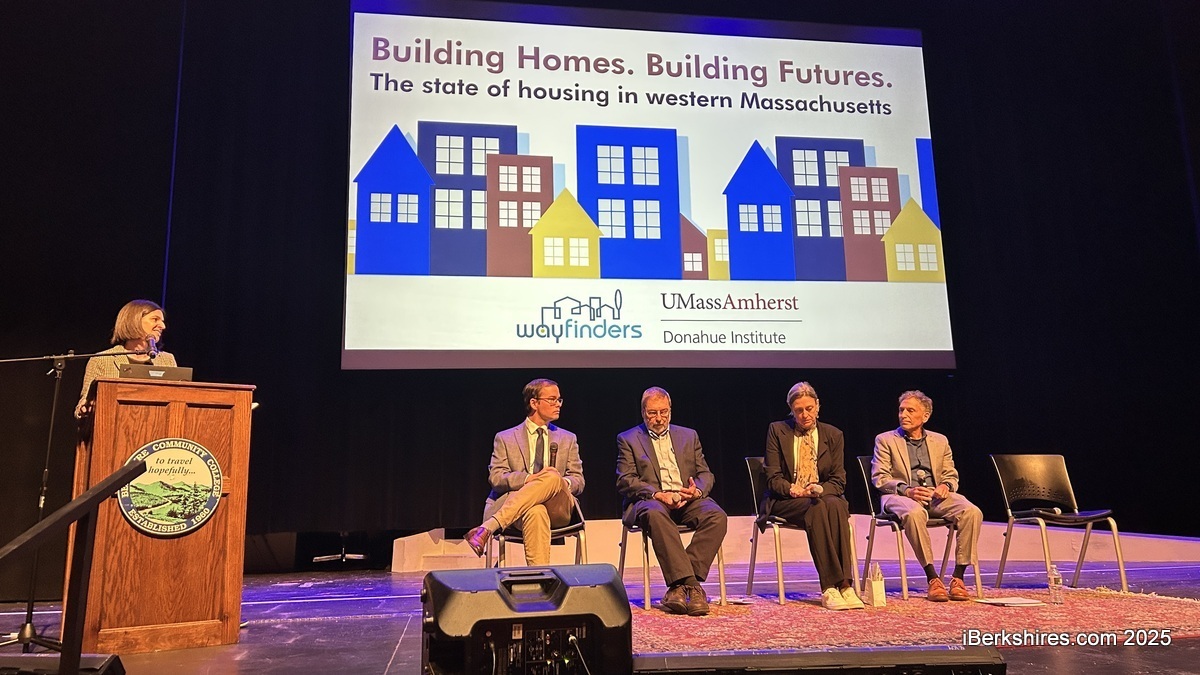
Last month, housing and planning organizations gathered at Berkshire Community College to share key findings from the "Building Homes. Building Futures" study, which is the first to cover Berkshire, Franklin, Hampshire, and Hampden Counties.
Berkshire Regional Planning Commission, Hearthway, and Upside413 partnered with Way Finders and their research partner, the University of Massachusetts Donahue Institute, for the effort.
Brad Gordon, executive director of UpSide413, said most community challenges can be linked back to the housing crisis, such as homelessness, lack of employees, and difficulty with educational attainment. He saw this presentation as a call to action.
"If you leave here tonight and you think, 'Oh, the experts, whoever that is, I guess that's supposed to be us, have this,' You are wrong," he said.
"This is an all of community issue. This is a crisis, and a crisis requires an all-in community response, and so that's what we're looking for out of all of you tonight."
Western Mass needs more than 23,400 units to meet current demand, and Berkshire County needs 1,910 units, 876 in 2035, due to continued housing development and population decline. According to the study, closing the housing gap would add nearly 4,400 new employees to the county, generate $444 million in new economic activity, and generate $12.8 million in local taxes.
"We need to build more homes and rehabilitate existing homes to meet demand. As the population changes and ages, demand for housing will shift towards smaller and more accessible units," said
Michael McNally, a senior research analyst with the Donahue Institute.
"We need to invest in solutions to help families afford housing now and prevent evictions, such as vouchers and targeted homeownership interventions. Meeting demand for housing will have a massive positive impact on the region."
The study, conducted in 2024 and 2025, was commissioned by Way Finders to update previous regional housing studies in 2021 and 2022.
The median home in Western Massachusetts costs $318,000, and has risen 44 percent in price since 2014, higher than the state average of 39 percent. Since 2021, there has been a 35 percent increase in rents in Berkshire and Hampshire Counties.
When McNally reported that Zillow.com data suggests Berkshire County has the lowest rental prices in Western Massachusetts, laughter broke out in the crowd.
While prices may fall lower than the state average, more than half of county renters are cost burdened, which the Department of Housing and Urban Development defines as spending 30 percent or more of household income on housing costs. Renter cost burden is nearly double that of homeowner cost burden, and Black and Hispanic households experience higher cost burden as renters and homeowners.
"In Berkshire County, there are around 2,800 rental units with rents less than $600, but there are around 5,900 renter households for whom a rent of $600 or less is needed to avoid being cost burdened," McNally reported.
"This leaves a shortage of 3,100 units at that price point in Berkshire County."
In most cases, a unit of this price could require a government subsidy.
Berkshire County's eviction rate also doubled between 2021 and 2023, and evictions have been rising across the board. It was noted that over the period of study, there was an increase in homelessness and shelter needs, met with "significant" cuts in federal support for emergency housing assistance.
Berkshire County has the second-highest rate of foreclosure petitions in Western Massachusetts at 11.3 per 1,000 owner households. North Adams leads all communities with 24 foreclosure petitions per 1,000 owner households.
During the Q&A section, Gordon expressed support for rent control.
"What we've seen over the last few years, if not decade, since rent control was essentially banned by referendum, which was in 1994, is that when there's been these initiatives, they usually are defeated, but maybe we're reaching that tipping point, because there's such a cross section of folks that are impacted by our housing affordability crisis," he said.
"And what I've seen out there, there's a couple of different pieces of legislation, and there's also a ballot initiative. What would those essentially do? They're pretty similar. They would give the opportunity for local municipalities to vote to adopt a uniform, affordable rent control process or approach to containing costs."
He recognized that there is an "incredibly strong" rental property owner and real estate lobby that prevailed each time the initiatives come forward, but he feels rent control is desperately needed at this point.
A local real estate developer in the audience said rent control has never worked. The developer also countered a slide that showed the number of real estate transactions by investors between 2004 and 2019. Pittsfield has seen more than 2,600 investor transactions, or 23.5 percent.
"The idea that investors cause higher rents when they fix the housing stock, a little bit silly. We should get a real estate developer on the stage next time. I was in a building today that was four units. The rents were $400," he said.
"The ceilings were caving in, so when I buy the building, of course, the rents need to go up, and I need to fix the building. So, implying that investors on the property are part of the problem for why housing is going up is misleading. It's the fact that it's so expensive to add additional housing units."
Eileen Peltier, president and CEO of Hearthway, pointed to the "unfortunate situation" where a mom-and-pop property with not many improvements and a paid mortgage is sold to an investor, who has to improve the building and pay acquisition costs.
She recognized that the investors have to meet high costs for the mortgage, rehab, code compliance, and "Maybe, there are a few bad actors who were trying to jack the rent up a lot."
"I think there's this sense always that new investors is always a bad thing, and I don't actually agree with that," she said.
"I think it's really important, and you can do creative things with small-scale projects."
Gordon said it is a mixed bag. He didn't want to get into rent control during the event, but offered to speak to the attendee privately about it.
"We have a lot of property that was underinvested in, and needs significant capital improvements and upgrades, and those are real costs, and no one is going to challenge or fault an investor for raising the rent to meet those costs," he said.
"But we also, because we as an organization provide housing and rental counseling, and you see a number of new investors that have come in, also that are raising the rents, but those places are still substandard, and so that's a challenge as well. So it's a spectrum, and I think people need to understand that."
McNally added that the investor piece was a small part of the overall picture.
"When you only build a very limited stock of housing, only in certain price ranges or none at all, an investor purchasing a unit, upgrading it, renovating it, making it nicer is wonderful but at the same time, the person living in that cheaper unit, before it was upgraded, may have to go back in the market and find something that fits them and might not have a lot of options," he said.
"And that is really bad. I think all the time, people find they lose their unit, it gets refurbished, it becomes a lot better and nicer, rather, and they end up without a home."
He added that building more in general will alleviate some of that in reduce the criticism of investment as an activity.
Tags: affordable housing, housing,