Berkshire Innovation Center Plans Expansion, New Manufacturing Tenant
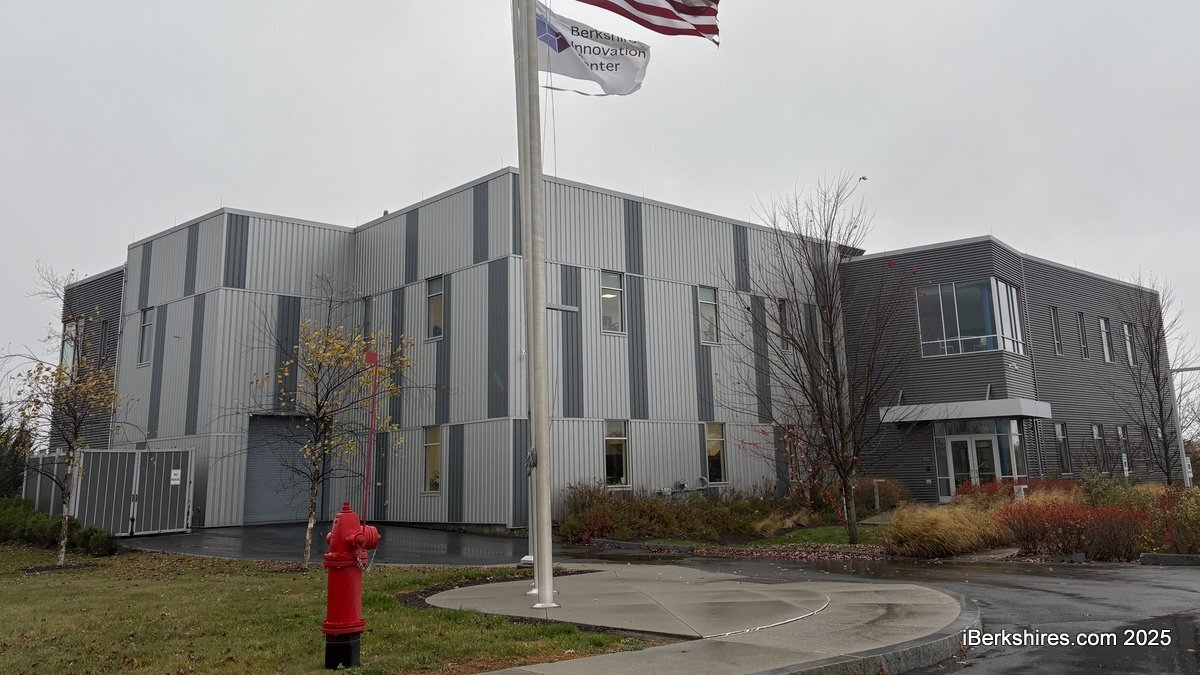
PITTSFIELD, Mass. — A total of $1 million in Pittsfield Economic Development Funds has been requested to build a tech hub at the Berkshire Innovation Center and help to move a company there.
The BIC is seeking $500,000 to expand and Myrias Optics Inc. is seeking $500,000 to establish a manufacturing laboratory at the BIC. Last week, the City Council referred both requests to the Community and Economic Development subcommittee, which will meet on Nov. 10.
The BIC plans to build a specialized nanoimprint lithography (NIL) lab to support the Massachusetts-based photonics company that is currently reliant on a space in Austria. The lab would be within a 7,000-square-foot "Advanced Manufacturing for Advanced Optics Tech Hub" expansion.
"The proposed expansion of the BIC facility is essential to alleviating current space limitations and ensuring the continued growth of programming that serves the local community. With more space, BIC will be able to accommodate larger student groups through dedicated classrooms that reduce congestion and improve accessibility," the project narrative reads.
"The expansion will also create more flexible environments for Pittsfield companies seeking training, collaboration opportunities, and research support. Importantly, this growth will preserve vital educational and meeting areas that would otherwise be repurposed into laboratory space, ensuring that Pittsfield residents continue to benefit from shared access to public innovation and learning spaces."
The BIC opened in the William Stanley Business Park in 2020 and is 23,500 square feet. In addition to the $500,000 in economic development funds requested, the BIC is seeking $7 million from the state.
Funds would be secured through a deferred-payment, forgivable 10-year promissory note and appropriate security. The applicant estimates that the hub could contribute between $113 million and $142 million to the state's gross product, and between $55 million and $69 million in labor income.
"The goal of the expansion is to create a world-class optics and photonics cluster at the BIC, positioning Pittsfield and Western Massachusetts as a national leader in developing and producing compact, high-performance optical technologies," the project narrative reads.
"Anchored by two rapidly growing companies — Myrias Optics and Electro Magnetic Applications (EMA) — the Tech Hub will provide shared infrastructure, business development support, and specialized workforce training. The Hub will accelerate innovation in advanced optical systems used in areas like telecommunications, aerospace, defense, medical technology, augmented/virtual reality, and data processing."
Myrias Optics was born out of the University of Massachusetts at Amherst, and this facility is expected to "dramatically" advance the company's commercialization goals. The manufacturing lab would be modeled after the Austria facility and house NIL tooling, process engineering, and metrology operations.
By 2028, the company plans to expand from 10 to 55 employees with an average annual salary between $112,000 $127,000, and the annual revenue growth from $1 million to $33 .7 million.
"As Myrias grows, the BIC will become an anchor for advanced optical manufacturing and commercialization in Western Massachusetts, laying the foundation for a sustainable innovation ecosystem driven by private sector growth," the project narrative reads.
The funds would be released in increments of $250,000 when a 10-year lease is signed and ten full-time jobs with $65,000 minimum salaries are documented, $150,000 six months after an additional ten full-time employees are documented, and $100,000 six months after an additional ten full-time employees are documented.
The BIC currently has an advanced optics lab in partnership with Electro Magnetic Applications Inc. and UMass Amherst. In 2019, Pittsfield gave EMA $140,000 in economic development funds towards the purchase of a space environment testing chamber and a tax agreement that will curb the taxes EMA pays to the city from fiscal 2020 to fiscal 2026. The agreement is valued at approximately $65,774.
Tags: BIC, economic development, GE fund,