Williamstown Select Board Asked to Consider Fireworks Ban
WILLIAMSTOWN, Mass. — Just days away from the Thanksgiving holiday, the Select Board Monday was asked to think about how residents celebrate a different holiday: Independence Day.
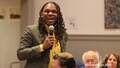
Paul Harsch took the podium during the public comment period of the board's meeting to ask the elected officials to think about an ordinance to ban ordnance.
"I know during one of your recent meetings, Matt [Neely] suggested setting up a committee to study fireworks," Harsch told the board. "Probably, you were thinking of a committee to figure out how to pay for it. I'm here to suggest the Select Board, if it does the responsible thing, environmentally, you would make that very difficult decision to ban the use of fireworks in this town.
"It would be major. But there is so much science on the toxins given off from fireworks, plus, of course, the harmful effects on animals and wildlife."
Harsch gave the board documents outlining some of that science with links to articles he found in his research on the topic.
There is no shortage of references to choose from. One 2015 study cited by the American Lung Association on its website found that, "air pollution levels increased by an average of 42 percent on the Fourth of July."
The issue also is personal for Harsch, who told the board that his family lost a pet to a heart attack suffered at home during a July 4 fireworks display. He also cited studies by biologists at the U.S. Fish and Wildlife Services who concluded that, "fireworks can cause nesting birds to abandon their nest in confusion."
"[N]esting mothers of the flock sometimes cannot find their own nest upon return, endangering the well-being of nestlings," Canadian researchers have found.
"These painful deaths are particularly tragic because they are completely avoidable," Harsch told the Select Board in his eight-page memo on fireworks.
Per their policy, the Select Board's members did not respond to Harsch's request because the topic was not on the agenda for Monday's meeting.
But Harsch encouraged the board to take the bold step of banning fireworks and follow a local tradition of such steps, citing Williamstown's local ban on smoking in restaurants that predated the commonwealth's 2004 smoke-free workplace law and town meeting's 2015 decision to outlook single-use plastic bags in retail settings.
"Restaurants were terrified by the prospect of ending smoking," Harsch said. "They thought no one would come to the bars and restaurants. … Everyone survived and thrived. And it was the same with plastic bags."
Harsch asked the board to think seriously about a local ban on fireworks, admitting that he has strong personal feelings about the celebratory ritual.
"Frankly, I hate fireworks," he said. "I dislike the noise. We never go. I understand it's a very popular thing in many areas. But I also think it's one of those things that we haven't as a nation or as human beings questioned sufficiently.
"Why do we have to glorify war, which, essentially it is … when, for example, the disaster in Ukraine is happening right now, right before our eyes?"
In other business on Monday night, the Select Board finalized a memo to the town manager outlining the board's priorities for the fiscal year 2027 budget as discussed at its Nov. 10 meeting, and requested that the board's own line item in the spending plan be cut by 80 percent.
Chair Stephanie Boyd noted that as of Monday, the board had spent only a couple hundred dollars from a $10,000 allotment in the FY26 budget year that began on July 1.
That money has been spent on travel expenses for board members attending professional events hosted by the Massachusetts Municipal Association, for example. And Boyd recommended that the body carve out some space in the town budget for that type of expense.
The other members agreed but indicated that having too much in the way of discretionary funds in the Select Board's name would encourage residents to come to the body with funding requests throughout the year.
"More than that creates multiple requests for $7,000 because people hear there's a Select Board budget with no strings attached," Peter Beck said. "It ends up being whoever asks first and loudest."
Rather, Beck said, projects that need town funding should go through the regular budget process, which gets rolling this winter when Menicocci develops an FY27 spending plan to present to the Finance Committee in February for review ahead of May's annual town meeting.
The Select Board Monday voted 4-0 to lower its FY27 budget line request to $2,000.
It also voted 4-0 to put in place a policy for the board's consideration of exercising the town's right of first refusal when lands previously conserved under Chapter 61 come on the market. The policy is largely the same as the draft Boyd presented on Nov. 10 with the following changes: It adds the Finance Committee to the list of town boards and committees that will be notified when the town is notified of a land sale and it removes language about the town having access to said land during its consideration process because Massachusetts law already has provisions for such inspections.
Fireworks: The Good, The Bad, and The Ugly Truth by iBerkshires.com
Tags: fireworks,