Pittsfield Health Board Asked to Support Peaker Plant Decarbonization
PITTSFIELD, Mass. — The Berkshire Environmental Action Team is seeking letter support from the Board of Health on peaker plants and the need to decarbonize them.
Peaking power plants — also known as peaker plants — run when there is a high demand for electricity. Facilities on Woodland Road in Lee and Doreen Street in Pittsfield were shut down in 2022 and have been removed entirely, with usable parts auctioned off.
The remaining is Pittsfield Generating Co., owned by Hull Street Energy. The gas-powered plant is over 30 years old and runs less than 5 percent of the time, during "peak" hours.
In 2021, the Pittsfield Board of Health signed a letter in support of the transfer from fossil fuels and to promote engagement with plant owners.
At last month's Board of Health meeting, Rosemary Wessel, director for BEAT's No Fracked Gas, gave a presentation on the plant asked the board to send a letter of support for decarbonization to Hull Street Energy and the state Executive Office of Energy and Environmental Affairs.
"It would support Pittsfield's marketability to clean tech firms and for clean tech development, it would improve Public health by removing 78 percent of Pittsfield's standing emissions, so stationary emissions, most of it comes from Pittsfield Generating even though it only runs intermittently, and it would show that Pittsfield supports climate initiatives," she said.
The peaker plants emit fossil fuel emissions that can have harmful effects on climate but also the community.
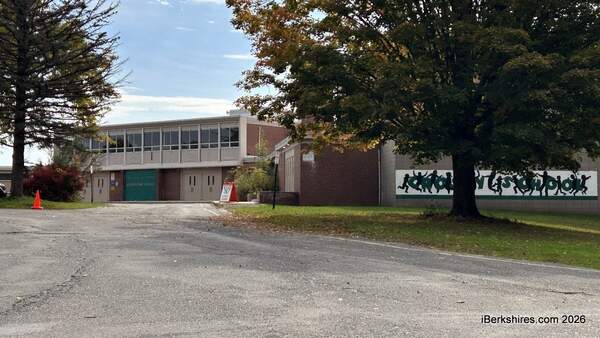
The peaker plant is less than 1,000 feet from Allendale Elementary School and adjacent to environmental justice neighborhoods. Possible health effects from fossil fuel emissions include reduced lung function, asthma, preterm birth, and premature death with children and the elderly most vulnerable, Wessel said.
Wessel is suggesting the plant be converted to battery energy storage systems, which would replace fossil fuel emissions.
"We're trying to get the plant owners to do the conversion. And they're actually working with the Office of Energy Transformation, along with several other peaker power plants and other stakeholder groups. We're one of the stakeholder groups also in discussions, and they're studying how these conversions can happen. And they haven't said no, but they haven't said yes yet," she said.
Wessel also suggested iron-air batteries which can be a little safer than lithium.
"It's iron-air batteries, which, again, is an iron-based battery. It's nonflammable, it's nontoxic. It actually rusts and unrusts to store and dispense energy. I don't understand the physics of how that works, but they have a pilot project already running," Wessel said.
Wessel has been hosting community discussions about the plant and to hear from neighbors on what they think. A lot of them believe the plant should be decommissioned and removed with many saying it should not continue operating as is, she said.
"Folks in the community when we were speaking to them, we're all for it, like, yes, please take away that plant. We don't want to live with it anymore," she said.
Wessel said it will be easy to change and can, in turn, save a lot of money for the community and save their health.
"It's converting an already industrial zone, and there's already existing interconnections to the grid there, which also saves the grid a lot of money. It saves a lot of money on the project, which in turn, saves people on their electric rates, and most of all, it improves the local health outcomes for the community."