Dalton Zoning Denies Berkshire Concrete's Appeal for Dig Site
DALTON, Mass. — The Zoning Board maintained its decision that Berkshire Concrete's unauthorized dig site on parcel No. 105-16 needs to be fully remediated or covered to abide by town bylaws.
In October, the board voted that Berkshire Concrete violated zoning bylaw 350-61 Section E. Restoration. A decision that Petricca Industries, the parent company of Berkshire Concrete, appealed.
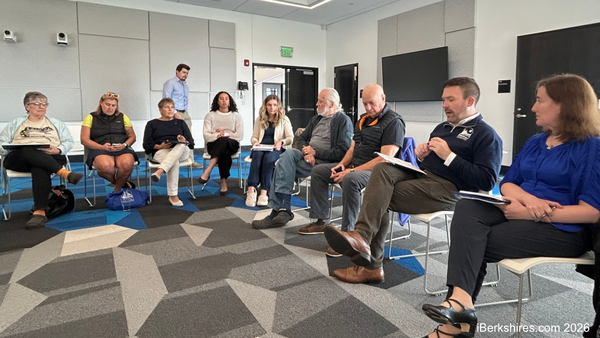
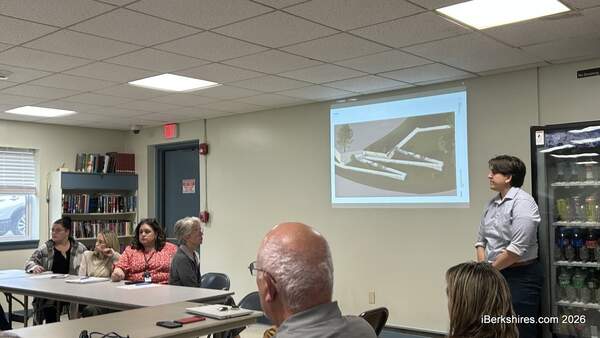
During the appeal's public hearing last week, Berkshire Concrete's attorney, Dennis Egan Jr. of Cohen Kinne Valicenti & Cook LLP, argued that the restoration requirements and the enforcement order were incorrectly applied, given the history and current status of its permits.
Egan said the zoning bylaws are not applicable because the property is a pre-existing, nonconforming use, established before zoning bylaws existed. Berkshire Concrete operations began in 1947 and zoning was adopted in 1951.
Additionally, a special permit issued in 1992 encompasses the entire property. Berkshire Concrete renews this permit every two years, specifying which parcels will be mined during that period.
The parcel causing the most contention 105-16 was not included in its special permit renewal application due to a "clerical error" resulting in abutters not being notified.
At the advice of town counsel, all work stopped, and Berkshire Concrete was required to reapply for this permit under this parcel number.
The public hearing on this matter was continued to allow Berkshire Concrete time to gather that information. More information here.
During the initial public hearing, which lasted more than three hours Planning Board members expressed confusion around Berkshire Concrete's plans, because of inconsistencies in the documentation and its vagueness.
Egan claimed that while specific operations on parcel 105-16 ceased, this was not "voluntary" because of orders by the town.
The board's previous justification for their initial determination was because operations were voluntarily stopped once the cease-and-desist order had been sent.
Attendees against the appeal said that according to town bylaws, restoration of the affected parcel is mandatory upon cessation, voluntary or otherwise.
"This bylaw shall not apply to a removal operation which is subject of an official, valid permit or license issued in writing prior to the effective date of this bylaw, or which is being conducted in compliance with requirements of a subdivision plan approved by the planning board," Select Board member Anthony "Tony" Pagliarulo quoted the town's bylaws.
"So in fact, it was not an approved permit. Consequently, the bylaw is in effect in terms of restoration."
During the meeting, attendees highlighted how the pit is covered with snow which has helped mitigate the sand leaving the parcel but that will not always be they case.
They also reiterated their concerns surrounding the pit including its impact on property values, the environment, and public health.
Egan argued that the Zoning Board of Appeals lacks the authority to enforce restoration and said he believed responsibility lies with the Planning Board, particularly since Berkshire Concrete is currently seeking permit renewal through that board.
Those against the appeal expressed distrust in Berkshire Concrete's intentions and past behavior, calling for the board to enforce immediate cleanup and not be swayed by pending applications.
The board unanimously voted to uphold its initial decision.
"I don't really see how anything has changed. They dug without a valid permit. It should be remediated," said Caleb Darby, board vice chair.
They also noted that even if the planning board gave future permission for the parcel, it would not affect the current denial.
"They neglected, or they at least didn't put it on the application and they went and did it, and then it created the problem," board Chair Anthony Doyle said.
"Whether or not that cease and desist order constitutes a voluntary cessation of activity, it seems to me that they had to cease…It's still a problem and that they have to remediate it."
Tags: ZBA, berkshire concrete, dust, debris,