Cheshire Increases Transfer Station Prices to Address Deficit
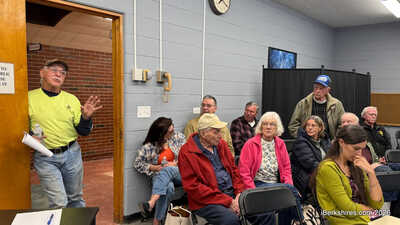 |
| Residents still using the old blue bags objected that their diligence in recycling was no going to cost them more. |
CHESHRE, Mass. — The town has adjusted its pricing for the transfer station to address annual shortfalls stemming from rising costs.
For the last six years, the transfer station has averaged a $45,000 deficit, Select Board Chair Shawn McGath said at a joint meeting with the Board of Health on Tuesday.
The Board of Health voted to increase the annual permit cost to $150 and bag tags to $1 each. Additionally, it voted to phase blue bags into the tag system until the existing supply is exhausted.
Each blue bag — 33-gallon bags used prior to the pay-as-you-go system — will be treated as equivalent to a $1 tag. Residents will have to add one tag to throw away a full blue bag, but they still get the same value they initially paid because other bags of this size require two tags.
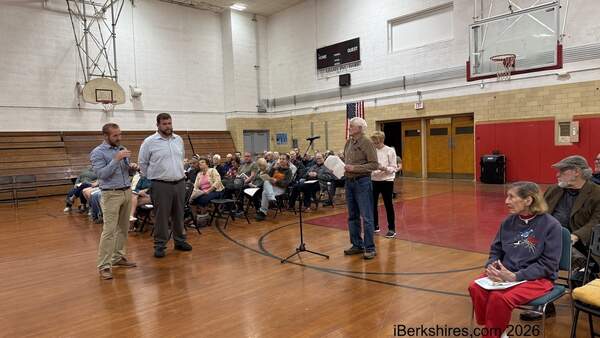
Nearly 30 residents attended the meeting, many speaking passionately about the system — particularly concerns surrounding blue bags.
At several points, public officials had to ask attendees to quiet side conversations, as the noise made it difficult to hear the board's discussion.
Previously, residents would pay $125 for a permit and $50 for 52 blue bags. However, in 2020, the town switched from color-coded bags to stickers. One sticker, or tag, was good for an 11-gallon bag and three tags for 33-gallon bags.
This change is driven for three reasons: the amount of landfill waste generated by blue bags, the goal of reducing the number of bags sent to the transfer station, and lowering upfront costs for residents, said CJ Garner, Board of Health chair.
The town charges residents based on volume but haulers charge by weight, Department of Public Works Director Corey McGrath said.
McGrath previously showed that Cheshire generates much more solid waste per permit holder than other towns, using January data from Casella Waste Management for comparison.
Adams has 500 permit holders and reported 13.12 tons of solid waste. Dalton has 600 permits and 22.8 tons. And Williamstown had 1,043 permits and reported 15 tons. Cheshire has 600 permits and reported 36.10 tons, he said.
Blue bags were still being accepted as a single trash tag, which continued to compound the deficit.
One resident voiced frustration, noting he has an excess of more than 300 blue bags purchased in previous years, and questioned why he must now add a tag to each bag despite already paying the initial cost. He argued it was not fair because that was not his expectation at the time of purchase.
Since 2021, hauler costs have increased by 44.44 percent and there is another anticipated increase this year, Corey McGrath said.
"There's another rate increase coming in July. We don't know what that number is. I don't see it being huge, but it will be an increase," he said.
Recyclers still felt penalized for not generating as much waste, which is why they still have blue bags left over.
Officials argued that is not the case because they're still getting that $1 value they initially paid. Costs have gone up so the transfer station has to raise its prices to break even.
If you bought a $20 gas card that once filled your tank, but years later it only covers half, would you expect it to still fill the tank, Shawn McGath asked.
Not only was the transfer station operating at a deficit, but it is losing grant funding because the program is not really a pay-as-you-throw anymore, Northern Berkshire Solid Waste Program Director Linda Cernik previously said.
Based on a point system, the station gets when applying for grants, the transfer station only receives around $3,000, when it could have gotten around double, she said.
The pay-as-you-throw model will help recyclers save money because the less waste that you have the less you have to pay, officials said.
"The educational piece is a huge component to this, communicating to the people — you'll pay less to dump here, if you follow all these programs that we have, and we'll be able to keep the cost down," Selectwoman Michelle Francesconi said.
Tags: recycling, waste collections,