Pittsfield Panel Supports Councilors' Privacy, Lake Management Commission
PITTSFIELD, Mass. — Councilors believe they have the right to keep their home address off work documents.
Last week, the Ordinances and Rules subcommittee voted to remove city councilors' addresses from public documents and create a Lake Management Commission for Pittsfield's waterbodies.
Ward 4 Councilor James Conant, Ward 7 Councilor Katherine Moody, Ward 1 Councilor Kenneth Warren, and Ward 2 Councilor Cameron Cunningham submitted a request to remove councilors' addresses from city documents and websites and replace them with 70 Allen St., or City Hall, to improve safety.
"As we know, especially over the weekend, there's just increasing violence in America at every level, from the president right on down. Governors, judges, mayors, city councilors," Conant said.
"I feel that we can increase our security by stopping using our home addresses on city-issued websites and paperwork."
City Solicitor Jeffrey Grandchamp pointed out that this will not prevent the city officials' addresses from becoming public, as their addresses are listed elsewhere as residents.
Conant proposed to make it optional.
Councilors couldn't find anything in the city code that requires them to use home addresses. Ward 5 Councilor Patrick Kavey pointed out that when you run for office, the City Clerk verifies your address and residency.
"Looking at what other communities do, it does, again, look like we're kind of in the minority in terms of how much information we're putting out to the public," Ward 6 Councilor Dina Lampiasi observed.
"I like this petition."
Councilor at Large Peter White doesn't think it changes anything if constituents know their exact addresses, versus knowing how to get in touch.
Mayor Peter Marchetti reported that Conant suggested adding a Lake Management Commission. He explained, "Basically, we know after the number of phone calls we all received last year on the conditions of Onota and Pontoosuc Lake that there are issues."
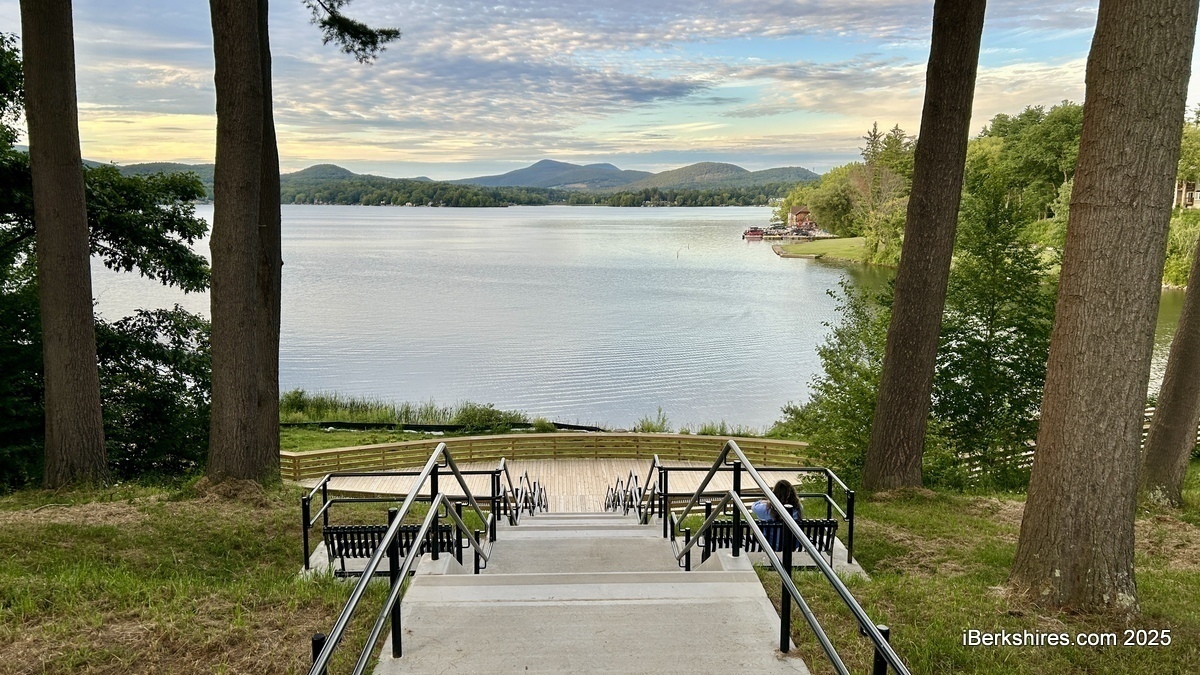
Last year, community members argued that erosion control plantings impeded access at Pontoosuc Lake, four easy access points were proposed, and a site visit with the Conservation Commission revealed that some of the bank erosion was worse than they believed. Small stairs were then proposed for that area instead.
The commission will be expected to produce a three to five-year lake management plan based on water quality tests and plant surveys to identify areas for aquatic plant control and possible zebra mussel control applications.
"Pittsfield lakes are an amazing resource treasure for all to enjoy. Our lakes are under stress from long-term and negative effects of climate change, introduction of invasive species, and stormwater outlet pollution from road salt usage," Conant said.
"Our challenges are many, with increasing threats from evasive plants such as Eurasian milfoil, zebra mussels, cyanobacteria blooms, and beaver activity. Lake water drawdowns have been limited by DEP's new rulings and only are now limited to a maximum of three feet."
He explained that the goal is to improve communication and education with the public on lake challenges as they develop, and what is needed to alleviate them.
Pittsfield struggled with zebra mussel detections in 2024, as eDNA was detected in both Onota and Pontoosuc lakes. Last month, the state Department of Environmental Protection outlined options for restoring a polluted Pontoosuc Lake to health: determining the lake's capacity for pollution (Total Maximum Daily Load) and developing a Nine Element Watershed-based plan.
MassDEP said the lake is showing signs of nutrient pollution and eutrophication — a condition which promotes algae blooms, fish kills, and dead zones — and cited recent algae blooms that resulted in public health advisories.
"This is something that the city needs," Lampiasi said.
Tags: lakes, ponds,