SJC Dismisses Pittsfield Cell Tower Suit
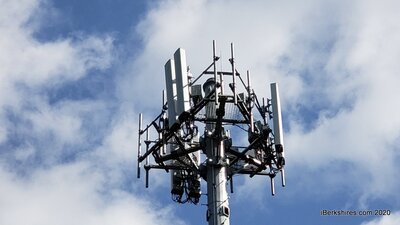 |
| The Supreme Judicial Court has dismissed a lawsuit against Verizon and the Board of Health over a Pittsfield cell tower. |
PITTSFIELD, Mass. — The Supreme Judicial Court has affirmed a lower court's order to dismiss a lawsuit over the cell tower on South Street.
The court's opinion, released Thursday, found that the city had no authority to pre-empt federal legislation, specifically the Federal Telecommunications Act of 1996.
The finding comes four years after the Board of Health issued — and then rescinded — an order for Verizon to cease the tower's operations.
Six residents in the Shacktown neighborhood have been fighting Verizon over the construction of the tower and the purported health issues they've suffered from the radio frequencies emanating from it. They first sought a ruling against the Zoning Board of Appeals over the notification process, which was dismissed.
They sought relief through the Board of Health, which discussed the problem for nearly a year before issuing a cease and desist to Verizon in 2022 if it did not respond to a show-cause hearing about the effects of RF radiation within seven days. Verizon, operating as Pittsfield Cellular Telephone, asked for a declaratory judgment from the U.S. District Court in Springfield against the city.
The Health Board, citing fears of litigation, withdrew the order and the residents, in turn, sued the city for failing to protect them.
The case was first heard in Superior Court on July 28, 2022, which dismissed the suit based on pre-emption of federal laws. The plaintiffs appealed and the Supreme Judicial Court, on its own initiative, transferred the case from the Appeals Court.
The plaintiffs, represented by W. Scott McCollough, of Texas, argued that the board's failure to act "was arbitrary and capricious and constituted a breach of its duty under G.L.c. 111, § 122, to eliminate nuisances injurious to public health."
Attorney Buffy D. Lord, representing Pittsfield's Board of Health, made the case that the board could not pre-empt the federal act regulating telecommunications.
The Supreme Judicial Court, which heard the case back in December, agreed, stating "enforcement of the board's order would have frustrated the TCA's objective of creating uniform wireless networks nationwide."
Federal legislation setting standards for wireless networks dates back nearly a century, the court opined, and the 1996 TCA was designed to "encourage the rapid deployment of new telecommunications technologies" ... through removal of "impediments imposed by local governments upon the installation of facilities for wireless communications."
The Board of Health's order would have subjected the tower's operations to local compliance rather than national uniformity and, secondly, would have interfered with the authority of the Federal Communications Commission to regulate RF emissions, a task delegated to it by the 1996 TCA.
"We are unpersuaded by the plaintiffs' various arguments against the applicability of pre-emption," the court stated. "As a preliminary matter, characterizing the order as an 'adjudication' rather than a regulation of RF emissions cannot shield it from pre-emption analysis. ...
"The order compelled Verizon to either attend a show cause hearing or 'eliminate all activities and operations' at the cell tower because the board concluded that the RF emissions from the tower constituted a health threat."
Local law, the court opined, "must yield to the Federal law under our constitutional system."
In regard to the plaintiffs' argument about health concerns, the court, in a footnote, stated that "if the plaintiffs do not think the current Federal standard is sufficiently protective, they can file a challenge in Federal court."
Tags: cell tower, SJC,