Mazzeo Presses Tyer On Capital Projects Never Completed
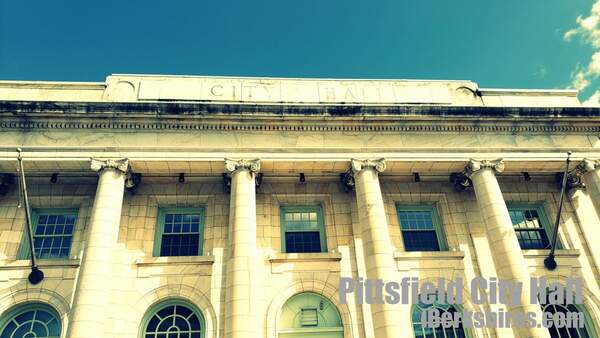
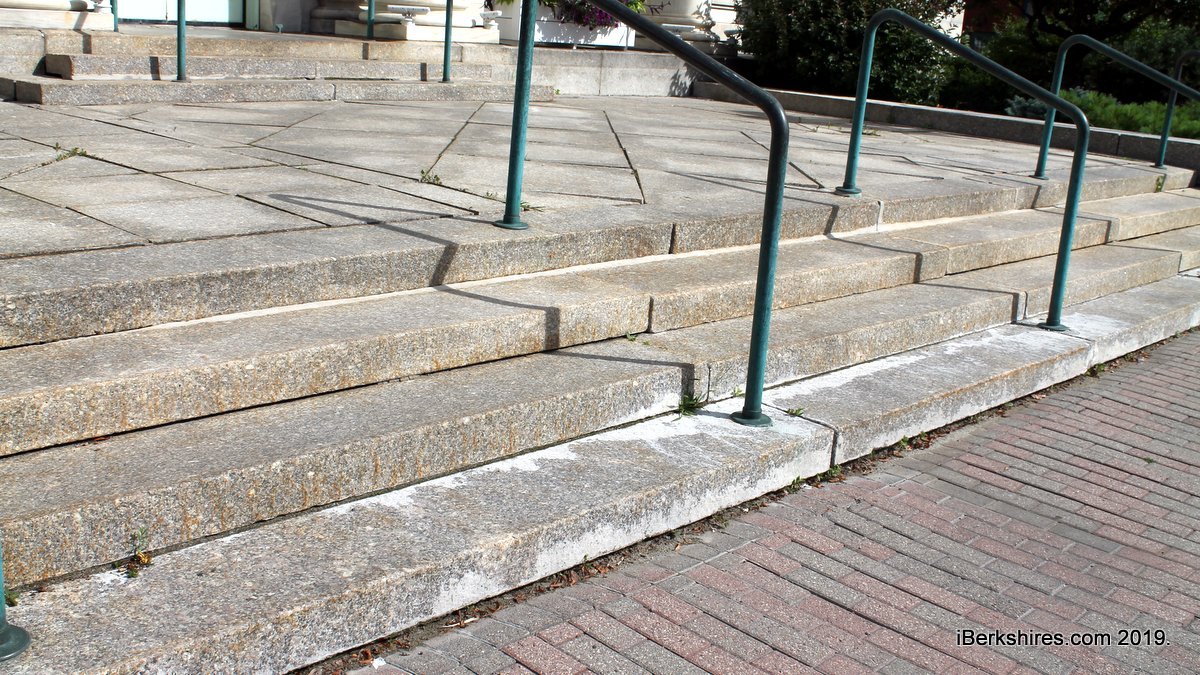
PITTSFIELD, Mass. — The cracked and worn steps to City Hall stood between two mayoral candidates Tuesday night.
Councilor at Large and mayoral candidate Melissa Mazzeo and Mayor Linda Tyer sparred during the City Council meeting over the lack of repairs to those steps. In 2015, a storm led to significant flooding in the basement of City Hall and damaged records.
The council then approved a borrowing of up to $100,000 to fix the steps and the foundation at City Hall to prevent more damage.
The work was never done. On Tuesday, the administration brought forth an order to rescind what is left of that authorization -- $91,000 -- because it will take more than that to ultimately do that work.
"The stairs are a disaster out there, why are we not going to do it?" Mazzeo pointedly asked Tyer suggesting the administration should have at least made some repairs to halt the flooding risk.
Tyer responded that not only had the bids come in too high, the city is now exploring making upgrades for security and accessibility to the building that was constructed as a post office in 1911. She'd rather do all of that work at once.
"Let's look at it in its totality and do the project in full," Tyer said. "In 2015, we determined that even to just repair the front steps it would cost more than $100,000. That was before my time but that was the determination."
At the time, Barry Architects was brought in to perform an assessment and draw up the engineering plans -- something Director of Finance Matthew Kerwood said is a requirement because of the costs. Kerwood said the bids for the work had come in too high and it was determined that the project wouldn't go forward.
The administration has been cleaning up the financial books and has routinely asked the council to rescind unused authorizations -- some dating back to 2008 and 2009. The authorizations aren't money, just an OK for the administration to borrow, and Kerwood said rescinding those makes for cleaner books and if borrowing is needed in the future, new authorizations would be sought.
"It is not money. It is strictly the authority to go get the money," he said. "It is just cleaner accounting."
That process, however, sheds light on what hasn't been done over the years. Mazzeo believes that if the council approves a project, it should be done.
Mazzeo said that even if the project pre-dates the Tyer administration, the authorization was still there and some work could have been completed. She thinks the front steps aren't likely to be dramatically altered for accessibility and security. When the council approves something, residents expect the work to be done and now many may be looking at those steps wondering where the money had gone.
Ward 4 Councilor Christopher Connell echoed similar sentiments.
"The foundation still has to be sealed," Connell said. "Why wouldn't we at least try to address the foundation as oppose to waiting?"
Kerwood responded that the Building Maintenance Department did do some maintenance work on the foundation, but to what extent is better asked of the department. Kerwood drew a line between a capital project the city would borrow for an routine maintenance, saying routine maintenance should be done from the operational budget and not borrowed.
"Otherwise you are issuing debt for something that should be operational repair and maintenance of your city," Kerwood said.
Such is the case with asbestos removal in city-owned buildings. The city has been doing environmental abatements on an annual basis so the funds for that were moved from capital authorizations to the operating budget. On Tuesday, a 2017 authorization for that work was rescinded but Kerwood said the work is ongoing, just paid for via a different source.
It isn't the first time Mazzeo pressed on projects that were never completed -- suggesting that the city is spending money on engineering and consultants and never actually completing the actual construction. In 2016, the administration put forth another order and she pressed on money that was never spent on the King Street dump in 2008. At the time, Kerwood said some work was done on the South Landfill but the state backed off on requirements and the administration at the time opted not to move forward with what became an unneeded project.
Tyer responded that every year millions of dollars are spent on completed projects and sometimes the city gets approval to borrow and the price tag grows to a point at which the administration decides not to borrow the money.
Nonetheless, Mazzeo thinks even if the specific projects come in too high, the administration can do some things. The administration asked to rescind an authorization for sidewalk repairs at Crosby Elmentary and Pittsfield High schools but the work ended up being above the $50,000 price tag. Mazzeo said there is plenty of sidewalks that need repair that could be done with that authorization.
"People are screaming for sidewalk repairs all over the city," Mazzeo said.
Kerwood responded that, by law, the city needs to stick with the description authorized by the council. In this case, the description specifically calls for sidewalks at the two schools so Kerwood doesn't believe it can be used for something else without council's approval. He added that he'd rather come back to the council with a new request for projects than to be amending old authorization.
Tags: capital projects, municipal borrowing,