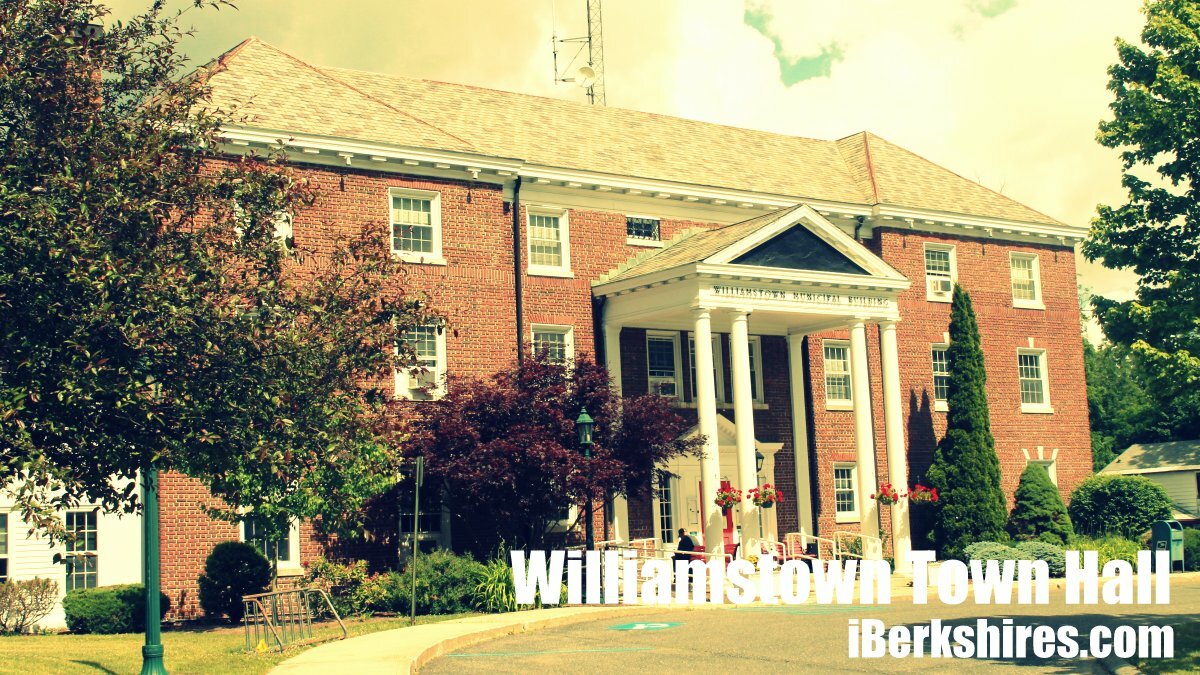
High Taxes, Wage Disparities Discussed at Williamstown Fin Comm
WILLIAMSTOWN, Mass. — News that a level-funded municipal budget could cost 4.4 percent more in fiscal 2024 had some officials Wednesday looking for ways to trim the town's spending plan.
First-year Town Manager Robert Menicocci used his initial budget presentation to a joint meeting of the Select Board and Finance Committee to focus on his philosophy of budgeting and solicit feedback from the officials.
He did not delve deeply into the line-item elements of the $10.4 million town spending plan.
But the bottom line caught the eye of Fin Comm Chair Melissa Cragg and Select Board Chair Hugh Daley.
Daley pointed out that the town traditionally has aimed for a 2.5 percent increase in the budget year-to-year.
"Four-point-four [percent] is an ask," Daley said.
"What a lot of people in this situation do — some people would say in ‘real life' is identify the cuts you're going to make to bring this in at 2.5 percent," Cragg followed up.
Select Board member Andrew Hogeland said he liked the idea of asking the town manager to lay out potential cost savings on paper and see whether any of the options would be acceptable to the community's elected and appointed representatives — and, ultimately, the annual town meeting that approves the budget. Hogeland noted that the cuts might be "so ugly" that they don't pass muster.
Daley agreed.
"Maybe we say, 'We're not going to have 24/7 policing and three nights per week, we'd have State Police coverage,'" Daley said. "To me, that's an interesting analysis worth doing."
In the long run, Daley said the solution is to grow the tax base.
"We really need more people, more assets here, not just asset inflation," Daley said. "We are going to have to be more open to growth. We have to be, in my opinion. I hope the community hears me that we're going to need to look at growth as the other long-term solution."
Select Board member Randal Fippinger offered a counterpoint to the conversation about how the town's tax burden may be too high by suggesting the real problem is that the burden is unfairly distributed.
"I think we have a tax imbalance," Fippinger said. "I think it's problematic that we have a flat tax rate. I think not everybody has a level playing field in the town. That's why I appreciate Bob [Menicocci] talking about an equity lens in budgeting.
"Other towns in Massachusetts have been creative about different levels of tax rates and ways to encourage low-income residents to come in."
Hogeland pointed out that income-eligible residents 70 and older do receive a property tax break due to the town's adoption of the state's 41C tax exemption program. Hogeland earlier this year brought the Select Board a proposal to lower the age of eligibility to 65 and tie the income eligibility to the Consumer Price Index.
"It isn't much, but it's a start," Hogeland said.
At one point, Hogeland said he does not hear complaints from constituents that taxes are too high in the town, and he finds that fact surprising.
But two attendees at Wednesday's meeting said they do hear that complaint.
"It depends on who you're around," Select Board member Jane Patton said. "We all feel like we get outside our bubble, but do we?"
Patton told the meeting about a lifelong resident she spoke to a couple of years ago and asked whether they would attend town meeting.
"They said, 'No one in this town cares what I think. All they want to do is raise my taxes,'" Patton said. "I do think it comes up. I don't know that we are in the places where it comes up as much. And, when we are, I'm not sure how comfortable people are saying something about it.
"Add my full-throated support that the concern about our taxes is on the table."
Hogeland asked Menicocci whether he has heard complaints about taxes in the eight months he has occupied the corner office at town hall.
"I don't hear about it in the sense of people coming to Town Hall to talk about it," Menicocci said. "But when I'm out in the community at an event, that's probably the No. 2 thing I hear about, 'Why are taxes so high?' It's definitely a concern."
Menicocci began Wednesday's joint meeting of the boards by talking about his background in municipal finance and his approach to budgeting.
"I'm a Massachusetts native and have spent time in a couple of towns that were town meeting communities," he said. "Through volunteering, I did this very kind of work, so I have a deep appreciation for what a Finance Committee does for a town. … It's my first time on this side of the table at a strictly municipal level, but having sat on that side, I have an appreciation for the work we can do in setting goals and such.
"I'm really thinking about what's come up of late in conversations around equity and work we need to do to make sure the budget developing process is one that is equitable."
To that end, one of the few increases that Menicocci called out in the budget that the Fin Comm will comb through over the next few weeks relates to a salary classification study that the town began last year. Menicocci said he expects a report in the middle of next month but already has built some money into the FY24 spending plan to address disparities that the study identifies.
That comes as good news to at least one budget center in town.
The only person to address the Fin Comm and Select Board during the public comment portion of Wednesday's meeting was an elected official from a different public body.
Bridget Spann, the chair of the Milne Public Library Board of Trustees, used the forum to ask the other town panels to support a budget that treats all town employees fairly.
"Of the 18 town employees who currently make less than $20 per hour, two are seasonal workers and 12 of the 18 are library staff," Spann said. "None of these 12 library employees make $19 per hour; three of them make between $18-$18.50 per hour, and the remaining nine staff earn $15 to $17 per hour. The three staff who make $15 per hour have the recent Jan. 1 increase in the Massachusetts minimum wage to thank, as they were earning around $14.25 this past year.
"The library's building and grounds attendant, whose job involves maintenance, repairs, and custodial work, is currently making $15.68 per hour; this person has been in this position for the past nine years. Most recently, the town filled another custodian position at a wage of over $20 per hour."
Spann said she was encouraged by her conversations with Menicocci about the disparity and asked the members of the Fin Comm and Select Board to support a budget that addresses the concerns raised by the wage classification study.
Tags: fiscal 2024, williamstown_budget,