Public Meeting to Be Held on Demo of Historical Wendell Avenue Barn
PITTSFIELD, Mass. — Community members will have a chance to weigh in on the proposed demolition of a barn owned by Berkshire Theatre Group in the next couple of months.
The Historical Commission this week voted to begin the 60-day process for a public hearing that will happen by the end of June.
Due to a misunderstanding of the process, the theater had lapsed on the 60-day public hearing window based on an August decision to deem it historically significant. Rather than making the organization restart its application, the panel on Tuesday decided to move forward with the public hearing process.
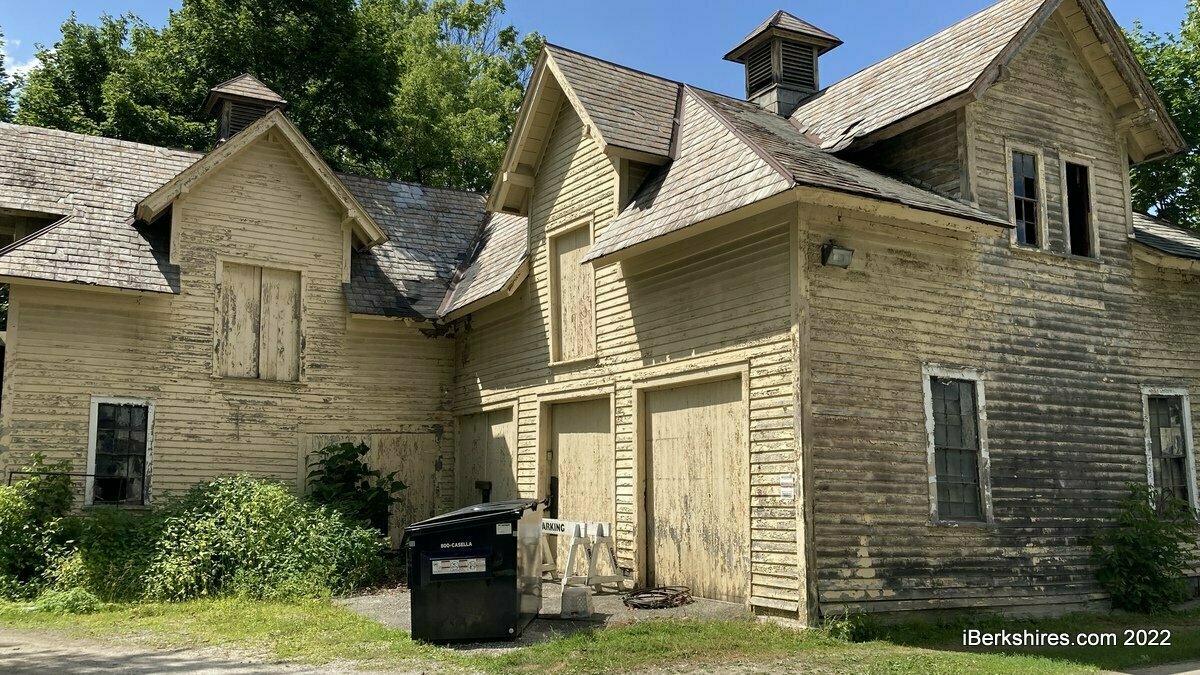
The carriage house is located behind the Thaddeus Clapp House on Wendell Avenue, which was built in 1871.
After BTG spent more than $1 million to restore the Clapp House, a professional assessment indicated that the best path forward for the barn is to take it down. In the future, the theater sees more artist housing in that space but there are no immediate plans for construction.
"We don't come here gleefully wanting to take this barn down," Executive Director Nick Paleologos said.
"If we saw any path to salvaging it, we would take it but the funds aren't there, the building, as you saw yourself and as [Bradley Architects] indicated, is really quite terrible shape."
Bradley Architects was hired to analyze the timber-frame barn and deemed it "beyond repair" due to a lack of a foundation, compromised structure, lack of utilities, water-damaged interior, and weather-destroyed exterior.
A letter from the architects says the structure's sill plate is rotted out along almost the entire perimeter, that there are several holes in the roof causing water damage, that the asphalt roofing is beyond service, that windows are damaged or missing, and that the building's utilities are destroyed from neglect.
Even if BTG could secure a stamp of approval for a refurbishment, he explained that securing funding has been a heavy lift now more than ever.
"Partially because, and I'm sure you've probably noticed this, but for the first time in seven decades, one of our competitors the Williamstown Theatre Festival has just decided not to produce a season this year and the ripple effect across the culturals has been dramatic, including ourselves," Paleologos said.
"I mean, this year, the first year after federal funds ended for the COVID emergency, is the most challenging for all of the culturals. It impacted them in one way and it's impacting us in another so every available dollar that we're able to raise right now has to go to basically keeping the doors open. We have existential operational issues that we didn't have last year, but we have them now, so our focus has shifted somewhat."
In this environment, the theater will no the able to build on the footprint right away but demolition will eliminate blight and make way for more parking.
Last year, the commission took a tour of the property to better understand its condition.
"I think it's pretty far gone," Matthew Herzberg said. "I think it has no discernible foundation. Certainly, not something that could be reused in something like housing or anything like that."
Members speculated that the public hearing process might bring interest in saving the structure.
"The purpose of the demolition delay is Berkshire Theatre Group has done a little bit of outreach to people they know by considering a one-year delay on it," Chair John Dickson said.
"We would be letting the public know a little bit broader and wider and maybe, working with other people who we know and working with Berkshire Theatre Group to see what else might be out there."
Ann-Marie Harris said the panel owes it to the public to get the word out and hear opinions.
"It's just that it's such a beautiful building and it's so historic that it's sad to think it no longer has a function or a meaning," Carol Nichols said.
In other news, the commission approved a demolition delay for a vacant deteriorated house and garage at 54 Mervyn St. and a demolition delay for an old single-family structure behind a main house on 1480 West St.
Tags: demolition, historical commission,