Pittsfield Historical Commission OKs Demos for Christian Center Expansion
PITTSFIELD, Mass. — The Christian Center plans to demolish two deteriorated buildings on its property to expand its footprint for increased community service.
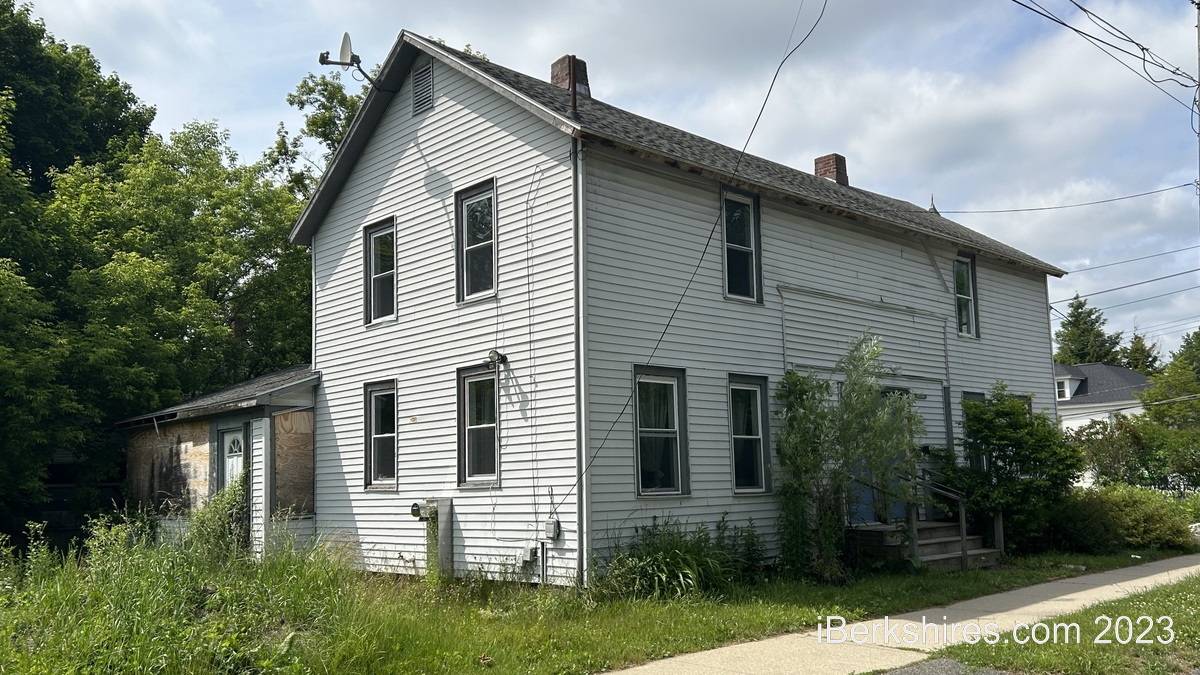
On Monday, the Historical Commission approved the demolition of 183-185 Robbins Ave. and 187-191 Robbins Ave., which are said to be beyond rehabilitation.
"These buildings have just become a horror story," Executive Director Betsy Sherman said.
"And the people that know me on this committee know that I would not tear down a building just tear down an old building. I love old buildings and have worked with many of them but I just can't see a way to do it and to make them work for anything that could be functional."
The structures were built in the 1880s for workforce housing and were acquired by the Christian Center in the early 20th century to be used primarily for housing.
When Sherman became involved with the center around 2013, the Berkshire Country Sheriff's Office took them over to be used as apartments for people leaving the county jail. This worked fairly well, she said, but there was not a staff member on-site at all times, and the center became responsible for issues that came up.
Repairs were done to the buildings by inmates but were not brought up to any kind of code that Sherman could see.
"And currently they reflect the fact that they were built in the 1880s," she added. "They have very steep stairwells, the pictures document that the ceilings are about 7 feet on the second floor, and you can see that there's been some damage done to them."
Shortly after the start of the COVID-19 pandemic, both buildings flooded on the same day. The center believed it to be an act of sabotage.
"During the pandemic, we really didn't have a lot of problems with people breaking into them, it wasn't necessarily an issue. Since things have loosened up, there are of course more homeless people, there are more drugs, there are more issues on the West Side than ever and we have had almost nonstop issues with people breaking in trying to find a place to sleep, trying to find a place to do drugs," she said, adding that buildings are now boarded up.
Sherman has had contractors look at the houses and cannot see a way to rehabilitate them into usable condition for less than half of a million dollars.
On top of it, there is an increased need for more space at the center next door. The center needs a larger pantry space and meeting space.
"What we have found at the Christian Center is that our numbers are up 60 percent from prior to the pandemic. That means that on average week we used to see 125 families a week, maybe 150, so that was a really busy week. We now see 100 families on Wednesdays alone. Our food pantry, which was always small but served all these people, is just — we're busting at the seams," she said.
"During the pandemic, we actually had an architect look at our building at length and also tried to discern a way to increase the size of the food pantry and our plan is that if these buildings come down, we will build an addition onto the center and have a larger food pantry and also an area for meetings or children, a smaller meeting space."
The clothing boutique located upstairs sees 350 to 400 people a month and about 1,500 pieces of clothing are given away. Between nine and 12 service agencies come in per week to meet with clients so there is also an idea to create a couple of new offices for privacy.
Sherman reported that the last people who lived in one of the buildings were essentially squatters and after being evicted, attempted to remove the copper from the household while an 18-month-old baby was in the house.
Based on the report, Chair John Dickson observed that the site itself seems to be historical but perhaps not the buildings.
"The site has a lot of good history. The buildings that are on the site, the old silk mill that burned, a barn that was there at some point in the distant past but in terms of what's there now, looking at the buildings, it has been resided and redone and gutted so many times," Sherman said.
"In looking to do something a new addition I would take a piece of an old building if I could and include it just to remember that building and we're just hard-pressed to find anything that's in these buildings that is worth saving.
The commission also voted to preferably preserve a carriage house located behind the Colonial Theatre's Thaddeus Clapp House on Wendell Avenue that was built in 1871.
Due to a misunderstanding of the process, the theater had lapsed on the 60-day public hearing window based on an August decision to deem it historically significant. Rather than making the organization restart its application, the panel in April decided to move forward with the public hearing process.
Members hope that the theater will take the next year to put an effort into restoring the structure to avoid demolition. The organization reported unsuccessfully seeking out resources for the project.
Tags: demolition, historic buildings, historical commission,