Wahconah Park Committee Moving Forward with $28M Design
PITTSFIELD, Mass. — The proposed reconstruction of historic Wahconah Park has been trimmed by $2 million.
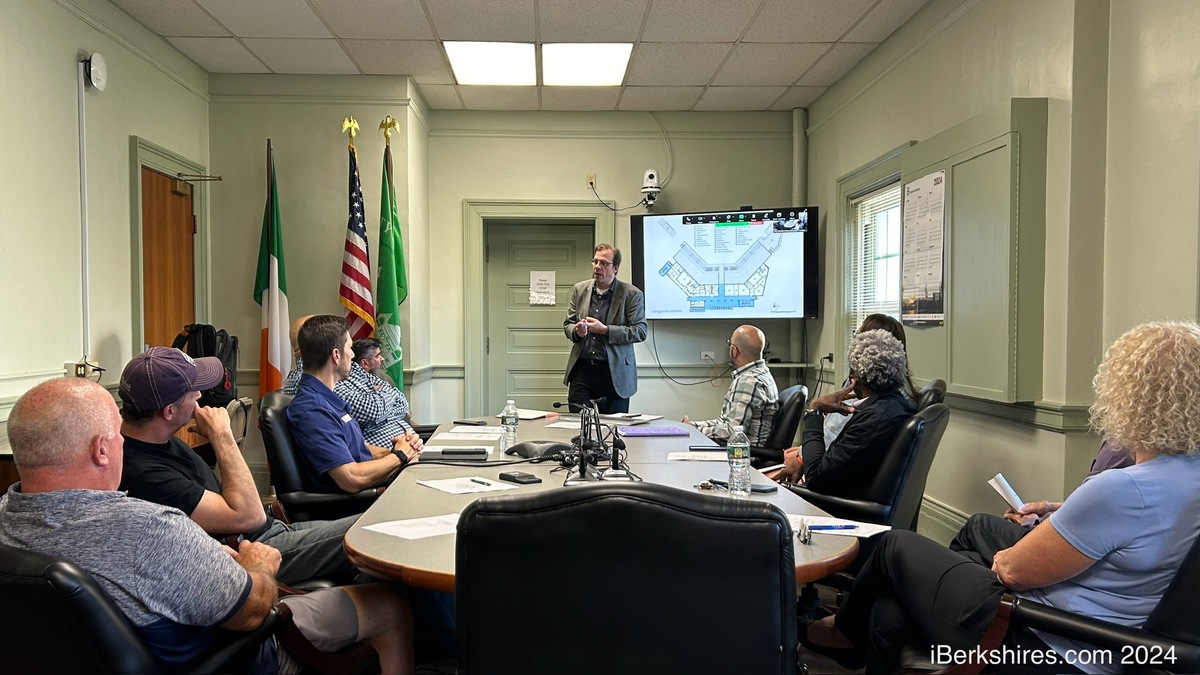
"We do have a budget issue," architect Salvatore Canciello told the Wahconah Park Restoration Committee on Thursday.
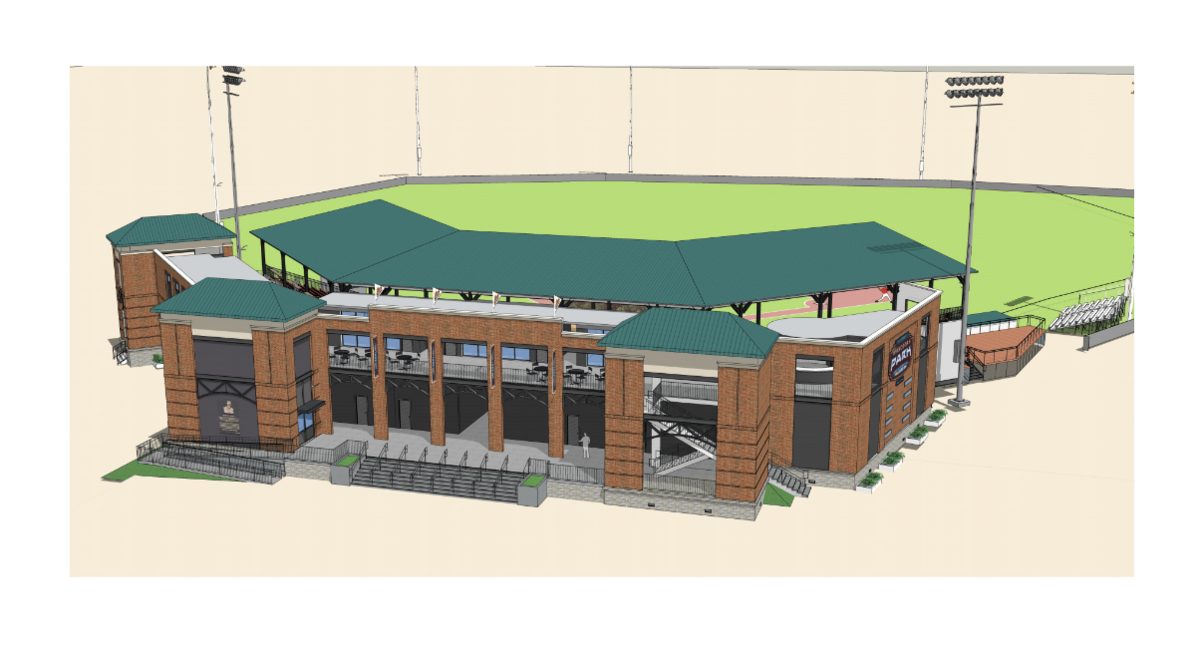
The panel has recommended a move from the schematic design to the design development phase for a $28.4 million rebuild of the grandstand and parking lot. Through value engineering, S3 Design was able to shave almost $2 million off the original $30 million price tag — half of the savings goal.
With $18 million committed between grant funding and capital borrowing, the committee must work to fill the $10 million gap.
Chair Earl Persip III is hopeful that the committee can actualize these funds, explaining that he doesn't have the answer to raising $10 million but "it's just finding the right people and right way to approach that and I don't think we've come up with a plan to do that or a strategy to do that yet."
The design development stage is where fine details and construction documents are developed.
"From the staff perspective and I think from conversations we've had, I think it makes sense for us to move into design development so we can get this project to a shovel-ready stage," Park, Open Space, and Natural Resource Program Manager James McGrath said.
"We have the funding in place. There was funding that has of course been provided by the capital budget. There was $2 million in the capital budget and then there was $3 million allocated by a congressional earmark. We've been using those funds to date to pay our consultants. We have ample funds to continue to move into design developments and we will have approximately $3 million remaining for which to use toward hard construction."
Mayor Peter Marchetti is willing to borrow $15 million, bringing the current commitment to $18 million. The project will also go to the Parks Commission before it goes to bid.
To avoid further inflation, the committee aims to get the recommendation on Marchetti's desk by August to inch toward a yearlong construction beginning next year. Costs escalate by about $1 million per year and the initial estimate began construction around this time.
"The longer we wait on this project the more expensive it is going to be," committee member Cliff Nilan said.
The 31,000-square-foot build breaks down into $23 million for construction costs and the remainder in soft costs. No work is currently proposed for the playing field.
Site improvements have increased by $1.2 million because the soil was in far worse condition than planners thought, increasing the number of piles required to support the building.
"We did make some changes to the roof forms to simplify them. We also opened up more of the space to react to some of the comments we got from the historic preservation commission that wanted it more open and more visible all the way through," Canciello explained.
"So we try to respond to some of those comments to make it more transparent, looking through to the stadium."
Earlier this year, the local historical panel agreed to draft a letter of support to the Massachusetts Historical Commission, which told the city that it "encourages consideration of project alternatives that would preserve the historic grandstand."
"There was a federal process, a federal review that has expired and now everything is back to Mass Historic Commission," McGrath reported.
"They've received our final filing and they have 30 days in which to comment."
The city has indicated that it is agreeable to a memorandum of agreement with the commonwealth stipulating how it will mitigate the impact of losing a historic structure. This includes a proposal for a "very robust, historically appropriate interpretive panel" as part of the stadium build that describes the site's history and baseball in Pittsfield.
"There were really no initial comments from Mass Historic, there are no comments from the federal review, so I think we're in good shape," McGrath said.
"And often, what we've heard from the consultant is that it's really the municipality that proposes a mitigation strategy working with their historic commission, and that often is not countered by the Commonwealth. So we've advanced something which we think is appropriate and respectful and it addresses the loss of the historic structure."
Within 30 days the city will have a "definitive understanding" but he doesn't force any issues from this point forward.
Tags: Wahconah Park,