North Adams Voters to Decide Greylock School Project
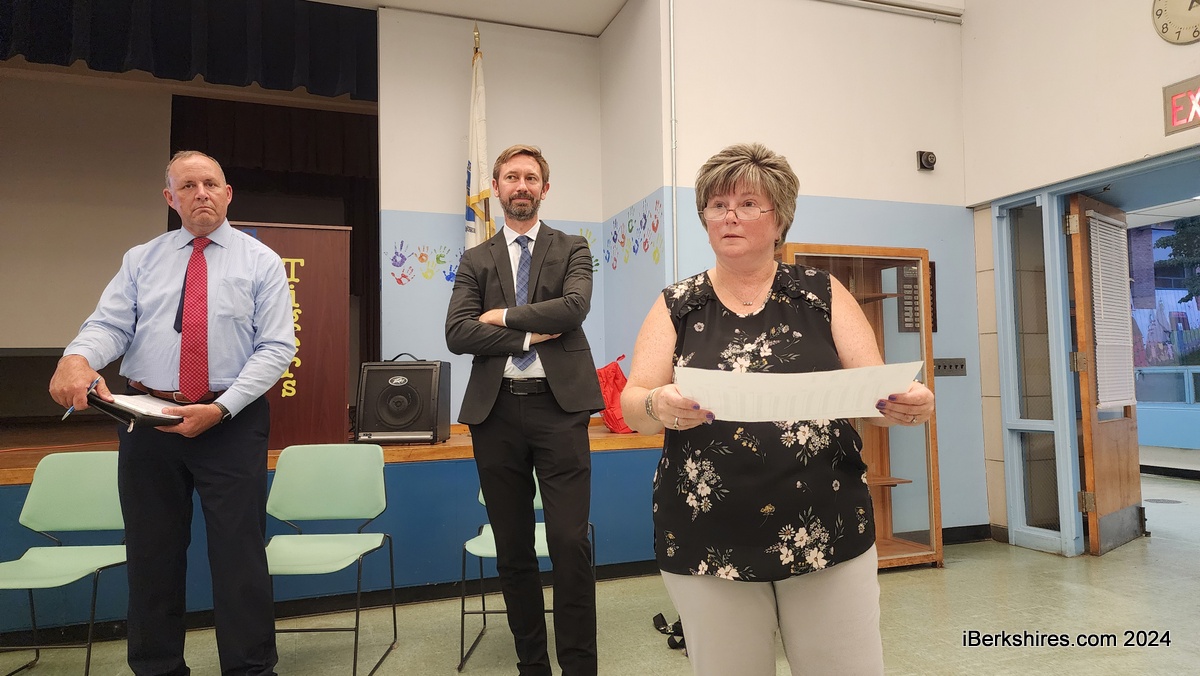
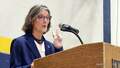
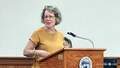
Mayor Jennifer Macksey at the project forum held at Greylock earlier this summer. She says she feels optimistic about the vote.
There is only one question on the ballot, whether to approve a debt exclusion that will allow borrowing for the project outside the limitations of Proposition 2 1/2 for the life of the loan. It is not an override.
The City Council approved the spending in July but a ballot vote is required to exclude the debt.
A yes vote will move the project forward; a no vote will essentially kill it.
Voting will take place from 7 a.m. to 8 p.m. at St. Elizabeth's Parish Center.
The questions about the project have largely revolved around two issues: the cost to the taxpayer and enrollment.
The School Committee voted last year to reduce from three elementary schools to two in light of the student population declining and to reconfigure the grades in the remaining schools as a better educational option. Colegrove Park would become a Grades 3 to 6 school and the new school a prekindergarten through 2 early education center.
Opponents of the project have cried foul over the School Building Committee's use of enrollment data. They have focused on numbers from the Berkshire Regional Planning Commission, which forecast a higher rate of decline. The committee has been working with a compilation of data, including studies done by the New England Development Council and the Massachusetts School Building Authority.
The projections had been of 625 students in K-6, with another 91 prekindergarten students by 2030. This was revised early last year to 535 in K-6, with still nearly 100 in preK, based on a 10-year projected average.
But the project information put out over the last several months has used the 2030 prediction, not the 2033 one. This was corrected on Friday on the project website after opponents and media questioned the numbers.
Superintendent Barbara Malkas on Friday said the presentation design had been around the graphics and the School Building Committee had not been given the updated graphics, although apparently they were created by the MSBA.
"I presented [the older graphics] as part of an understanding of what we accomplished in eligibility and feasibility," said Malkas. "There was no intent to not disclose the update for the 240 [for a preK-2 school]. ...
"I really didn't even think about it, you know, because it wasn't a major portion of our progression through the project. So, does it really make a difference? The number has been certified that we will need two schools up until at least 2033 and beyond."
The School Building Committee had requested an update on the enrollment figures, first calculated in 2021, as it considered grade reconfiguration. These figures were discussed a meeting of the committee in March 2023. The letter is included in the minutes but there are no graphics.
"It doesn't change any of the points we've ever tried to make," said Malkas. "And really it was to consider a preK through 2 school. That second projected enrollment would never have happened unless we asked for it."
The number of students were factored into the calculations for square footage in the project. At the same time, the MSBA invited the city into the feasibility study module.
Mayor Jennifer Macksey cautioned that the numbers were just a projection and that it was possible they are more pessimistic. Officials have noted that the student population has been fairly stable the last few years, that it's been outperforming the BRPC numbers, and that economic development within the city may pump up the population.
They say even if the number is lower, the city still needs two schools. With the updated projection, there will be an estimated 626 children including prekindergarten. Brayton and Colegrove have capacity for 449 and 420, respectively.
And they point out that the MSBA has not only voted to move forward with the project, it has highlighted North Adams for its educational planning for the new school.
The second issue, around cost, also plays into the declining enrollment. Opponents are predicting that the city will only need one elementary school in the not too distant future and that Brayton, despite its many problems, can limp along until then.
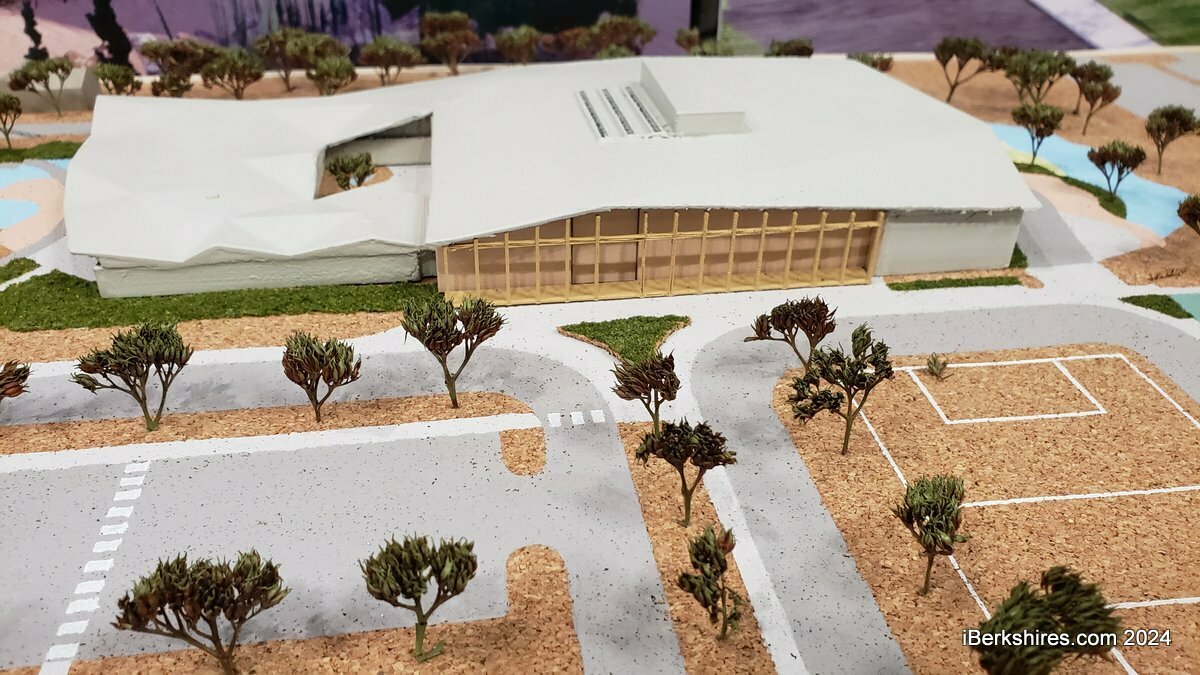
The cost to the city for a new school is set at $19.6 million out of the $65 million for the project. The full cost includes site work, the demolition of the old building, the construction of the new building, a 10 percent cost overrun and a geothermal heating and cooling system covered by a $2.7 million federal grant.
The borrowing will be staggered over a 30-year period and is expected to add $270 in the highest year to the average single-family home tax bill. After that, the cost will begin to go down. The $270 has been described as an average cost; it is not. The impact will depend on the value of the property.
"So for what I know right now, with our base, our average home is $206,000 and change. And this is what we project," Macksey said. "I can't guarantee that that's what it's going to be, because of your assessment."
The now 70-year-old Greylock School had been initially considered back in 2012 as part of two-school project that would see the renovation of Conte Middle School and a new Greylock built. The MSBA rejected that idea and officials at the time moved forward with what would become Colegrove Park Elementary School.
Greylock was never off the table completely, and statements of interest continued to be submitted to the MSBA in the following years. In 2019, the city was invited to move forward with a feasibility study of the school but this was derailed first by the pandemic and then by city's declining school enrollment.
An application for Brayton was also been submitted to the MSBA's Accelerated Repair program which covers roof, windows and boiler projects. The school was not selected.
Instead, the MSBA encouraged and accepted the city's application to change its project to include Brayton Elementary with the understanding that this would likely mean the closure of Greylock.
Should the vote go down, the city will have to deal with numerous issues at Brayton, which has had mold and mildew problems, has an outdated heating system, no air conditioning or sprinklers, and will be needing a new roof, just for starters.
Repairs or updates amounting to more than 30 percent of the fair cash value of the building could also trigger compliance with Americans with Disabilities Act. Brayton is currently assessed at $6.9 million; replacing the outdated HVAC system is estimated at more than $11 million. These cost studies were done during the feasibility stage for both buildings.
"The reality is, if it does fail, we're going to be stuck with Brayton, because we can't go back to Greylock, because the state of Massachusetts has already deemed it's an unacceptable building," said Macksey.
The MSBA has historically been reluctant to spend funds on buildings determined not to be conducive to contemporary education standards, which would include Brayton.
The mayor and superintendent said the School Building Committee has worked to be as transparent as possible over some four years of planning and they were perturbed at how negative and personal the debate over the vote had become.
"Go online and see all of our minutes posted," said the mayor. "When people, people say this wasn't well thought out? Well, I get defensive for the people who spent all the time, all those November meetings till nine o'clock, doing educational visioning ... This is about kids. You don't like me, don't like me. ... But this is about kids."
She said she's listened to concerns about the cost of the project from residents at coffees and at forums and understands their money worry. But she feels confident in the vote as the days wind down to Tuesday.
"The message we want to get out is that this is an investment in the future of North Adams," she said. "And if we don't have good facilities, and we don't invest now, when will we? When will we?"
iBerkshires has been covering the School Building Committee since 2019. A recent list of our stories can be found here.
Tags: brayton/greylock project, debt exclusion, MSBA,