Dalton Health Board Orders Dust-Abatement Plan for Concrete Site
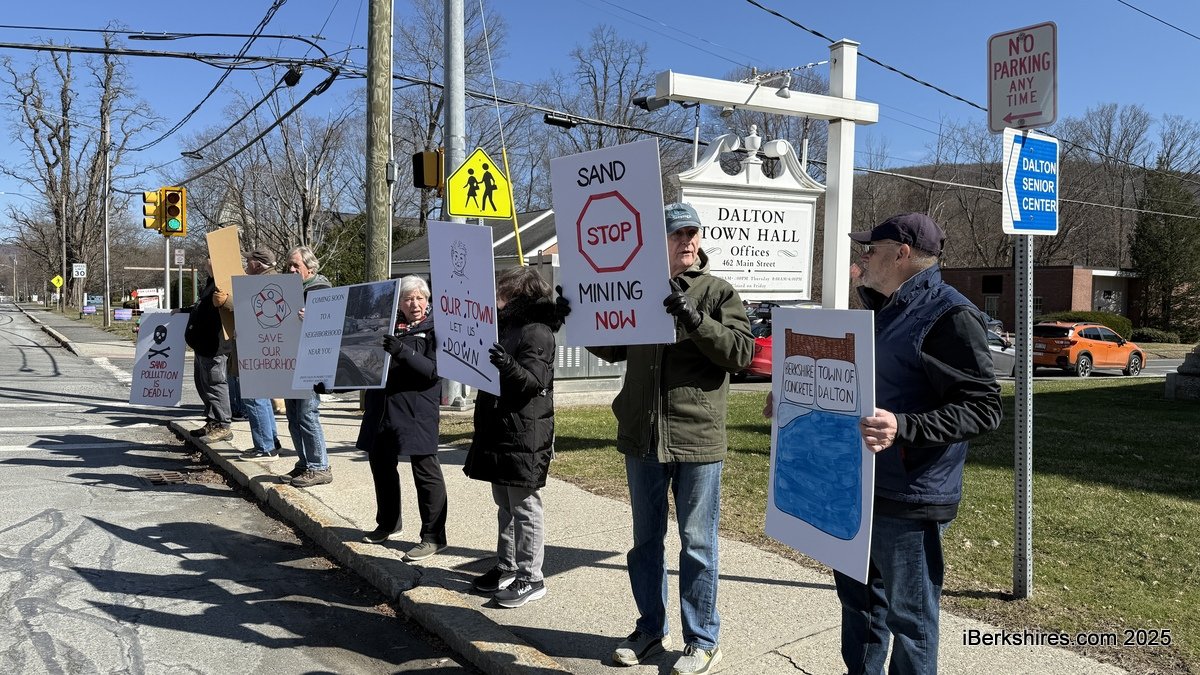
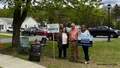
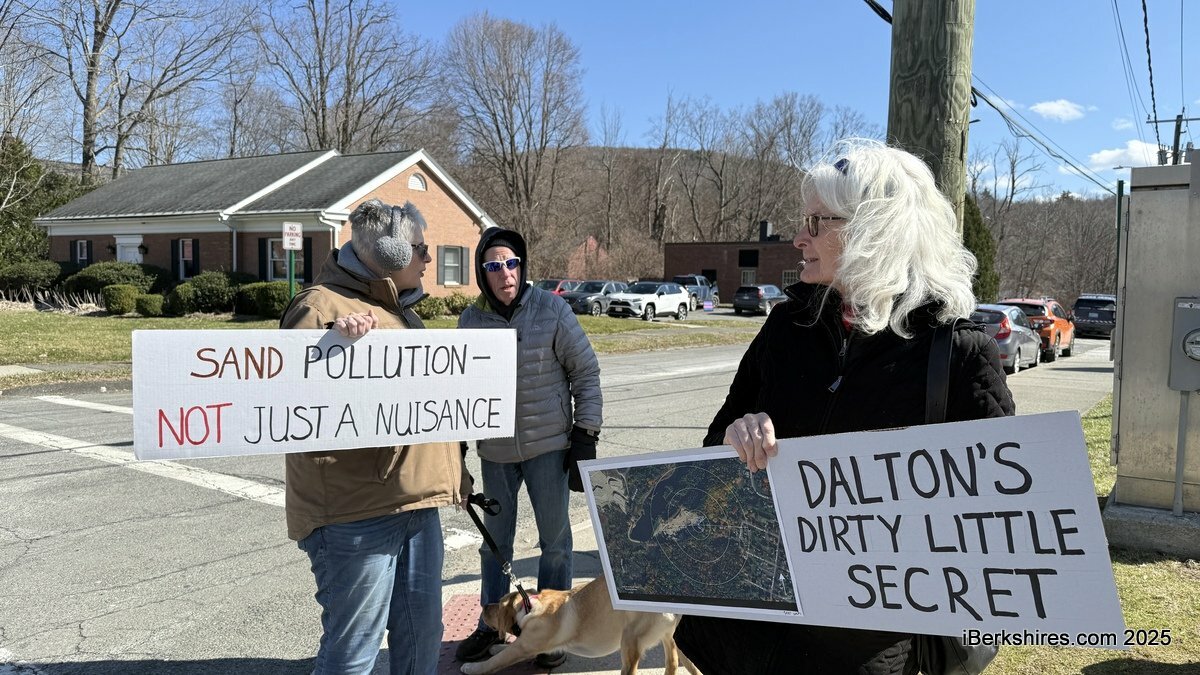
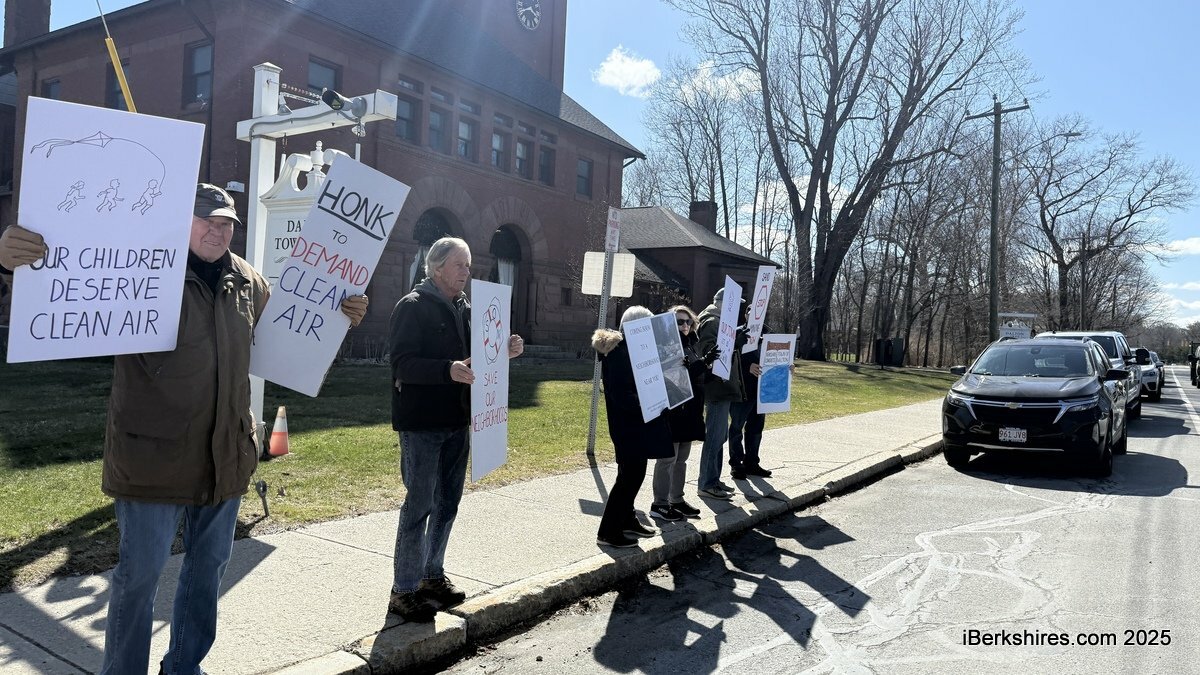
Residents protest on Wednesday ahead of a Board of Health meeting.
During Wednesday's meeting, the Board of Health voted to send a letter to the company requiring a comprehensive plan by April 25.
This letter establishes a formal deadline for submitting a detailed plan to address the dust nuisance and notes that failure to comply with this requirement could lead to financial penalties and potential legal action.
The board also recommended to request that a third-party review the dust mitigation plans and ongoing air quality monitoring as conditions of the special permit for Berkshire Concrete.
Resident David Pugh argued that Petricca Industries, the parent company of Berkshire Concrete, has shown a generational disregard.
"The history speaks for itself," he said. A petition submitted by residents argues this point, using newspaper clippings dating back to 1976.
"What we need with [the board's] action, is the same level of reaction by the people who created the problem to begin," Pugh said.
"So our reaction has been very strongly coordinated. Their reaction has been very slow and one of inaction, and that's where the real frustration."
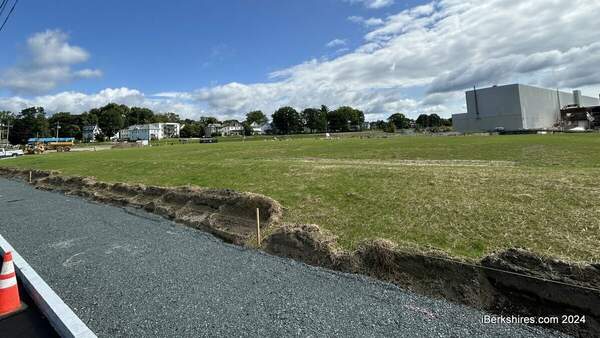
Since February, more than 100 residents have been searching for a solution to the sand they say is causing health issues.
Many have attended meetings of the Select Board, Conservation Commission, Board of Health, and Planning Board to demonstrate their complaints.
The issue resulted in a petition that gathered 357 signatures to urge the boards to take strict action on the situation.
"One of the things I want to have happen within all this process is a better process with the town and the different boards, the Planning Board, the permitting your oversight as a Board of Health, so when something goes wrong, you have a plan in place to react," Pugh said.
The board voted to issue layered fines for situations such as this based upon the violation itself, the basis of the violation, and the history behind the circumstances.
The first violation would range from $1,000 to $5,000 and subsequent violations can get fined up to $10,000 per violation.
During the meeting, residents advocated for ongoing, continuous air quality testing and highlighted how this would aid in enforcement because it shows when the violations take place.
After months of residents demanding action and town boards navigating a process toward a resolution and getting the sand tested, the state Department of Environmental Protection determined that the dust is not an air quality health concern but a nuisance, which the town is the regulatory authority to mitigate.
Sampling was conducted at multiple locations: 38 Deming St., 30 Florence St., 33 Florence St., and the upper end of Prospect Street.
For background information, Silver Lake in Pittsfield, which serves as the monitoring station for DEP, was included in the analysis.
The sampling occurred over three days: March 3, March 12 (which had light winds), and March 21 (which experienced strong winds).
Residents expressed skepticism of these results, saying the sampling does not reflect their daily lived experience.
Ronald Griffin disagreed with the state's assessment that the sand is not a health risk, citing a note from his wife's doctor saying the contrary. Griffin said, he and his wife, Lynne Griffin, are willing to share this with the Board of Health.
On March 12, Town Health Agent Agnes Witkowski issued a cease-and-desist letter to Berkshire Concrete, ordering that they abate nuisance conditions.
On March 26, the town received a response from Berkshire Concrete's attorneys Cohen, Kinne, Valicenti, and Cook.
"While [Berkshire Concrete Corporation] does not agree that the activities set forth in the order constitute a nuisance, BCC has been working diligently and thoughtfully with Foresight Land Services Inc. to complete a comprehensive mitigation plan addressing issues set forth in the order, as well as, the issues brought to BCC's attention by the [Planning Board,]" attorney Dennis Egan Jr. wrote in the letter.
The attorney claims that the last remaining piece of the plan is a map that shows the specific parcels, including the areas for mitigation, and is expected to be complete by "early next week."
A final dust mitigation plan has not yet been submitted. The town did receive a preliminary plan, which was considered incomplete.
Tags: berkshire concrete, BOH, dust, debris,