image description
The names of those lost to overdose were read out at Park Square on Sunday.
image description
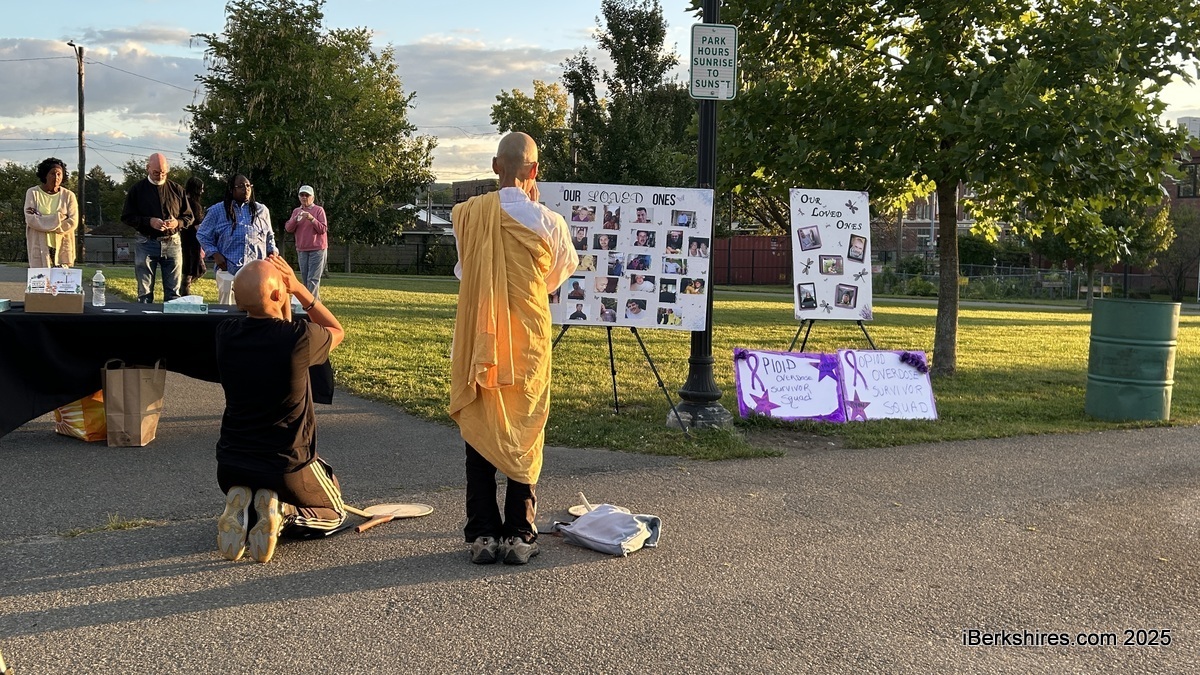
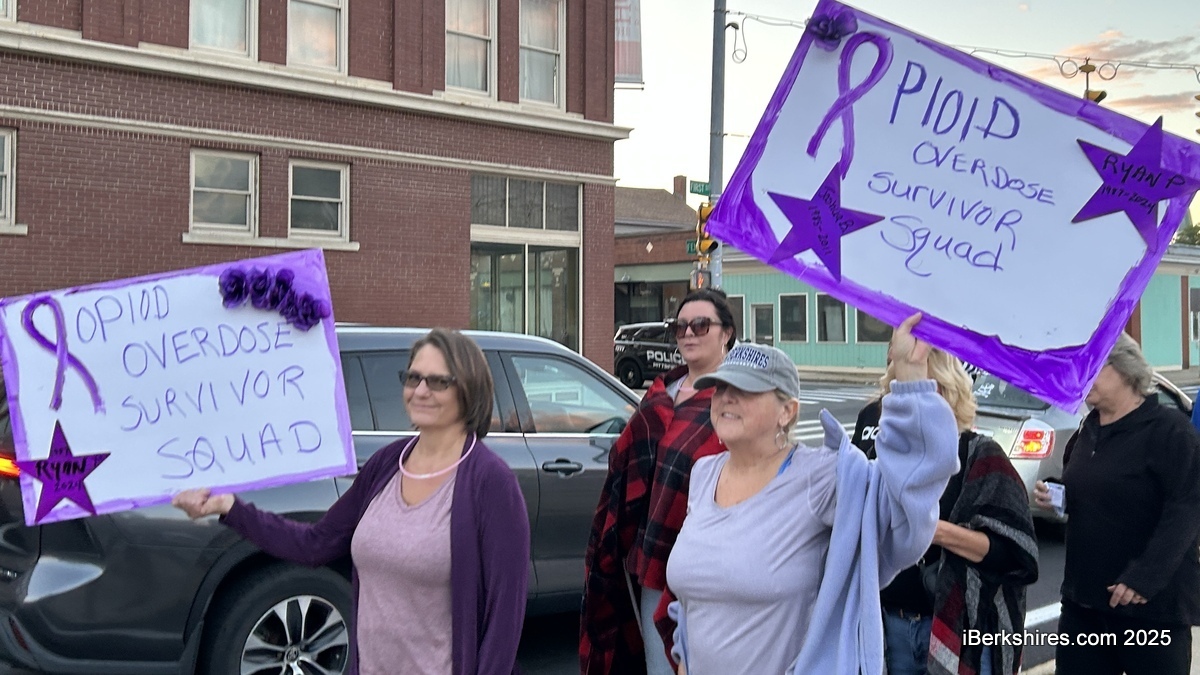
The event started at the Common and walked to Park Square.
image description
image description
image description
image description
image description
image description

Candlelit Signs in Park Square Mark 41 Overdose Deaths in 2024
By Brittany PolitoiBerkshires Staff
Print Story | Email Story

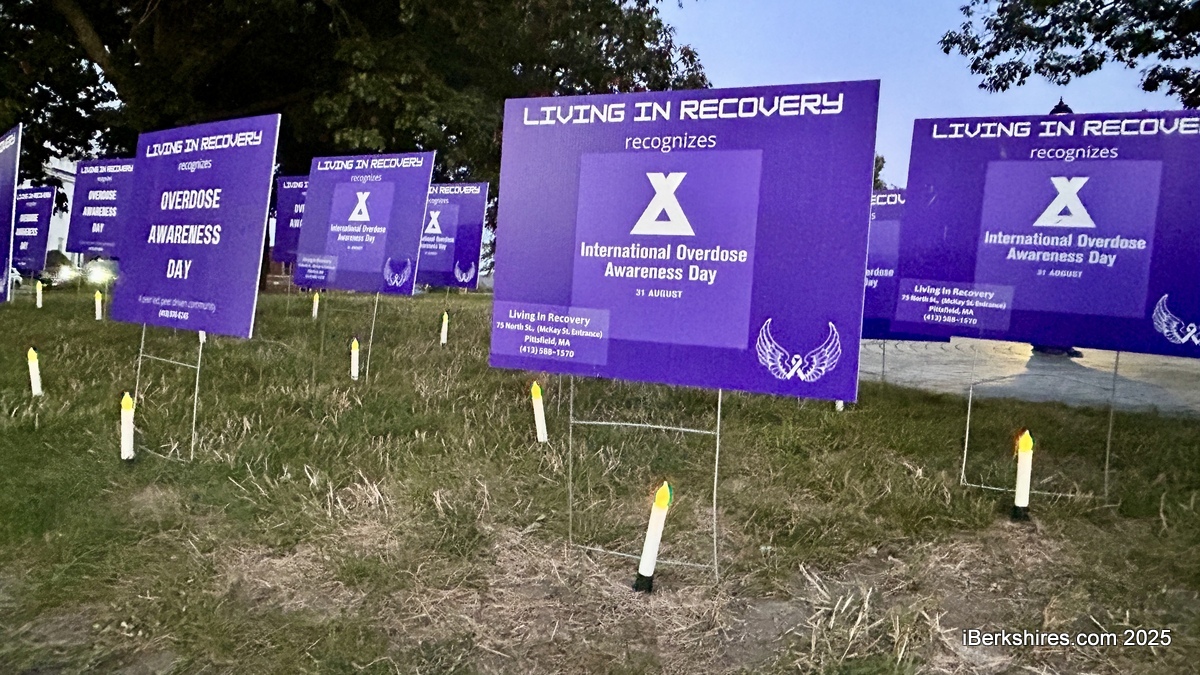
Each sign had the name of one of the 41 people in Berkshire County who died of overdose in 2024. 

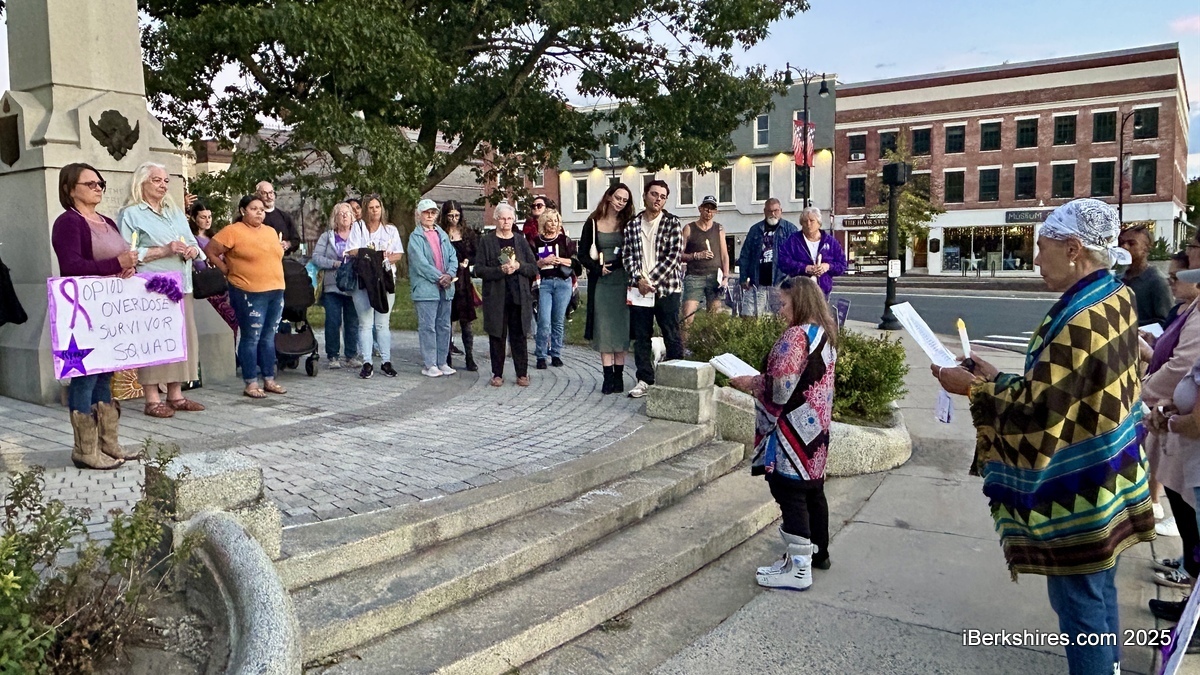
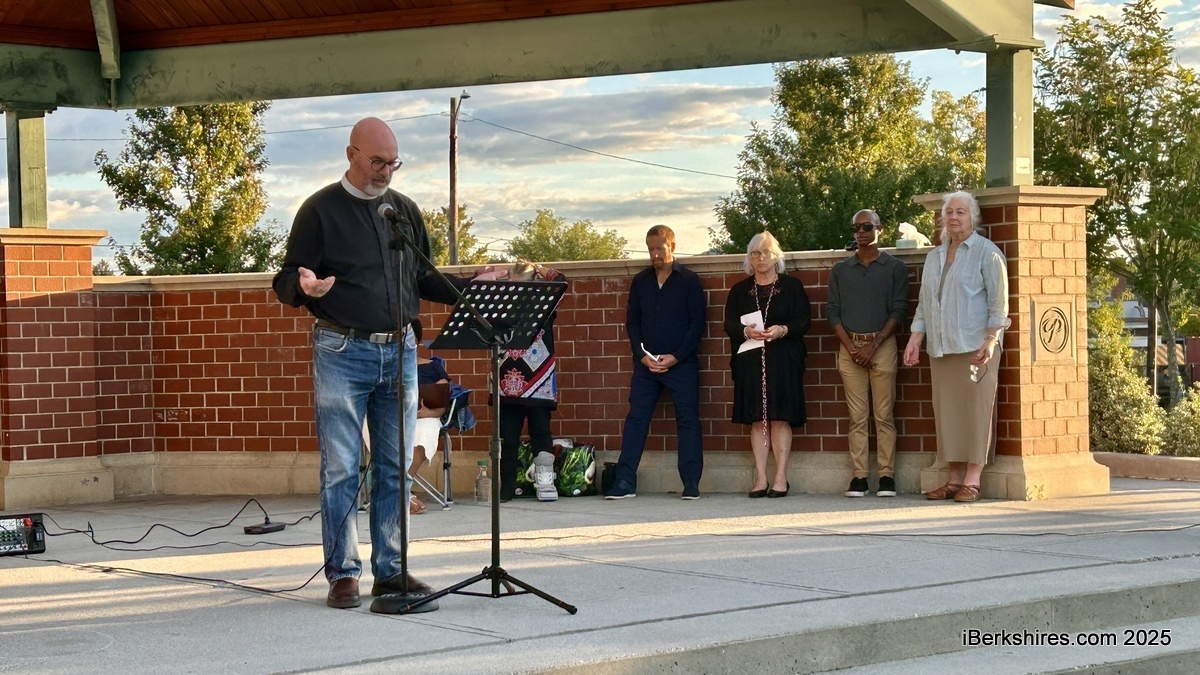
PITTSFIELD, Mass. — Pairs of community members walked from the Common to Park Square in silence on Sunday, honoring those who have died from overdose. 

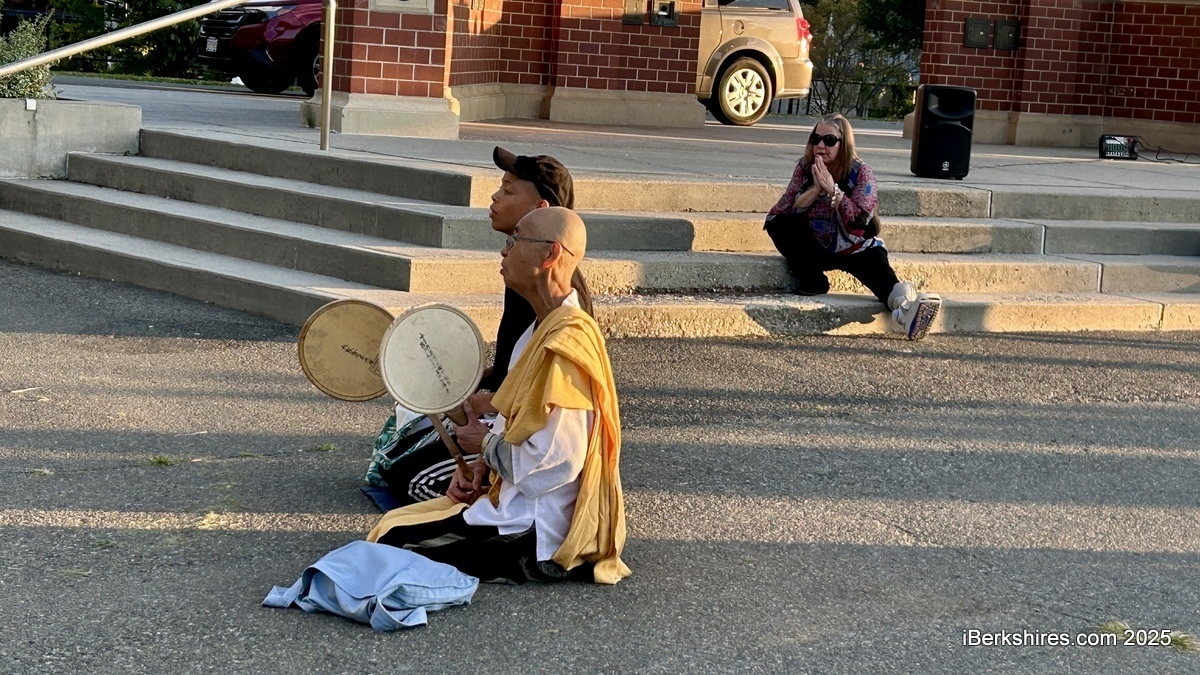
Living in Recovery held its fourth annual memorial service and candlelight vigil on Aug. 31, in observance of International Overdose Awareness Day. Forty-one purple, illuminated signs in Park Square represented every person lost to overdose in Berkshire County in 2024. 

"I am kind of a little bit dismayed that we have to keep doing this, but certainly I'm glad that we're all able to come together," Program Director Julie MacDonald told a crowd of about 50 people at the Common. 

This is a day for honoring those lost to overdose while highlighting the importance of harm reduction and recovery resources to prevent further loss. Hundreds have passed from overdose in the last decade; 24 Pittsfield residents just last year. 

"In 2024, 41 of our neighbors in Berkshire County lost their lives to overdose, 24 here in Pittsfield. Since 2013, a staggering 482 lives have been taken, each one an irreplaceable member of our community. In gathering today, we acknowledge the loss of these human lives and the many we have lost before them," recovery coach Quentin Anderson said. 

"It is our hope and our belief in education, compassion, and direct action, we will see these numbers decline. To truly turn the tide, we must replace stigma with compassion, silence with truth, and isolation with community." 

Anderson asked teary-eyed attendees to fight the urge to hide from the pain of this illness. 

"We must speak loudly," the recovery coach said. "We must share our collective grief for all to see. When we have been disenfranchised from expressing our grief, barred from the opportunity to receive the much-needed support from our community, we begin to isolate ourselves, but no more. Now we must do all that we can do to protect our community and ourselves from suffering losses such as this." 

Living In Recovery, located behind 75 North St., offers non-clinical, peer-led support options and educational and social activities. 


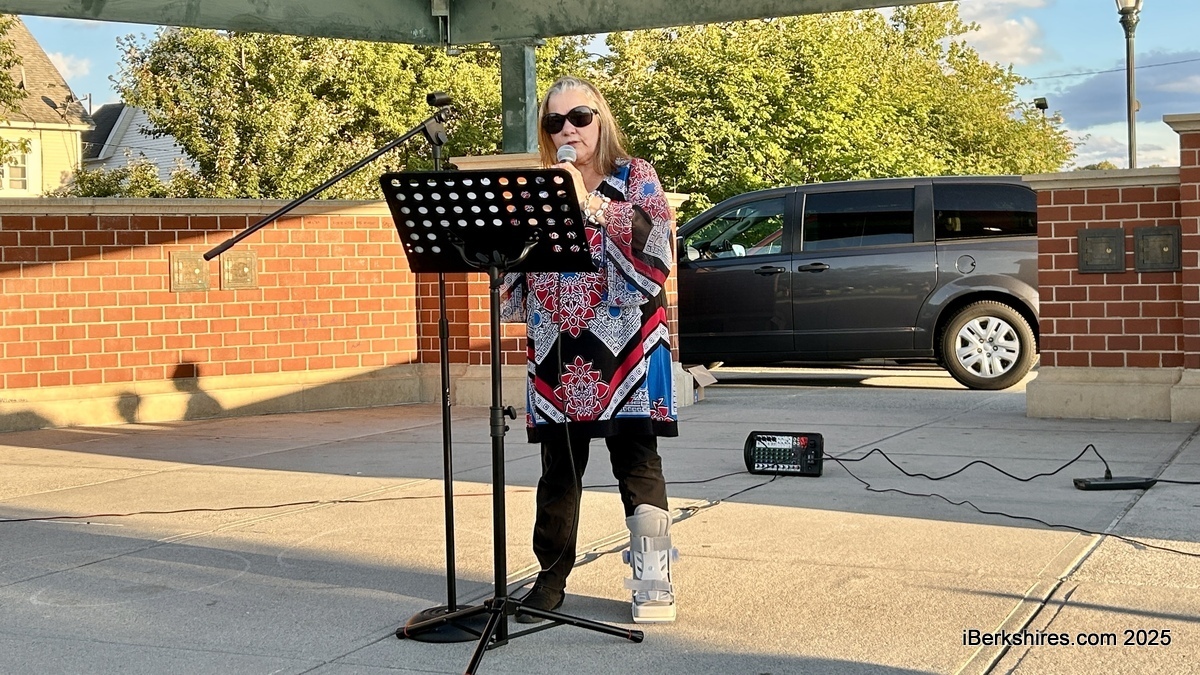
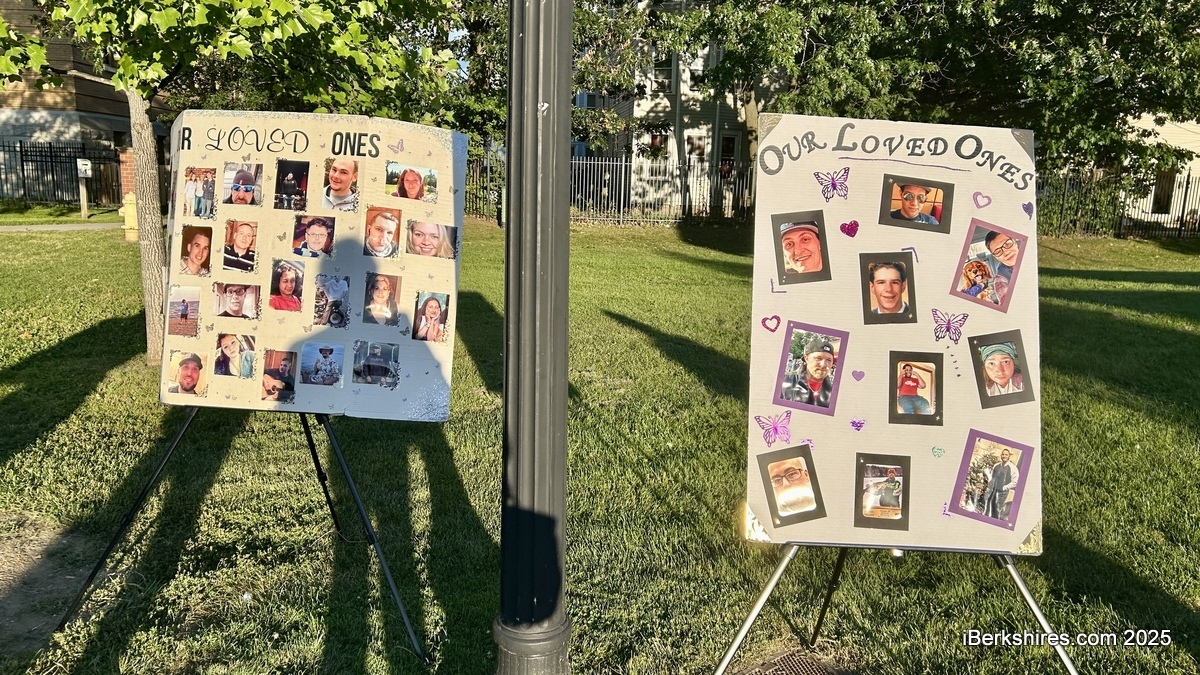
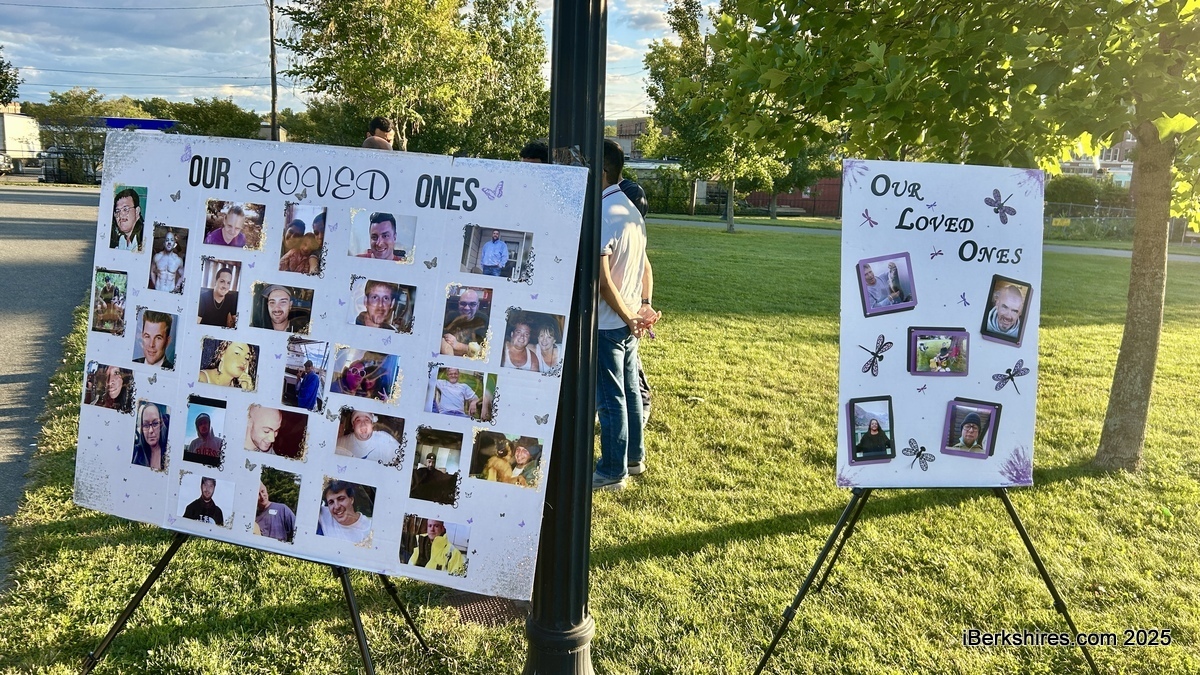
Pictures of the bereaved were displayed on boards adorned with butterflies and dragonflies. Grief counselor Peggy Zamierowski pointed out that these are brothers, sisters, mothers, fathers, friends, co-workers, partners, and children. 

"Though we are bonded together by our collective losses, we know that each person we grieve was a unique individual with their own personality, their own strengths and struggles, accomplishments and disappointments, and their own life stories," she said. 

"Our loss includes more than our loved ones. We grieve the role they played in our lives. We grieve their role in our day-to-day life, and the hope we had carried of a brighter future together. We grieve the loss of those dreams." 

She asked people to remember that despite a person's pain, their lives also had many moments of delight, happiness, caring, friendship, and love. 

"They mattered in this lifetime, and today, we remind ourselves and our community of that." 

 MacDonald said people live on in the hearts and minds of the living.

"The separateness, the uniqueness of each human life is what brings us to this place of grief, of feeling the loss of that special person," 

"When you look through the entire world, you will see that there is no one like your loved one, and they still live on in our memories, though no longer a visible part of our lives; they live on for the influence they have had on us and the special part they played in our lives." 

The group was asked to keep in mind the solemnness of the occasion and walk in silence to the candlelit vigil. Once at Park Square, the names of people who passed from overdose were read aloud as a (battery-operated) candle was placed in front of each sign. 


Tags: memorial,   overdose,   
If you would like to contribute information on this article, contact us at info@iberkshires.com.

Youth For The Future: Adwita Arunkumar

By Breanna SteeleiBerkshires Staff

PITTSFIELD, Mass. — Williams Elementary School fourth-grader Adwita Arunkumar has been selected as our April Youth for the Future for her mentoring of a younger child.

Youth for the Future is a 12-month series that honors young individuals that have made an impact on their community. This year's sponsor is Patriot Car Wash. Nominate a youth here

Adwita has cortical visual impairment; she has been working with her teacher, Lynn Shortis, and her, paraprofessional Nadine Henner.

"My journey with CVI means that I learned in a different way. I work hard every day with Miss Henner and Miss Lynn, to show how smart I am," she said.

"Adwita is a remarkable student. She's a remarkable child. She has, as she shared, cortical visual impairment, which is a brain-based visual processing disorder, which means the information coming in through the eyes is interfered with somewhere along the pathways, and we never quite know what's being interpreted and how and how it's being seen," said Shortis.

"So she has a lot of accommodations and specialized instruction to help her learn."

Recently Adwita has chosen to mentor 4-year-old Cayden Ziemba, who is also visually impaired.

"I decided to be a mentor to Cayden so that she can learn some new things. I teach her how to walk with the cane, with the diagonal and tap technique, I am teaching her Braille," she said. "I enjoy spending time with Cayden, playing games and being a good role model."

Shortis said the mentoring opportunity came up when Cayden was entering preschool at Williams, and they introduced her to Adwita. 

"Adwita works really, really hard academically. She's very smart, but there are a lot of challenges in that, because of the way that it's so visual and she's a natural. She's just, it's automatic," Shortis said. "It's kind of like a switch is turned on and she becomes this extremely confident and proud person in this teacher role."

Adwita also has been helping Cayden on how to use her cane on the bus and became a mentor in a unexpected ways.

"Immediately at the start of this year, she would meet Cayden at the bus. She has taught Cayden how to use her cane to go down the bus stairs. Again, Adwita learned that skill, so it wasn't something I had to say to her, this is what you need to have Cayden do. She just automatically picked that up and transferred that information," said Shortis. "Cayden is now going down the bus step steps independently with her cane. And then she really works hard with Adwita in traveling through the hallways, Adwita leads her to her class every morning, helps her put her things away and get ready for her morning."

Adwita said she hopes Cayden can feel excited about school and that other students can feel good about themselves as well.

"I want them to know that Braille is cool to learn. You can feel the bumpiness with your fingers. I want people to know how you can still learn if your brain works differently sometimes. I need to have a lot of patience working with a 3-year-old. I need to be creative and energized," she said.

She hopes to one day take her mentoring skills to the head of the class as a teacher.

"I want to become a teacher and teach other students when I grow up. I might want to teach math, because I am great at it," she said. "I also want to teach others about CVI. CVI doesn't stop me from being able to do anything I want to. I want students to not feel stressed out and know that they can do anything they want by working hard and persevering."

Her one-to-one paraprofessional said she likes seeing the bond that has grown between the two girls, and can picture Adwita being a teacher one day.

"I do see her in the future being a teacher because of her patience, understanding and just natural-born instinctive skills on how to work with young children," Henner said.

Shortis also said their bond is quite special and their relationship has helped to bring out the confidence in each other.

"The beauty of it, there's just something about it their bond is, I don't even really have a word to describe the bond that the two of them have. I think they share something in common, that they're both visually impaired, and regardless of the fact that their visual impairment differs and the you know the cause of it differs," she said.

"They can relate. And they both have the cane. They're both learning some Braille. But there's something else that's there that just the two of them connected immediately, and you see it. You just you see it in their overall relationship."

 
View Full Story

More Pittsfield Stories