MassWildLife: Watch for bald eagles this winter
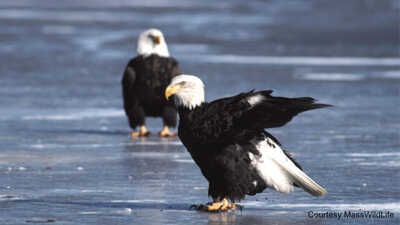 |
Many people are surprised to find out that winter is a prime time for birding. There are opportunities for beginner and experienced birders to spot our year-round resident birds as well as the seasonal "snowbirds" that visit Massachusetts for the winter months. Some veteran birders make an annual trek to the Massachusetts coast in winter catch a glimpse of seabirds and sea ducks. Other, more casual birders are content with the sight of back-capped chickadees, downy woodpeckers, or white-breasted nuthatches as they walk or ski along. One iconic bird—the bald eagle—is becoming easier for winter birders to spot.
Bald eagle restoration is one the best conservation success stories in Massachusetts. MassWildlife continues to document steady growth and expansion of the eagle population. That means that there may be more opportunities to see an eagle near you this winter.
Where to look for eagles in MA
Bald eagles usually live in coastal areas, estuaries, and larger inland waters. They need a lot of shoreline habitat with forested areas for nesting. They prefer areas where some trees project above the forest canopy for perching with an unimpeded view. Bald eagles typically choose waterbodies with a good supply of moderate- to large-sized fish.
Eagle-spotting tips:
- Eagles are drawn to open waters. When lakes and ponds begin to freeze, there are fewer areas of open waters which may make eagles easier to find.
- Eagles often gather below dams if water is being released.
- If you see an eagle once, visit that site again. Eagles tend to return to the same section of shoreline or even the same tree throughout the season and year after year.
- Look for large nests in big trees. Massachusetts is home to over 70 nesting pairs. If you do spot a nest, keep your distance and observe from afar.
- If you see an eagle, watching with binoculars from inside your vehicle is a great way to observe the birds without disturbing them and you’ll stay warm.
What do eagles do in the winter?
Bald eagles become sexually mature when they are between 4–6 years old, but they may be considerably older before breeding for the first time. Courtship takes place in mid- to late winter. After courtship, a mated pair builds or adds to a large nest in December–February. The nest is built with large sticks and lined with sprigs of pine, grasses, and other soft materials. Male eagles collect the nest materials and deliver them to their mates, which are responsible for most of the actual nest construction.Once a nesting site is chosen, mated pairs usually return every year and add to the existing nest. Egg laying usually takes place from early March to early April.
If you see a bald eagle nest this winter, please report your observation to MassWildlife at mass.wildlife@mass.gov. Please include the location and date of the observation and your contact information. These observations help MassWildlife identify new nest locations and monitor our eagle population.
Other tips for winter birding
- Plan for the weather. Winter birding is a great activity for friends and family, but it won’t be fun for long if you're cold. Dress in layers of fleece or wool, wear warm, sturdy boots, and ensure your outer layer provides wind protection by choosing rain or wind pants and jacket. Don’t forget a scarf or face mask. Sunglasses (or clear safety glasses if it’s overcast) also provide wind protection. A few snacks and water along with coffee or hot chocolate tucked in a day pack will keep you going strong.
- Remember birdwatching ethics. It’s critical for birders and photographers to resist the temptation to get too close. If you get too close to an animal its behavior will change; it may stop feeding, look at you, vocalize, appear nervous, or flee. If you notice a change in behavior, slowly back away. Always follow marked trails where indicated, speak quietly, and move cautiously. Use your binoculars and spotting scope rather than your feet to get "closer" to your subject.
- Use the right equipment. Your main apparatus in birdwatching are your eyes and ears. Binoculars and simple bird identification guide are the minimal gear needed to aid your senses. A spotting scope helps when birding along the coast or in open meadows and fields but not necessary. If you are in a popular birding area, birders are generous and will often offer you a view through their scopes. It might be difficult photographing birds with a camera, but you can capture your birding buddies' excitement and the scenery.
Tags: MassWildlife,