Mount Greylock Schools Draft Budget Sees Double-Digit Percentage Hikes for Towns
WILLIAMSTOWN, Mass. — The Mount Greylock Regional School Committee on Tuesday began consideration of whether it wants to send its member towns fiscal year 2027 assessments that are 12 to 13 percent higher than the bills Lanesborough and Williamstown paid for the current school year.
The committee held a special meeting with a single item on the agenda: the draft FY27 budget prepared by the administration.
That spending plan, which comes with no net increase in staffing or services, would result in an 11.73 percent increase in the assessment to Lanesborough (up by $801,742 from FY26) and a 12.71 percent increase to Williamstown (up by $1,883,944).
The draft budget could address some of the needs expressed by the school councils in each of the district's three schools. But it does so by reallocating positions in the FY26 budget and without adding any full-time equivalent positions (FTEs), Superintendent Joseph Bergeron told the School Committee.
Both Lanesborough Elementary and Williamstown Elementary listed the addition of a math interventionist as one of their top priorities for FY27 in presentations given to the School Committee over the last couple of months.
"Both elementary schools have potential paths to gaining math interventionists," Bergeron said. "The increases that you see within what we have here, meaning the 12 and 13 percent increases, those embed with them the ability to gain those math interventionists within the staffing. In order to do that, we would need to move pieces around within schools.
"If we wanted to … purely increase FTEs in order to achieve math interventionists at the elementary schools coming in from the outside? Each town's budget would need to increase by about another $100,000, and that equates to increasing each town's percentage [increase] by another .4 to .5 percent."
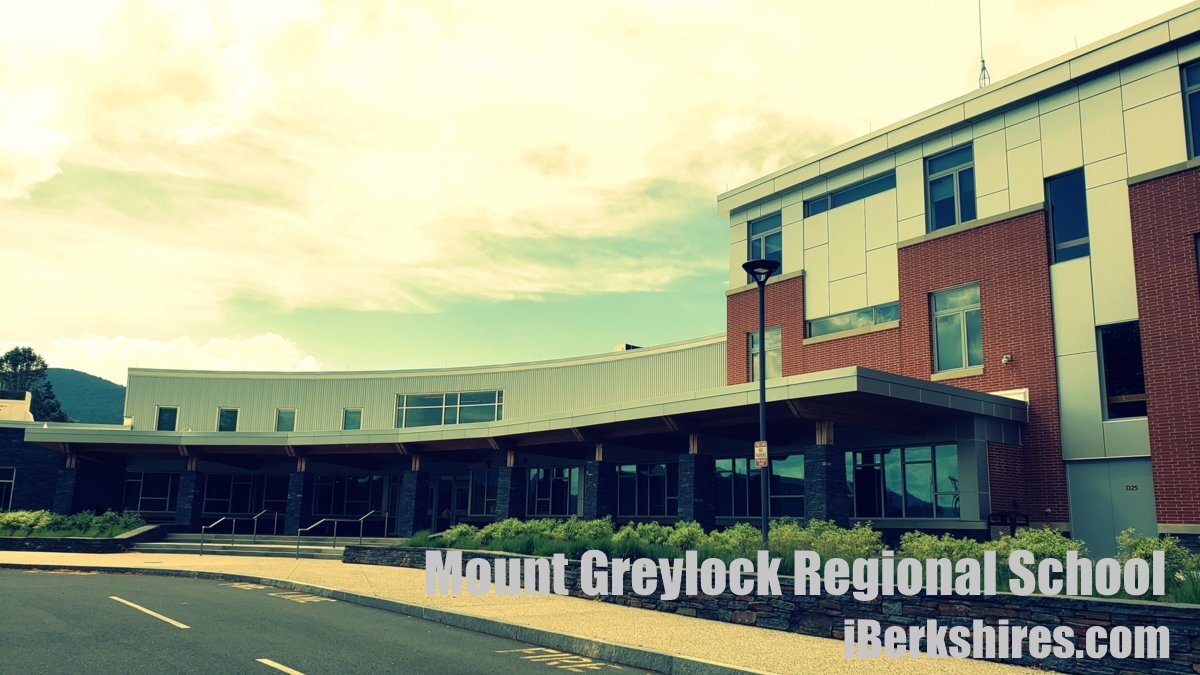
Mount Greylock Regional School, the district's middle-high school, came to the committee seeking a new math teacher and a behaviorist.
The former ask is not reflected in the draft budget Bergeron presented on Tuesday. The need for a behaviorist, however, would be addressed by the second-year superintendent's plan to shuffle staff in the district office.
Bergeron proposed repurposing funds in the FY26 budget for three central office positions that remain unfilled: the director of business/finance, the director of academic technology and the executive assistant to the director.
Instead, he wants to fund two new positions at the district level — a director of behavior, community and culture and a coordinator of communication and strategic projects — while using the money budgeted for the third position to support the budgets in the three schools.
Bergeron said it is not that the district does not need the three positions he is proposing cutting. The district just needs the two proposed positions more, he said.
Bergeron, who came into the district as a finance director and has continued in that role while being the assistant superintendent, interim superintendent and superintendent, explained to the committee his vision for the new positions.
"We need people who are going to get the work we need to get done done, and we're facing budgetary challenges … that are significant," Bergeron said. "The area of focus that we, within the district office, have the least expertise, the least ability to carry on our own right now and that's showing significant needs beyond anything our three school buildings are able to take care of on their own … is within this realm of behavior, community development, family engagement, culture — meaning how is the culture of the district evolving and what are the ways we are being supportive, what are the ways we are maximizing what we are as human beings.
"Bringing a person in who has the skill set within restorative practices, [multi-tiered system of support] development within the [social emotional learning] and behavior world and who also is an excellent communicator and bridge builder. … Right now we are calling it a director of behavior, community and culture."
Bergeron noted that the new district position would be in line with Mount Greylock's request for a behaviorist and also address the Williamstown Elementary School Council's desire to continue to address chronic absenteeism at the elementary school.
The new "coordinator of communication and strategic projects" might not be a full-time position, Bergeron told the committee.
"This coming year, and for many years in the future, we have a complex set of things that we should be better about communicating with, establishing vision and values development," Bergeron said. "How do we make sure we're as inviting to the community as we possibly can be? Then moving into strategic planning. Who is helping to make sure all of this is moving in a way where we don't forget about things that are important and we make sure all of the dots are aligned.
"Similarly, we have a website that is old. It needs attention. We could much better organize and communicate information through it."
If the committee advances the budget that Bergeron put forward — without any new classroom hires and with a $90,000 savings by trimming the central office — the district's net operating budget will go up by $2.7 million from FY26 to FY27 with a resulting increase in about that amount in the combined assessments to Lanesborough and Williamstown.
Why?
A number of factors are at play, not the least of which is health insurance. In addition to an 8.75 percent premium increase from Berkshire Health Group, the Mount Greylock Regional School District has seen a marked increase in the number of employees signing up for the district's health insurance plan.
Currently, about 70 percent of district employees use Mount Greylock's plan. Five years ago, that number was 55 percent, Bergeron said.
Also included in the budget are contracted salary increases and rising costs for transportation and utilities. Plus, the district this school year absorbed the cost of new out-of-district placements that were not included in the FY26 budget, bills that were paid by relying on reserves in the current school year but which are factored into the operating budget for FY27.
Speaking of those reserves, the School Committee in recent years, in response to requests from town officials in Lanesborough and Williamstown, has been spending down its reserves by applying them to the operating budget and, thus, lowering assessments to the member towns.
Those days are over because the reserve funds have been successfully depleted. The FY27 draft budget Bergeron presented on Tuesday includes $700,000 less in offsets from tuition, School Choice and excess and deficiency (a regional school district's equivalent of a town's "free cash").
At the same time, the district anticipates a net decrease of $80,000 in federal and state funding for FY27.
All of that — the increased costs, lack of reserves and decline in federal and state support — creates a situation where the local assessments will be significantly higher than desired by officials in both the district's member towns.
Williamstown, which has an earlier town meeting and is, therefore, earlier in the process of developing its FY27 budget, built a draft spending plan with a "place-holder" 9 percent increase from the MGRSD, well below the 12.7 percent resulting from Bergeron's draft budget.
The School Committee has two weeks to decide whether that is the budget it will approve and send to its towns' town meetings.
That process will include three meetings of the committee's Finance Subcommittee on March 5, 12 and 17 and the public hearing and planned vote by the full School Committee on March 19. School Committee Chair Julia Bowen encouraged public attendance at the Finance Subcommittee meetings.
On Tuesday, the committee received feedback from one member of the public, Jenna Hasenkampf, who serves on the Williamstown council and has two children at the school.
"I believe it's not OK for us to not provide an excellent education for every student who comes through our doors and meet their needs wherever they're at, whether it's advanced course loads or supports to get them to grade level," Hasenkampf said. "And I ask you to put together a budget that not just maintains but adds funding to our schools.
"If there is pushback from the Select Board, we as parents and community members have the opportunity to show up as residents of this town."
The School Committee contemplated what happens if the school district's budget gets pushback from town meeting or if the assessment to either town is forced to go to a Proposition 2 1/2 override vote to maintain its budget — most of which goes to the public schools.
In the former case, Bergeron said, the district would have the opportunity have its FY27 assessment considered at special town meetings after the annual town meeting, perhaps after the School Committee approves cuts that would reduce those assessments.
In the latter, the district would be at the center of a debate about municipal spending.
"If either town is ever looking at an override, we have a responsibility to help them organize and mobilize — help the families of our schools and folks who want to support the school budgets," School Committee member Carolyn Greene told her colleagues. "So we should at least keep that in mind for this year or future years. We'll need to help do some of that work.
"I've worked override campaigns. They're not easy. And it's often the schools that are driving override budgets."
The committee members also heard some of the arguments they may be able to bring to such a discussion.
Prompted by member Curtis Elfenbein, Bergeron reported that the potential 12 and 13 percent increases in assessment for FY27 are an outlier for the district. Its assessment increase history the last four years has been: FY23, 2.68 percent for Lanesborough and 4.1 percent for Williamstown; FY24, 3 percent for Lanesborough and 3.16 percent for Williamstown; FY25, 3.38 percent for Lanesborough and 3.9 percent for Williamstown; and FY26, 6.38 percent for Lanesborough and 7.62 percent for Williamstown.
"You've heard me say this year after year: I'd very much like to see that graphed alongside the increase in the cost of all the things that are hitting all of our households, energy costs, fuel costs, food costs, insurance costs," Elfenbein said. "And then reiterate to the people of our towns we represent in this endeavor that those things are also part of school. We've seen those costs skyrocket for us as individuals and communities, and yet the ask of the towns in terms of the percentage increase has not followed that same trajectory. That's part of why we're at where we're at now."
Bergeron provided some other data that could be used in a potential debate about the size of the district's budget, showing a table drawn from the latest figures from the Department of Elementary and Secondary Education.
As of 2024, according to DESE, the Mount Greylock School District spent $21,704 per student, which ranked ninth out of 10 Berkshire County school districts (only Central Berkshire, at $19,766, spent less). Meanwhile, in the same year, Mount Greylock ranked third in in-district FTE positions, behind only the Pittsfield Public Schools and Central Berkshire.
"We spend less, and our enrollment has held steady while others have declined," Bergeron noted.
Tags: fiscal 2027, MGRSD_budget, school budget,