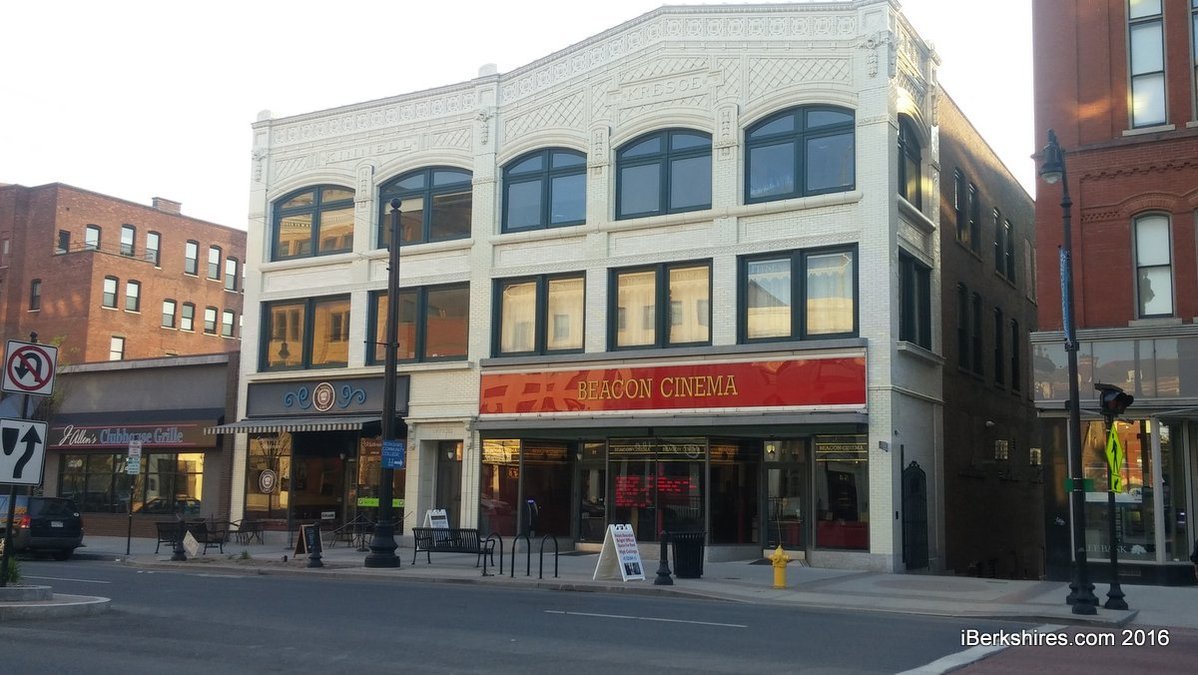
Michigan Company Looking to Buy Beacon Cinema
PITTSFIELD, Mass. — A Michigan company is looking to buy the Beacon Cinema.
Insight Management Consulting has made an offer to purchase the building and the business from owner Richard Stanley. Stanley had redeveloped the North Street building into a theater in 2008, becoming an anchor to the city's future vision of revitalizing North Street when it opened its doors in 2009.
"The Beacon Cinema is a unique historic landmark and vital anchor in downtown Pittsfield. The restoration of the formerly distressed structure was a critical catalyst in our downtown revitalization. Early investments in Pittsfield's downtown, like the Beacon, have stimulated other investments, increasing downtown property values by 21.5 percent in the last 10 years," wrote Mayor Linda Tyer in a letter to the City Council.
The renovated Kinnell-Kresge building with its two-story cinema was touted to bring upwards of 200,000 people annually to North Street when ground was broken in 2008. But Stanley, who also owns the Triplex Cinema in Great Barrington, has struggled to sustain a profit. In 2016, the City Council agreed to extend tax incentives for five additional years to help with improvements to the theater. The Beacon Cinema then lowered its prices and put in brand-new seating.
Insight Management, doing business as Pheonix Theaters, owns and operates theaters in Michigan and Iowa.
With a sale pending, the seller and the buyer petitioned the city to forgive $2.5 million worth of loans the city issued to the Beacon. According to Director of Community Development Deanna Ruffer, Tyer countered and the two parties agreed to ask forgiveness for $1 million of that with the rest of it being forgiven in 10 years provided that the theater remains open.
On Tuesday, the City Council will be asked to make those amendments.
"This debt is the result of the magnitude of investment required to redevelop existing dilapidated downtown historical structures into a state of the art cinema center and office complex, meeting the requirements of the state and federal historic tax credit program and the New Market Tax Credit program. These financial challenges were exacerbated by the changes that have occurred in the past decade in the movie industry and the owner's inability to complete the full build-out of the commercial components of the property," Ruffer wrote.
Ruffer warns that "the proposed sale of the property to an experience independent theatre owner has been determined to be the best option; with the only reasonable alternative being foreclosure which could result in the immediate closing of the Beacon Cinema and elimination of all of the city debt."
Ruffer provided an analysis of Insight Management and determined "it is the opinion of the Department that IMC and its owner have the financial and operational wherewithal to ensure that the property and theatre are long-term successful endeavors and continue to contribute to the ongoing vitality and growth of downtown Pittsfield for many years into the future."
The redevelopment of the theater in 2008 is a key piece of the city's recent history. North Street's vacancies were piling up through the 1990s. In 1997, a master plan was developed by Downtown Pittsfield Inc. identifying a downtown movie theater as a key component to the downtown's future.
The Beacon was coupled with the live-performance Colonial Theater and Barrington Stage as three pillars for redevelopment. Those since triggered the growth of additional shops nearby.
In 2016, a number of downtown businesses came to the aid of the Beacon, saying it helps bring customers to their stores.
"It wasn't until the Beacon Theater was proposed when we thought [downtown Pittsfield] would be a good fit for us," said David Renner, who owns the Marketplace Cafe right next door to the cinema, at the time.
Downtown Pittsfield officials credit Stanley for investing in the more than $20.2 million project and creating 39 total jobs. However, the theater landscape has changed and increased competition from Regal Cinemas at the Berkshire Mall has taken its toll. Despite boasting of increased attendance numbers since installing the new seats, it appears Stanley has yet to see a profit.
"Also in 2016, Regal Cinema upgraded the seats in their theaters at the Berkshire Mall to manual reclining seats. This had an immediate, negative impact on Beacon attendance and exacerbated the Beacon's financial challenges," Ruffer wrote.
"In response, the Beacon's commercial lenders required that an independent analysis of the Beacon's operation be conducted (as stated above this analysis was performed by IMC personnel). A number of the recommendations made as a result of this analysis were implemented by the Beacon's management. The most significant of which was the upgrading of the seating. The installation of state of the art electric reclining seats was completed in November 2017. In the year since this completion, attendance has increased by 40 percent over the prior year."
Tags: beacon cinema, movie theater,