Downtown Pittsfield Uses Shared Streets Grant to Improve Outdoor Dining
The Massachusetts Department of Transportation developed this program to provide grants as small as $5,000 and as large as $300,000 for cities and towns to quickly implement or expand improvements to sidewalks, curbs, streets, on-street parking spaces and off-street parking lots in support of public health, safe mobility, and renewed commerce in their communities.
During COVID-19, this grant is greatly being used to accommodate outdoor dining.
Commissioner of Public Utilities Ricardo Morales explained that the grant has two aspects, which include enhanced mobility and place making.
Enhanced mobility includes projects like the reduction of travel lanes on the first block of North Street from two to one lane and the addition of the protected bike lanes.
This also includes treatment to the Wahconah and North Street, Linder and North Street, Bradford and North Street intersections and the added bike lanes on Columbus Avenue and Melville Street.
Enhanced mobility also includes the changing direction on School Street and Allen Street into one-way and the work on Center Street and Goverment Drive that is scheduled for next week.
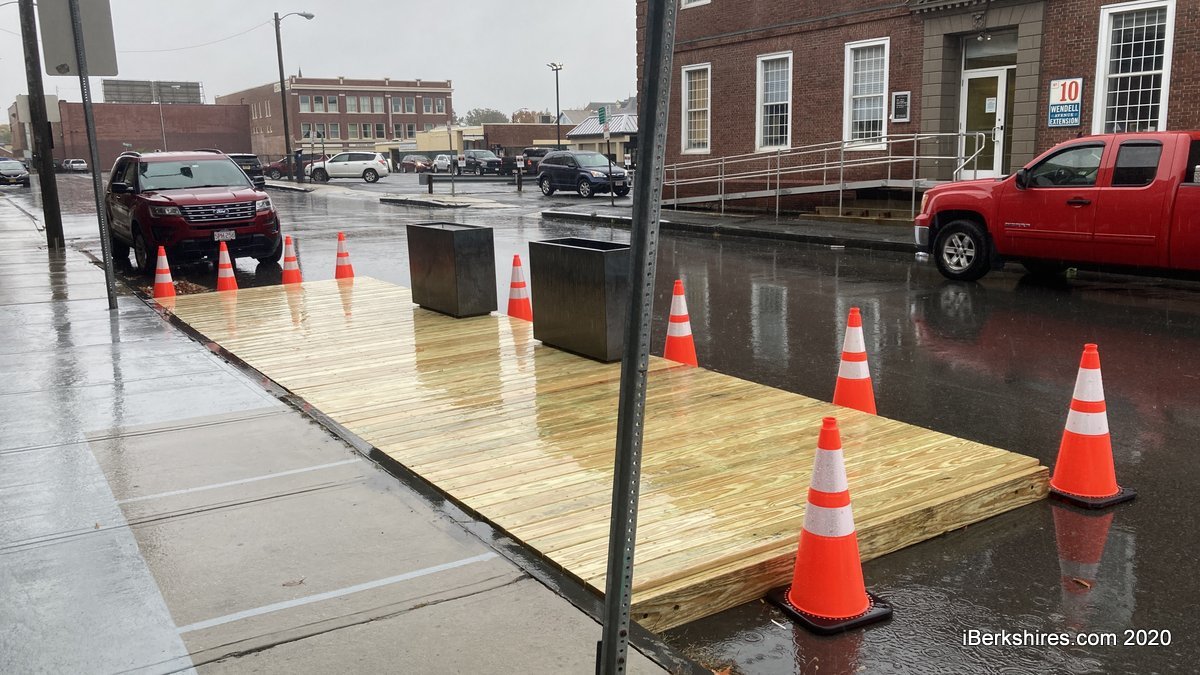
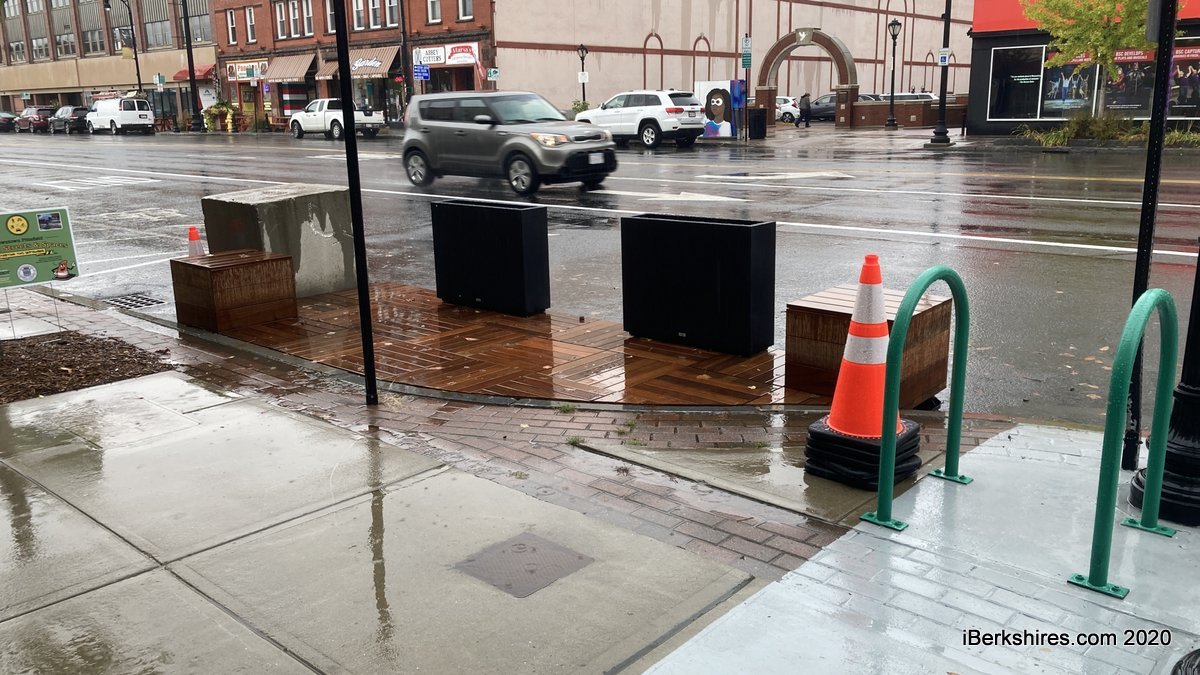
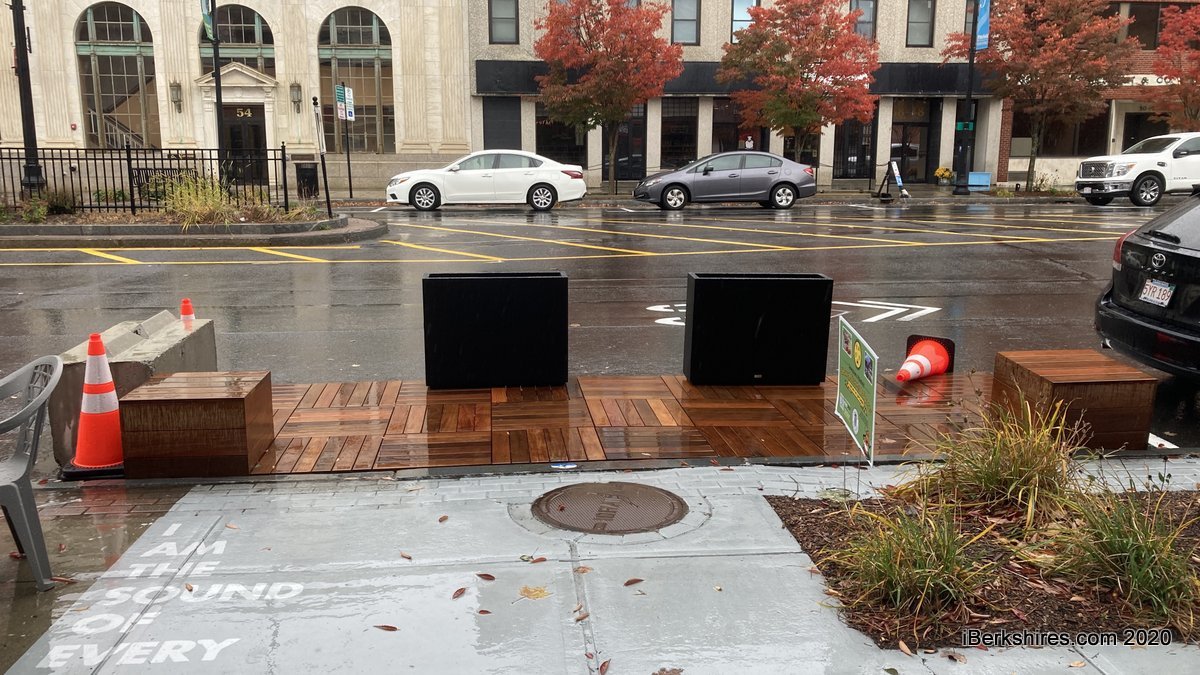
For the place making part of the grant, much of the funding went to the purchase of parklets to provide more outdoor dining space. The definition of a parklet is a publicly used space that is taking the space of a parking spot. The goal of a parklet is to be an extension of the sidewalk.
Planters to decorate parklets, barriers, and tables and chairs were also purchased through the grant.
The parklets will be an extension of the sidewalk for the pedestrian realm. Restaurants will benefit from additional space parklets will provide especially because of the conditions and regulations that restaurants are being subjected to during pandemic.
The installation of these parklets has everything to do with the COVID-19 pandemic because even though Berkshire County is doing better than the rest of the state in COVID-19 cases, every guideline needs to be abided by to keep residents safe, Morales said.
The city came into the money from the grant late, as this project was aimed to be completed in early fall. Regardless, the parklets will be installed and some may be used through the winter if businesses chose to provide heating.
The idea is to put the parklets up immediately and take them down in about three or four weeks, store them, and place them in the same or different locations in April.
Morales said the good thing about these parklets is that they can be relocated.
"We can be very mobile with where these are located," he said. "If it doesn’t work in a specific spot we can move it around the corner and try again. It creates a sense of place making that this grant was for."
There will be a total of eight parklets around downtown Pittsfield. Four of them will be medium-sized with raised decking, two will have ramps down to the asphalt, and two more larger ones with raised decking will be placed on Wendell Avenue extension and on McKay Street.
The parklets will be placed in the following areas:
- The intersection of North and Depot Street
- Near The Marketplace North
- Near Methuselah Bar & Lounge on North
- In front of Hotel on North
- Near Mission Bar & Tapas on North
As part of place making, the city will also be creating non-parklet pedestrian spaces for use of additional outdoor dining.
They will be closing off one portion of Market Street between Berkshire General Store and Berkshire Bank and installing fencing to create a pedestrian plaza where people can dine.
The same thing will be done in front of Patrick's Pub, as the city will be pushing out parking spaces on Bank Row closer to the travel lane so that the paver area can be used for seating.
Additional pedestrian dining locations will be near Pancho's in paved area next to Barrington Stage and across from the Highland Restaurant on the Fenn Street side of the First Street parking lot.
Tables and chairs will be provided for these spaces under the grant. The idea is to have nearby restaurants care for these areas with an ownership style, being responsible for cleaning the areas and taking the chairs and tables in upon closing.
Another aspect of the place-making part of the Shared Streets and Spaces Grant is enhancing pedestrian space. This was done by adding taglines from The Mastheads' poetry program with third-grade students of Pittsfield Public Schools to the sidewalks.
The Mastheads is a public humanities project that connects residents to the literary history of the region, creates a forum for thinking about place, and supports the production of new creative work.
Additionally, the SolarFi Prive Pods that the city has purchased are also a part grant. Prive Pods are small greenhouse looking structures that can house diners while providing heat and air conditioning, Bluetooth speakers, and mobile charging that is powered by solar panels.
Morales is referring to these pods as "winter pods" because that is a more direct definition of their use.
He said the important thing to note about this program it is a pilot program funded by state money.
The state has requested that Pittsfield makes a commitment to making these improvements and the city is fulfilling their commitment.
Pittsfield is a Complete Streets community, meaning that the city has adopted a state policy to consider how each resident uses the streets in different ways and make them accessible to all.
"As a part of the complete streets policy, we have to think about how we create a safer street, a street that is inclusive of everyone using the space, and that does not stop with cars," Morales said. "We have to think more about pedestrians, bicyclists and commuters. And in the COVID-19 world, we also have to think about places for restaurants to use for outdoor dining."
Tags: COVID-19, outdoor seating, state grant,
More Coronavirus Updates