Local Environmentalists Demand Cleaner Berkshires Power Plants
PITTSFIELD, Mass. — Local environmentalists are taking a stand against air pollution from power plants that are hardly used.
A Berkshire Environmental Action Team campaign "Put Peakers in the Past" is demanding that the three peaking power plants located in Berkshire County revert to only renewable and clean alternatives. "Peaking" plants are used to meet periods of high energy demand.
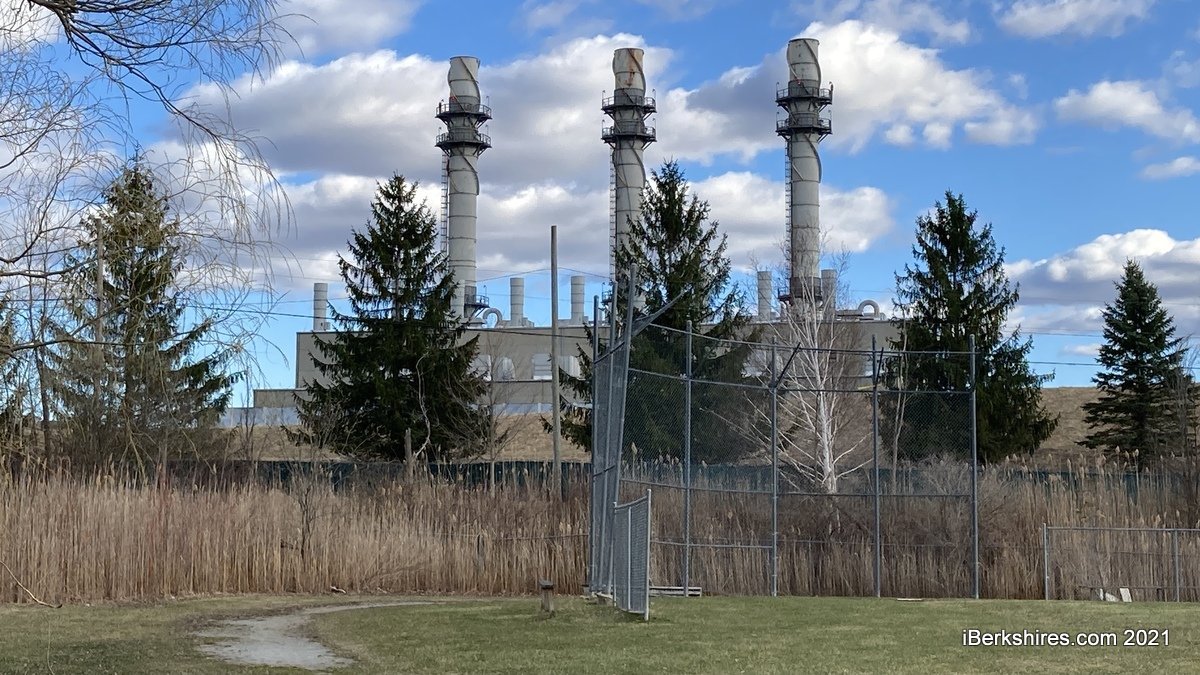
The decades-old plants at Pittsfield Generating Co. on Merrill Road, the Eversource substation on Doreen Street and the EP Energy plant on Woodland Road in Lee run off fossil fuels such as natural gas, oil, and kerosene. Pittsfield Generating is a co-generating plant that also provides steam energy.
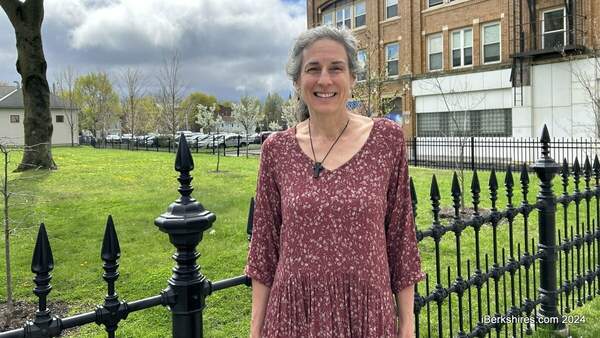
Rosemary Wessel, program director for BEAT's "No Fracked Gas in Mass" campaign, said this sparks concern from environmentalists because the fuels emit excess nitrogen oxides and contribute to the region' s greenhouse gas emissions.
Pittsfield Generating Co. reportedly accounts for over 15 percent of Pittsfield's stationary emissions despite only running for a few days out of the year.
"We started last year when we were looking into emissions for the city of Pittsfield and found out that the Pittsfield Generating only runs about 5 percent of the time but it makes 15 percent of the stationary emissions for Pittsfield every year," Wessel said.
"So even though these plants don't run often, they only run when there's a peak demand on the grid when the regular power plants are starting to max out, they tend to be older plants and they're very inefficient and put out a tremendous amount of pollution for the number of megawatts they generate."
Most peaker plants in the state run 5 percent of the time or less, she added, but the Doreen Street and Lee plants run less than 1 percent of the time, which makes the total emissions numbers alarming to the group.
"Very little run time, still substantial pollution, " Wessel said.
The campaign's first actions are obtaining signatures on their virtual petition and talking to plant owners and see if they already have plans to switch over to clean energy solutions. Wessel said that they haven't heard back from the plant owners yet and are hoping to get legislators involved to facilitate that communication.
She cited the state's climate change legislation to reduce gas emissions that was signed by Gov. Charlie Baker last month. This bill codifies into law the Baker-Polito administration's commitment to achieving net-zero emissions by 2050 and furthers the state's efforts to combat climate change and protect vulnerable communities.
"The state, of course, just signed the next-generation climate bill, which means we' re going to be going for net zero very quickly, so these plants are facing, sort of a change or die kind of situation," Wessel explained. "And we're interested in finding out if they're planning to retire, or if they have plans to change to clean energy, or how they're going to deal with the fact that they' re not going to be able to burn fossil fuels for very much longer. "
Alternatives to peakers include demand response or "peak-shaving" in which customers avoid energy use during peak demand, grid storage that uses solar plus storage to produce and store clean energy to use by the grid, and Mass Save's "Connected Solutions" program that allows electric customers to use battery storage alternatives to replace power plants.
A peaker opposition coalition is also being formed of local organizations, neighborhood groups, and businesses who are opposed to the continued use of fossil fuels for peak demand. The coalition is reaching out to plant owners and urging them to convert to clean energy storage options.
Their goal is to create public opposition to Pittsfield Generating's October air permit renewal before the owners apply for it, which Wessel said they will have to file "any day now" for an October approval.
Members advocating for these plants to switch to cleaner energy solutions include the Berkshire Brigades, the Berkshire Women's Action Group, Indivisible Pittsfield, and Lee's Board of Selectmen and Greener Gateway Committee.
Wessel said she has found that many residents are not even aware of the plants' activities in their neighborhood. The Doreen Street plant, she said, is hardly visible because of vegetation yet is close to many residential areas and Pittsfield Generating is right in the center of the city.
"Public outreach we figured was a way to get people to realize that this may be what's contributing to their asthma or other health issues," she said. "And to see who' s interested in seeing the business model change, or the plants shut down one way or another. "
Throughout the pandemic, BEAT has been able to continue monthly Green Drinks meetings through the Zoom platform. Before the pandemic, the meetings were in-person, informal sessions where people who work in the environmental field could grab a drink or snack and converse.
BEAT now welcomes a guest speaker each month to talk for about 30 minutes on topics ranging from wildlife tracking, local economies, environmental education, and more. Having the sessions virtually has reportedly increased attendance for Green Drinks.
"Our first talk about it was actually addressing demand response, which is one of the ways one of the other ways to meet peak demand," Wessel said.
"We're starting to talk about you know, as things are starting to open up, do we want to go back to a real person one or not and we're thinking we'll probably do hybrid, once things are open enough. We're in no rush to open up too soon, but probably do in person, but still find a way to get it up on Zoom as well. "
Tags: clean energy, power plants,