Pittsfield Health Board Wants Feedback on Tobacco Ban
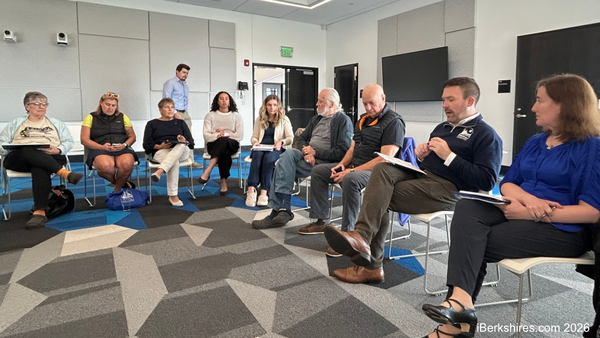
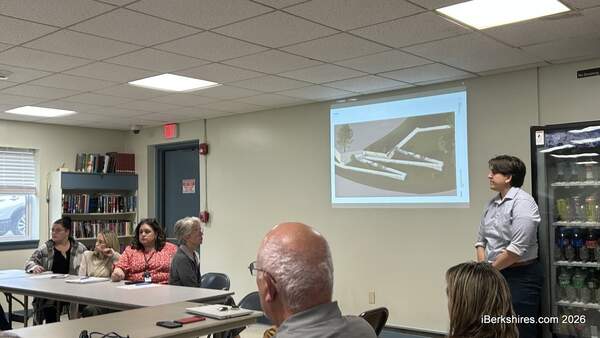
PITTSFIELD, Mass. — The Board of Health will hear from the community before adding Nicotine-Free Generation guidelines into the tobacco ordinance.
Earlier this month, the panel reviewed a draft update for Pittsfield's tobacco regulations, including a provision that "No retailer or person shall sell or provide a tobacco product to a person born on or after January 1, 2005."
No vote was taken, and discussion is set to pick up at the next meeting.
"This is going to be a process that we're going to be involving everyone in and being respectful of everyone's opinions or facts that they have to share with us," Director of Public Health Andy Cambi said.
Several retailers came to the meeting to voice concerns about losing sales to surrounding communities without NFG regulations and the loss of other sales associated with tobacco purchases. They asked that Pittsfield wait for a ruling from the state.
Pinal Shah, owner of Harte's Package, said, "It will slowly drive us out," and that is unfair to pass just Pittsfield.
"We think that it is not only not fair for us retailers to just target the city because it will just drive the business to neighboring cities, which, with Pittsfield being so small, they can literally drive five minutes and buy the product," he explained.
"We are the taxpayers in Pittsfield, and we're just going to give the business to them."
Another retailer added that they are in full support of the board taking precautions for a healthy community, but they have a family to support, so they are thinking about that, too.
"It's better to wait for the state than just impose it to the city, because, according to one of my distributors, Pittsfield last year bought over $10 million of tobacco products from just one distributor, just Pittsfield itself," reported Berkshire Wine & Liquor owner Jigar Sinroza.
"If we lose even 10 percent or 20 percent of it, we're still dealing in millions, and it's not like the customer will come in, only buy a tobacco product, and leave."
Cambi explained that, as a rather new director with new Board of Health members, he wants to ensure a thoughtful and thorough process.
"What we also want to do is make sure that we take this into a larger scale, meaning we talk to our councilors, we talk to our mayor, we talk to our residents, our schools, everyone, because it does have an impact on the community," he said.
"I think what's important to note is that this is a Board of Health and Health Department initiative and a policy change that we want to do so we're going to have to have a partnership with our city councilors and our mayor and everyone else that's involved in this, even our permit holders because, again, we all have to find a medium for us to meet, a balanced medium."
He said the board will have to consider business owners' concerns, but it seems that everyone agrees the products are harmful. Fifteen municipalities have passed the age restriction, and there are reportedly another 15 in the pipeline.
"I think something that I heard tonight was something that we're clear on is that tobacco is a harmful product. I think we've known that for many years, and now we have to make adjustments to our policies and see what we can do locally in our community to move forward," Cambi said, explaining that there may be a couple more meetings before a vote is taken.
James Wilusz of the Tri-Town Health Department said it is a "partnership to a point in trying to do our best to support the retailers," and is a struggle no matter how you look at it.
"Boards of health, town by town, set policies, which trickle to other towns doing policies, and it grows and it puts pressure on the Legislature, which then it becomes a tipping point for state laws," he told the board.
The conversation began early this year with a presentation on the Nicotine-Free Generation initiative to prevent incoming 21-year-olds from taking up the habit. The city's tobacco ordinance was last updated in 2023.
Cambi thinks that residents deserve access to healthier options and sees it as more of a movement than a ban.
"I don't want to consider it a ban. I want to consider it a change. A change for the future of our generation, for us to say as a Board of Health, 'It's not OK anymore,'" he explained.
"Even us giving permits to tobacco retailers is kind of saying we're permitting you to sell a harmful product, and I struggle with that."
Board member Roberta Elliott agreed, describing it as a preventative health strategy similar to those for lead and asbestos.
"I think this is the beginning step forward for us to learn more about this," she said. "I feel like I have a lot more learning to do about all of the documents that you provided tonight and and all of that before we're ready to move in that direction."
Tags: board of health, tobacco regulations,