GE Buildings 12 & 14 Demolished in Pittsfield
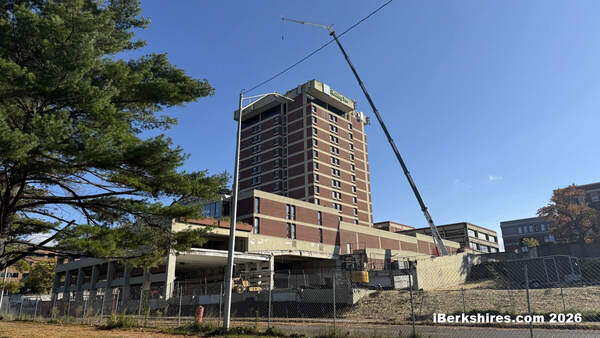
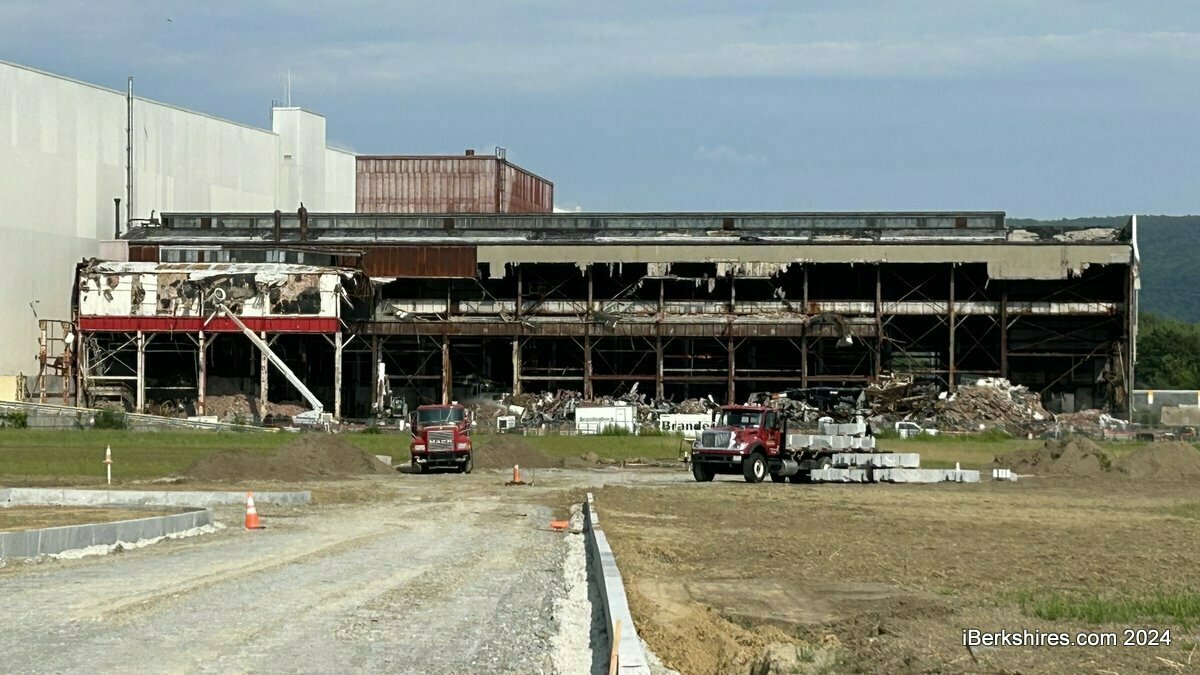
PITTSFIELD, Mass.— General Electric's former Buildings 12 and 14 are demolished and the debris will soon be capped.
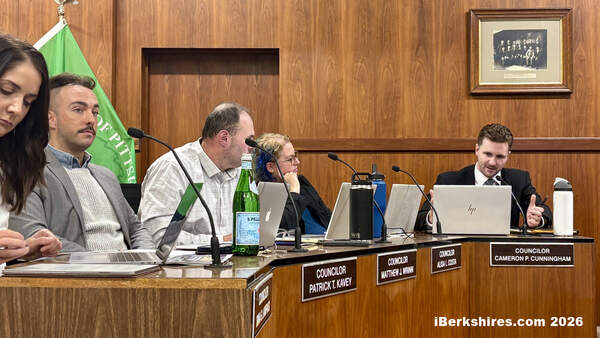
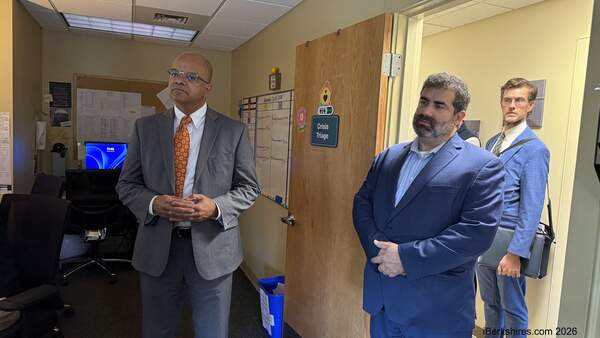
Last week, the public health and safety subcommittee received an update on the project that was paused over the summer after air sampling detected an exceedance of polychlorinated biphenyls (PCBs.)
Authorities said the measurements are "conservative" and do not threaten public health.
Work to demolish the two buildings began last year and was completed in September after it was temporarily halted on July 25. Debris will be set off-site for disposal at the end of the year, and the subsurface vaults will be sealed and capped soon after.
Richard Fisher, remedial project manager for the U.S. Environmental Protection Agency's Region 1, emphasized that the monitors around the perimeter that borders Tyler Street Extension did not show an exceedance.
"The public was not widely informed of this contamination, and no effort appeared to be made to trace it to GE property," argued Valerie Anderson, a member of the EPA GE Citizens Coordinating Council.
"Toxic contamination still abounds in Pittsfield."
At the beginning of the meeting, a couple of residents voiced concerns about PCB contamination in Pittsfield and its effect on public health. Also on the agenda was an annual update on the Hill 78 and Building 71 capped landfills that abut Allendale School.
The GE buildings' demolition is not covered by the consent decree for PCB remediation and required state and local permits. Debris including steel and crushed concrete were consolidated in sub-surface vaults in the Building 12 complex, which is covered by the consent decree.
Asbestos, liquids, hazardous materials, intact drums, capacitors, or universal wastes were shipped off-site prior to demolition.
Restoration plans are not yet finalized but GE is consulting with the city and anticipates implementation of the restoration work next year.
"Air monitoring was conducted at six locations on the site perimeter for PCBs. It was conducted weekly to start, then adjusted to monthly, and then reverted back to weekly due to an action level exceedance," Fisher reported.
"There was one exceedance of the action level and notification level and it was on the adjacent PEDA work site."
Because PEDA was conducting redevelopment work on Site 9 at almost the same time, it had an air monitoring program around the perimeter of the work and the exceedance was found next to Building 12.
"These levels are incredibly conservative and they're based on very long-term potential risk, like a long-term exposure to create the risk," Fisher said.
"But we still monitor these and use that level just to sort of require engineering controls to be implemented if it starts going up to just to get it right back down so there is no long-term exposure."
All of PEDA's air monitoring data was below the notification and action level aside from that one sample, he reported, and all of GE's PCB data is non-detect except for two samples.
Councilor at Large Kathy Amuso asked why there was an elevated level of PCBs on July 24.
"I don't want to speculate on exactly what the root cause was but I will say at the same time, in the same time period that the air monitors that are more reflective of public safety, which are all around the perimeter where air could get into the neighborhoods. None of those, you know, triggered any notification or action level," Fisher said.
"And it was right where GE was taking down a very large building. I don't know what the conditions were at the time, but that's why we would tell GE to stop work, figure out a way to make that not happen, and they couldn't start doing the work again until the air monitoring showed that the levels were all back down low again."
He added that PEDA had finished the work that required air monitoring after the detection, so there is no August data from the same monitor.
In August, Mill Town Capital announced that it would purchase 4.7 acres of Site 9, William Stanley Business Park's largest parcel. The investment firm's vision includes evaluating the development of a commercial building upwards of 20,000 square feet to provide office and lab space for growing local businesses.
Ward 2 Councilor Brittany Noto asked if there will be air monitoring in the new construction on the PEDA site. Fisher said if the groundwater data doesn't indicate a need, he doesn't see why that would be necessary.
"Strictly speaking about the groundwater as a source, the levels in the groundwater don't support the need," he said, adding that it would be a city decision.
Tags: contamination, demolition, General Electric, PCBs, PEDA,