Year in Review: Pittsfield 2014
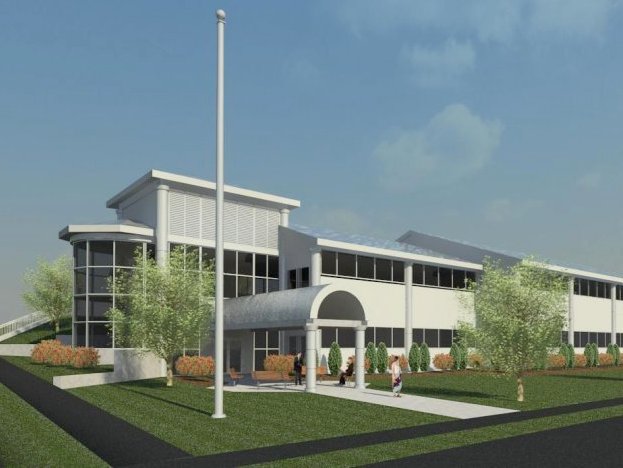 The state awarded Pittsfield $9.75 million to build a new innovation center at the William Stanley Business Park. The state awarded Pittsfield $9.75 million to build a new innovation center at the William Stanley Business Park. |
In May, city officials received the news that the state is spending $9.75 million to construct a science center at William Stanley Business Park.
An array of advanced manufacturing and research companies came together following the announcement to create a non-profit organization to operate the center. A board has been formed and is working with architects to design the future building, which is eyed to trigger a major expansion into the life sciences industry.
The business park continued to be a focus for the city's economic development. The Pittsfield Economic Development Agency was successful in its bid for the science center but unsuccessful in the attempt to reel in a manufacturer seeking a $550 million contract to build new Massachusetts Bay Transit Authority rail cars.
PEDA put up $1 million and the city matched it through the General Electric Economic Development Fund, which was created through the consent decree in response to the pollution caused by the plants. Despite getting interest from one major company that bid on the contract, the state ultimately awarded it to CNR Changchun, which will build a plant in Springfield.
PEDA officials say that while they didn't win the contract, their aggressiveness is something other manufacturers took notice of and they hope to be successful in a future bid. The goal had been to redevelop the PEDA property, particularly with a focus on science and manufacturing. The land has been mostly cleaned of pollutants and now the city is pushing to put it to use.
The cleaning of the land is most notable with Silver Lake. In 2014, officials deemed the lake, which once was so polluted that it wouldn't freeze, is now clean. Environmental officials say it still isn't safe to eat the fish from it. But the lake that mostly represents the pollution caused by General Electric has a new walking path and can be used for recreation.
Yet, Pittsfield isn't done with the clean up. The work downtown may be concluding but the federal Environmental Protection Agency released a plan to clean up the rest of the Housatonic River - from Pittsfield to Sheffield. The $613 million clean up includes nearly 1 million cubic yards of dredging from the river over 13 years. However, the plan most caps the PCBs instead of a full clean up, which has been a concern for the six municipalities that joined together to negotiate with General Electric for the negative impacts the cleanup with have.
Pittsfield is one of the six communities that will be affected by the proposed cleanup, which will likely be fought throughout 2015 by General Electric on the extent of the work. The Rest of the River group joined together and hired Pawa Law Group out of Boston to head negotiations. The group hopes for compensation from the company for the affects the clean up will have such as trucks damaging the roads and negative affects on tourism.
Tourism has continued to be one focus of economic development in Pittsfield. The highlight of that sector is the announcement and subsequent construction of Hotel on North. The boutique hotel broke ground on the North Street building in hopes for a 2015 opening. The 45-room hotel is being managed by Main Street Hospitality, the management group of the Red Lion Inn and Porches.
Arrowhead, another one of the city's major attractions, completed a multi-phased renovation in 2014, too.
North Street's streetscape program continued in 2014, which included reconstruction of Persip and Sottile Parks. In the fall the state granted the final $4.5 million needed to complete the project that was first envisioned in 2005. Next the city has turned their eyes to the Morningside neighborhood and hopes to have a similar streetscape plan for Tyler Street.
The City Council in January expanded the Downtown Arts Overlay District to areas on First Street. The district encourages mixed use development while trying to preserve historic buildings. First Street became the next extension and saw a few redevelopment in 2014 such as the Howard Block at the intersection of Fenn and First and the redevelopment of the former Notre Dame School on Melville into an apartment complex.
However, the former Plunkett School on First Street didn't survive the wrecking ball. The city has been at odds with Cafua Management, who has plans for a Dunkin Donuts at the site of the former school. But the city had previously denied the drive through and that is still being battled in court.
The former Stetson's Dry Cleaning on Federal Street is also eyed for demolition.
But the major First Street prize was the substantial completion of the First Street Common. The state spent more than $4 million to completely renovate the Common with performance pavilions, a spray ground for children, new basketball courts and playground. There are a few more touch ups to do in the spring, but for the most part the project is complete.
The Common will also host the Shakespeare in the Park program the city launched in 2014.
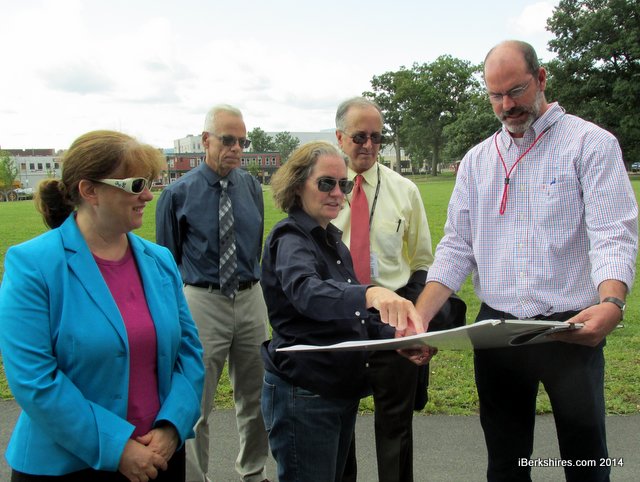 State Rep. Tricia Farley-Bouvier, Community Development Director Douglas Clark, Energy and Environmental Affairs Secretary Maeve Vallely Bartlett, Mayor Daniel Bianchi and Parks and Open Spaces Director James McGrath touring the Common. State Rep. Tricia Farley-Bouvier, Community Development Director Douglas Clark, Energy and Environmental Affairs Secretary Maeve Vallely Bartlett, Mayor Daniel Bianchi and Parks and Open Spaces Director James McGrath touring the Common. |
Beyond just the reconstruction of North Street over the last decade, the city added to the tourism atmosphere in 2014 with a new downtown ambassador program, which puts Berkshire Community College students on the street to help direct visitors. And, the city completed a parking management study, which was required through the state grant that help rebuild the McKay Street garage.
Downtown Pittsfield Inc. also hired a new director and a new coalition of downtown business owners was formed.
The parking plan will start to be implemented in 2015 after the City Council approved spending $500,000 to begin implementing the downtown parking recommendations. The plan includes new signage and changing the hours and cost of parking downtown, placing a hired cost on the premium spots.
The money, however, was approved in a contentious capital plan. Mayor Daniel Bianchi and the City Council was at odds over the capital budget in the spring and the city ultimately did not pass the omnibus bill. The City Council and Bianchi have been at odds on many occasions this year and the working relationship among the two had become tense - including a meeting when Bianchi supporters took over the open microphone to lash out on the City Council.
Nonetheless, the mayor brought the parking money back to the council in September and got it approved. The parking management is one of the capital items approved by the City Council. The City Council also approved spending $200,000 to help construct a new turf field sports facility at Berkshire Community College. The City Council approved the replacement of lights at Wahconah Park and bleachers at Pittsfield High School.
PHS was the site of a deadly car accident in January 2014. Two men, Ernest Duck and Tariq Sally, died after the rental car they were driving sped through the intersection of Second Street and East Street and slammed into the wall outside of the school. No students were hurt and Police said Duck was high on phencyclidine, a hallucinogen , leading up to the crash. Heroin was also to blame for a crash in which a man hit a South Street telephone pole, closing the road for hours.
The city has been facing a public health crisis because of heroin, so much so that District Attorney David Capeless called a press conference on the issue in April. In just the first few months of the year, five Berkshire residents had already died from overdoses and many more were suspected. Throughout the summer, Pittsfield Police not only handled many drug cases and overdoses but also saw an uptick in property crime. The city saw the highest property crime rate in recent years over the summer, much of it was attributed to the heroin epidemic.
Crime really took over conversations in the city after a teenager shot another in broad daylight at the intersection of First and Tyler Streets.
Early in 2014, the city used Charles E. Shannon Grant funding to hire Adam Hinds to help combat youth violence. He had been working with outreach workers Jamal Taylor and Mike Williams to mentor at-risk youth, including the two involved in the shooting. The shocking shooting led to multiple community conversations about how to further prevent violence. In December, the city again received a Shannon Grant and looks to fight youth violence even further.
Meanwhile, in law enforcement news, the sheriff's department took over the former Juvenile Resource Center on Second Street to turn it into a pre-release center. The JRC found a new home on East Street. The juvenile court is next to be moved.
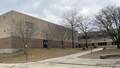
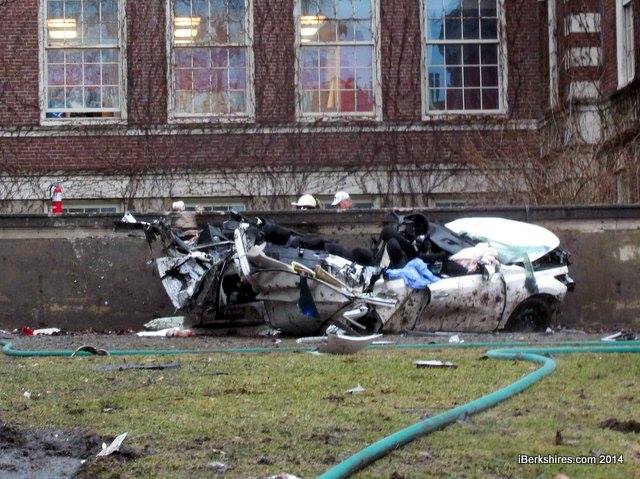 The crash at Pittsfield High School came as a shock to the community. The crash at Pittsfield High School came as a shock to the community. |
There were many changes in city personnel in 2014. Megan Whilden left her position as the director of cultural development. She was replaced by Jennifer Glockner. Gary Shepard resigned as director of the Berkshire Regional Transit Authority.
Bianchi fired both Veterans Agent Rosanne Frieri and BerkshireWorks director William Monterosso. He hired James Clark and Ken Demers, respectfully, to fill those roles.
Both Frieri and Monterosso left in controversial manners. Frieri has filed a discrimination suit against the city for her firing, which the mayor claims was because she didn't put together a budget. Monterosso was terminated after sexual harassment allegations.
Frieri wasn't the only one to claim Bianchi discriminated against her. Doreen Wade of Medford filed complaints with the Department of Justice and the attorney general's office. Wade claims the mayor discriminated against her when she presented him with plans to move her business to the city and was denied jobs she claims she was qualified. That case is now in federal hands.
Other department heads were relieved when the City Council approved raises for them. The 25 mid-level, non-union city employees hadn't had raises in a number of years and the City Council hopes to improve staff retention and attraction by paying them more. Subsequently, the City Council did the same for the mayoral position, which goes into effect after the next election, and decided to give stipends to School Committee members.
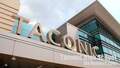
The School Committee is eying a major decision in 2015, when it comes to building a new Taconic High School. The city moved into the next design phase in the Massachusetts School Building Authority process and is working with architects on the details of the $115 million project.
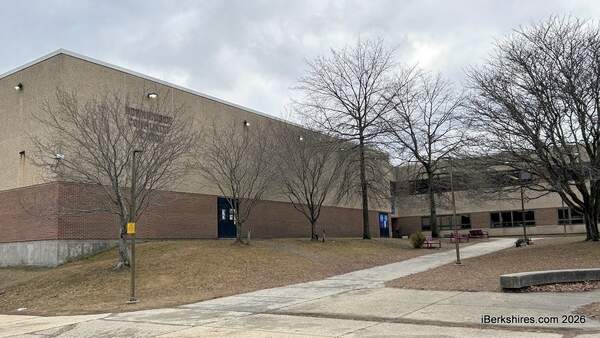
Much of that groundwork was laid in 2014 through the development of an education plan and preliminary designs, in which the School Committee agreed to apply to build a brand-new school rather than renovate the current one. The School Department also got new buses in 2014. And the state made it safer for students to walk to Silvo O. Conte Community School, through its Safe Routes to School program.
.jpg) Megan Whilden, the city's former director of cultural development and founder of Third Thursdays, moved on to take a job with Berkshire Community College in 2014. Megan Whilden, the city's former director of cultural development and founder of Third Thursdays, moved on to take a job with Berkshire Community College in 2014. |
However, the proponents of an electronic billboard at the intersection of East and Elm didn't have good luck in Pittsfield. The City Council objected to the plan. Multiple plans for a medical marijuana facility in Pittsfield never received permits from the state.
Cafua Management faced even more objections when it proposed razing St. Mary's of Morning Star on Tyler Street and building a Dunkin' Donuts.
That plan was faced with outrage and the formation of a Friends of St. Mary's group. Later the company opted to donate the church to the city instead.
But the city is skeptical of taking over the structure and is hoping to find a developer to save it.
While Harry's may have been around for a long time, he city's oldest church has them beat. The First Congregational Church celebrated its 250th year.
It was a busy 2014 and the groundwork is set for a busy 2015 as well.
Tags: year in review,